
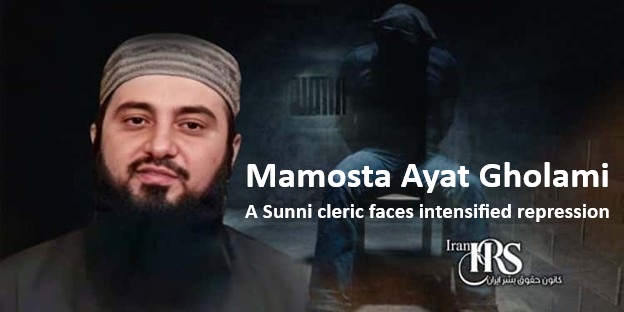
Mamosta Ayat Gholami, a Sunni cleric in Kermanshah, faces intensified repression for criticizing Iran’s policies.
Iran Human Rights Society, Sunday, September 7, 2025 – Sunni cleric repression in Iran continues to escalate, with Mamosta Ayat Gholami, a respected Kurdish Sunni cleric, facing severe penalties for his outspoken criticism of the government. On September 7, 2025, the Iran Human Rights Society reported that Gholami, a former imam of the Muhammad Rasulullah Mosque in Kermanshah, received a harsh sentence from the Appeals Branch of the Special Clergy Court. This case highlights Iran’s systematic policy to silence Sunni voices and curb religious freedom.
Systematic Sunni Cleric Repression in Iran
Mamosta Ayat Gholami, once a teacher and imam, now faces five years of suspended imprisonment and six months of mandatory imprisonment. Initially, the Special Clergy Court in Hamedan charged him with “propaganda against the regime,” “spreading falsehoods,” “disturbing public opinion,” and “insulting Saint Fatimah.” The court sentenced him to two years of imprisonment, with one year enforceable. After appealing, the Appeals Court issued an even harsher verdict on April 23, 2025. Authorities arrested Gholami, only releasing him temporarily on April 26, 2025, after he posted a 700 million toman bail. However, the threat of reimprisonment looms large, signaling intensified pressure.
Banned from Religious Activities

The crackdown on Gholami extends beyond the judiciary. In July 2024, security officials summoned him to the Kermanshah Clergy Center and banned him from leading prayers or engaging in religious activities at the Muhammad Rasulullah Mosque. In a courageous video statement, Gholami revealed that authorities demanded he conduct mosque activities under government supervision. He refused, asserting that such interference violates religious freedom and undermines the independence of Sunni clerics. Consequently, his defiance has made him a prime target for repression.
Why Is Gholami Targeted?
Gholami’s outspoken criticism fuels the government’s actions against him. Specifically, he protested:
- The killing of Kurdish porters (kulbars) and fuel carriers in border regions, a humanitarian crisis.
- The arrest and suppression of Sunni clerics for expressing their beliefs.
- The execution of Mamosta Mohammad Khezrnejad, which sparked widespread Sunni protests.
- Government control over mosque activities, restricting sermon content.
Gholami’s refusal to compromise his principles has intensified the regime’s efforts to silence him. His case reflects a broader strategy to suppress dissent within the Sunni community.
A Broader Policy of Sunni Suppression
Gholami’s ordeal is not isolated. Iran’s Sunni community faces systematic marginalization. Authorities prevent Sunnis from maintaining independent mosques in major cities and ban Friday prayers in Tehran. Additionally, they arrest prominent scholars and impose cultural and religious restrictions. For instance, in 2024, security forces arrested seven Sunni clerics across provinces like West Azerbaijan and Kermanshah. These actions aim to silence voices advocating for religious and cultural rights.
Moreover, the judiciary often charges Sunni activists with vague offenses like “propaganda against the state.” The Special Clergy Courts, meant to handle clerical matters, now serve as tools to suppress dissent. This pattern underscores an organized policy to marginalize Iran’s Sunni minority, particularly in regions like Kermanshah.
Human Rights Violations in Focus
Mamosta Ayat Gholami’s case violates several international human rights standards:
- Article 18 of the Universal Declaration of Human Rights: Freedom of religion and belief.
- Article 19: Freedom of expression.
- Article 9: Protection against arbitrary detention.
- Article 10: Right to a fair trial.
The verdicts against Gholami lack legal grounding and aim to silence his advocacy for justice. Furthermore, his arbitrary arrest and excessive bail requirements highlight the regime’s disregard for fair judicial processes.
The Role of Special Clergy Courts
The Special Clergy Courts have become instruments of repression. Originally designed to address clerical issues, they now target religious and political dissenters. For example, in 2024, authorities sentenced Sunni cleric Hadi Ahmadi to six months in prison for “propaganda against the state.” Similarly, Gholami’s charges reflect the courts’ role in stifling free speech and religious autonomy. These actions create an atmosphere of fear, discouraging clerics from speaking out.
See also the below articles:
- Hamid Haj Jafar Kashani’s Second Conviction Sparks Outrage
- Iran Executions Surge: 15 Prisoners Executed Across Multiple Prisons
Follow Iran Human Rights Society on social networks:
Telegram /Twitter /Instagram / YouTube / Facebook
Join Iran Human Rights Society on Twitter



Discussion about this post