
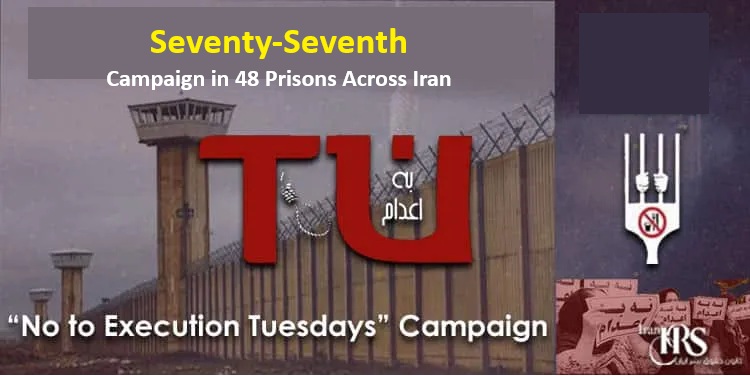
In Iran, the “No to Execution Tuesdays” campaign marks its 77th week, with prisoners in 48 prisons, including the newly joined Yazd Prison, staging hunger strikes to protest the regime’s escalating use of the death penalty. This grassroots movement, driven by prisoners and supported by families, challenges the systematic executions used to suppress dissent and instill fear. As the campaign expands, it amplifies the urgent call to stop executions and defend human rights in Iran.
Iran Human Rights Society, Tuesday, July 15, 2025 – The “No to Execution Tuesdays” campaign, now in its 77th consecutive week, welcomes Yazd Prison as the 48th facility to join this powerful resistance. This expansion highlights the growing determination of prisoners and justice seekers to confront the regime’s brutal execution machinery. Since January 2024, the campaign has gained momentum, with hunger strikes symbolizing defiance against state-sponsored killings. The addition of Yazd Prison underscores the movement’s reach across nearly every region of Iran, from Tehran to Kurdistan, uniting prisoners in a shared fight for life and justice.
Condemning Unjust Death Sentences

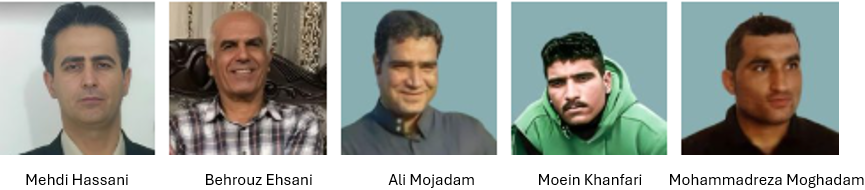
This week, prisoners condemned the issuance of six death sentences against three political prisoners—Farshad Etemadifar, Masoud Jamei, and Alireza Mardasi—in Ahvaz’s Sham Court, known for its lack of judicial fairness. These sentences reflect the regime’s targeting of dissenters, particularly from ethnic minorities like the Arab community. Additionally, three other prisoners—Ali Mojadam, Moein Khanfari, and Mohammadreza Moghadam—face imminent execution after being transferred to solitary confinement in Sepidar Prison, Ahvaz. The lack of transparency in their cases raises fears of forced disappearance, a tactic the regime frequently employs.
Judicial Injustice and Denied Appeals
The campaign also highlighted the repeated rejection of judicial reviews for Mehdi Hassani and Behrouz Ehsani, two political prisoners facing death sentences. For the fourth time, Iran’s Supreme Court denied their appeals, citing their cases as “classified,” which prevents their lawyers from accessing critical details. This blatant violation of due process underscores the regime’s misuse of the judiciary to silence opposition. Such actions expose the systemic flaws in Iran’s legal system, where executions serve as tools of political repression rather than justice.
A Surge in Executions
Since the start of July 2025, the regime has executed at least 44 individuals, including one woman, averaging two executions per day. Public hangings in Miandoab and Bokan further demonstrate the regime’s intent to intimidate society. These executions, often conducted in secrecy and without fair trials, target vulnerable groups, including political prisoners and ethnic minorities. The campaign’s statement emphasizes that these acts are not mere punishments but crimes against humanity, designed to crush dissent amid the regime’s internal crises.
A Call for Solidarity
The “No to Execution Tuesdays” campaign urges Iranians and the global community to stand in solidarity with the families of death row prisoners. Despite facing severe security pressures, these families continue their weekly protests, amplifying the call to halt executions. The campaign encourages people to disrupt public execution spectacles, turning them into platforms for resistance. By raising awareness, the movement aims to expose the regime’s human rights violations and rally support for justice seekers.
International Attention and Urgency
Ms. Mai Sato, the UN Special Rapporteur on Human Rights in Iran, has voiced grave concerns about the plight of Arab prisoners in Ahvaz, urging immediate international action to stop executions. The campaign echoes her call, stressing that warnings must translate into concrete measures to dismantle Iran’s execution machinery. With 428 executions reported since March 21, 2025, the need for global intervention is critical to protect vulnerable prisoners and uphold human rights.




Discussion about this post