
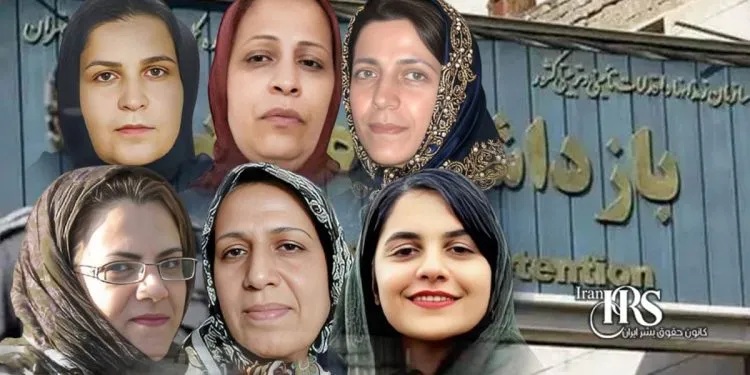
A significant portion of female political prisoners in Evin suffer from severe and sometimes incurable diseases, but are deprived of regular access to specialist doctors, medication, and medical services.

Iran Human Rights Society, Wednesday, December 24, 2025 – Reports from the women’s ward of Evin Prison indicate a concerning sanitary and medical situation for female political prisoners; a situation accompanied by the spread of severe diseases, lack of medical care, and severely unsanitary conditions. These conditions, especially for elderly prisoners and those with chronic illnesses, create serious and immediate dangers.
Unsanitary Environment and Pest Infestation in Women’s Ward
Prisoners report heavy pollution in corridors and rooms. Field rats and pests overrun the area. Inmates count around 100 rats, and numbers grow. Garbage piles up. Cleaning rarely happens. These factors threaten health directly. However, weakened immune systems raise infection risks higher.

Widespread Deprivation of Treatment and Medication
A significant portion of female political prisoners in Evin suffer from severe and sometimes incurable diseases, but are deprived of regular access to specialist doctors, medication, and medical services. Some of these women, despite suffering from cancer, history of heart surgery, or advanced neurological diseases, are still held in polluted and unsafe wards.
According to informed sources, transfer to medical centers outside the prison either does not occur at all or is accompanied by long and fruitless delays. This situation has increased concerns about the worsening of diseases and irreversible physical complications.
Houri (Fateme) Ziaei’s Rearrest Defies Medical Ruling
Houri (Fateme) Ziaei endures advanced multiple sclerosis. She combats latent pulmonary tuberculosis too. Severe urinary infections plague her. Doctors deemed prison intolerable on January 20, 2025. Forensic experts confirmed life-threatening risks. They ordered release. Security forces ignored rulings. Agents stormed her home on August 7, 2025. Raid happened at midnight. No warrant appeared. Arrest lacked explanation. They confiscated items forcefully. Family protests went unheard.
Prisoners with Heart and Cancer Diseases
Zahra Safaei, another female political prisoner, suffers from heart disease and has two stents placed in her heart. According to her relatives, she must be regularly monitored by a doctor, but for more than seven months, no medical examination has been performed, and she is currently struggling with severe heart pains.
Marzieh Farsi, another political prisoner, was previously diagnosed with breast cancer and was undergoing treatment before arrest. After arrest, her treatment was stopped, and she is now facing recurrence of the disease. In addition, she has been suffering from severe headaches for more than a year; headaches that have been left undiagnosed and untreated.
Urgent Need for Surgery and Specialized Treatment
Shiva Esmaili, an agricultural engineer imprisoned in the women’s ward of Evin, faces severe pain and serious mobility limitations due to rupture of four lumbar discs. Medical examinations have shown that she urgently needs surgery; a surgery that must be performed in hospitals outside the prison. She also has a history of cancer and undergoing treatment periods before arrest.
Elahe Fouladi also faces acute knee problems. The presence of a large tumor in the knee, meniscus tear, and spinal canal stenosis have caused her severe and persistent pain. However, no effective treatment process has been reported for her.
Physical Weakness and Malnutrition
According to the same reports, some political prisoners, including Tahereh Nouri and Forough Taghipour, do not have suitable physical conditions.
Political prisoner Tahereh Nouri suffers from sleep apnea. She has become very physically weak and does not have suitable conditions.
Forough Taghipour also suffers from severe anemia. Informed sources say that the lack of suitable food, absence of fresh fruits and vegetables, and poor quality of nutrition in prison have played a major role in causing this situation. These conditions have put the general health of prisoners at even greater risk.
Human Rights Violations in the Women’s Ward of Evin Prison

The conditions described in the women’s ward of Evin Prison indicate widespread and ongoing violations of the fundamental rights of prisoners; violations that trample both domestic laws and international obligations.
- Article 10 of the International Covenant on Civil and Political Rights – humane treatment of prisoners Holding sick prisoners in polluted and unsanitary environments.
- Article 12 of the International Covenant on Economic, Social and Cultural Rights – right to enjoyment of health Systematic deprivation of treatment, medication, and medical care.
- Mandela Rules, Principle 24 – access to medical services equivalent to society Failure to transfer sick prisoners to specialized medical centers.
- Article 38 of the Constitution – prohibition of harmful behaviors Disregard for physical suffering and worsening of diseases in detention.
- Mandela Rules, Principle 22 – provision of adequate nutrition Malnutrition and lack of essential food materials for maintaining health.
See also the below articles:
- UN Experts Demand Halt to Zahra Tabari Execution in Iran
- No to Execution Tuesdays Campaign: 100 Weeks of Defiant Resistance Against Iran’s Death Penalty Regime
Follow Iran Human Rights Society on social networks:
Telegram /Twitter /Instagram / YouTube / Facebook
Join Iran Human Rights Society on Twitter





Discussion about this post