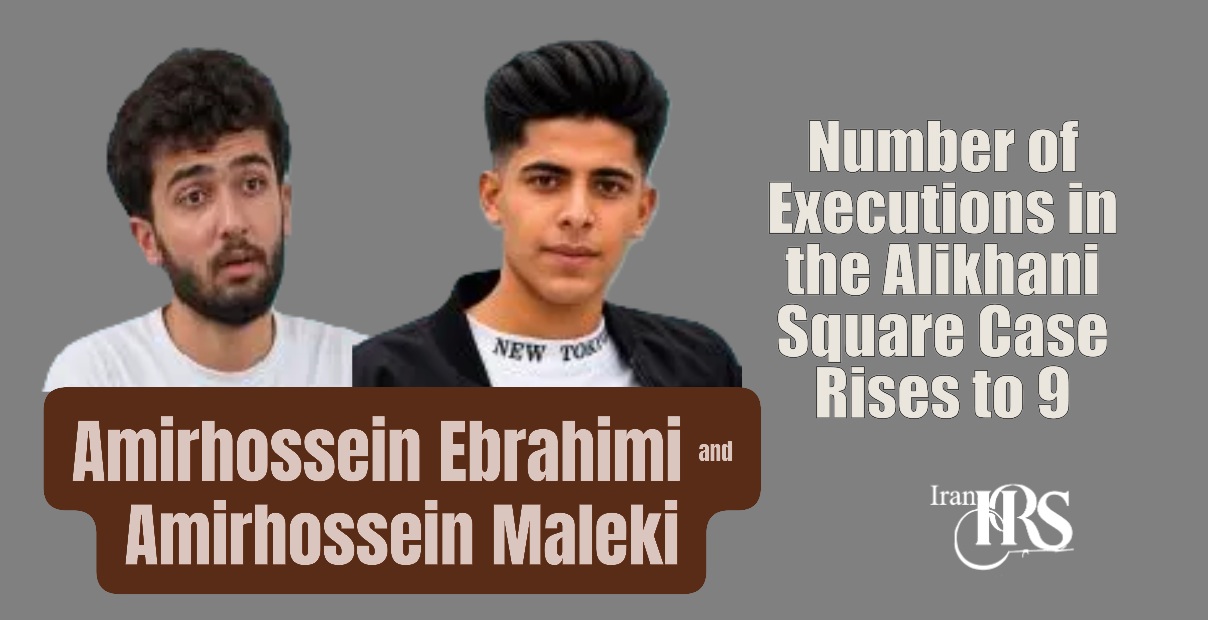
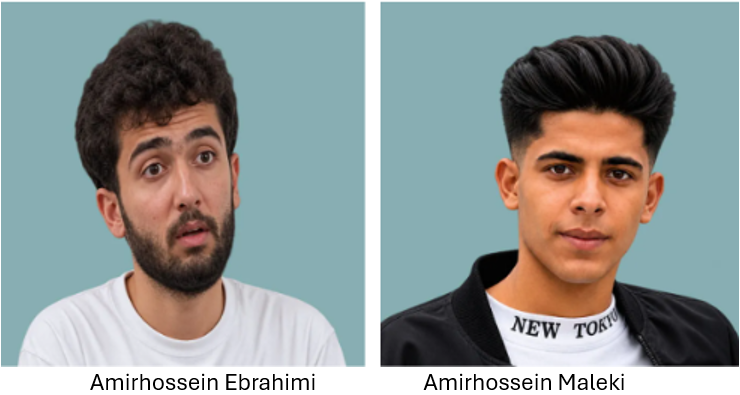
Amirhossein Ebrahimi, a 20-year-old medical student, and Amirhossein Maleki, two detainees of the 2025–2026 nationwide protests, were executed on the morning of Tuesday, November 3, 2026, in Dastgerd Prison, Isfahan; these two individuals were defendants in the case known as “Alikhani Square,” regarding which reports on judicial process, torture, and forced confessions had previously been published.
Iran Human Rights Society, Tuesday, November 3, 2026 – According to published reports, Amirhossein Ebrahimi and Amirhossein Maleki were executed on the morning of Tuesday, November 3, 2026, in Dastgerd Prison, Isfahan.
Mizan News Agency, affiliated with the Judiciary, confirmed the execution of these two prisoners and identified them as armed agents in an incident that led to the death of four Faraja and Basij forces during the events of January 8, 2026, in Isfahan.
Execution of Two Defendants in the Alikhani Square Case
Amirhossein Ebrahimi, 20 years old and a medical student, and Amirhossein Maleki were defendants in a case formed in connection with the events of Alikhani Square in Isfahan. According to previous reports, this case relates to the events of January 8, 2026; during which four members of the Basij and law enforcement forces were killed, after which dozens of citizens were arrested.
According to the published report on the process of this case, at least 59 people were arrested, and death sentences were issued for 12 people. 23 others were sentenced to prison terms ranging from five to 10 years.
The execution of two new defendants comes in continuation of a series of executions carried out over recent months in connection with this same case.
The Judiciary’s Narrative Regarding the Charges of the Two Prisoners
Mizan News Agency claimed in its report that Amirhossein Ebrahimi was present at Alikhani Square on January 8 and, covering his head and face, carried a cold weapon. This media outlet also claimed that during the events of that day, he acted to destroy property and assault officers.
According to this same narrative, after Ebrahimi’s arrest, several cold weapons and items including machetes, swords, knives, axes, stun guns, and brass knuckles were discovered on him. Regarding Amirhossein Maleki as well, Mizan claimed that he was present at the scene of the incident and carried a cold weapon.
The Judiciary cited the charges of these two individuals as “Moharebeh” (enmity against God) and “Efsad-fil-Arz” (corruption on Earth) through action against national security, and announced that the death sentences were confirmed after an appeal in the Supreme Court and executed on Tuesday morning.
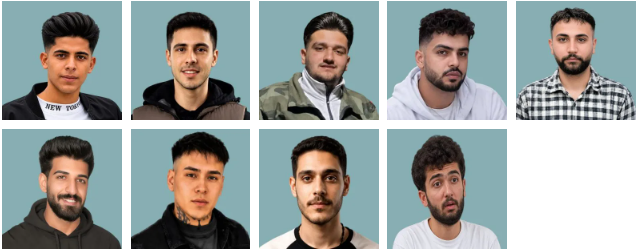
A Different Narrative Regarding Amirhossein Ebrahimi
In contrast, human rights reports and information published by sources close to the case present a different narrative regarding the manner of arrest and judicial process of Amirhossein Ebrahimi’s case.
According to published information, this top medical student was traveling by motorcycle toward his grandmother’s house in the area of Alikhani Square at the time of the protests and was caught in the crowd and traffic. According to this same narrative, he and his companion were arrested after being identified through mobile phone tracking.
It has also been reported that Ebrahimi was subjected to pressure and torture during interrogation and was pressured to give forced confessions regarding connections to Mossad. These claims were raised in human rights sources, while in contrast, the official narrative of the Judiciary did not confirm such accusations.
A Case with a Record of Multiple Executions
The execution of Amirhossein Ebrahimi and Amirhossein Maleki is not the first sentence implementation in the Alikhani Square case. Previously, several defendants in this case have been executed.
Erfan Esfandiari and Gol-Mohammad Mohammadi were executed on the morning of July 19, 2026. Esfandiari was 18 years old at the time of arrest and Mohammadi was 23 years old and an Afghan citizen. These two individuals had been accused of participating in the killing of four Basij members during the events of January 8.
Prior to the execution of their sentences, 12 convicts sentenced to death in this case, along with two other political prisoners, had been transferred to solitary confinement cells; a measure that increased concerns about the possibility of executing sentences of other convicts. The Supreme Court had also confirmed the death sentences of 12 people on July 9, 2026.
Following this trend, Ghaem Hosseini was also executed in Dastgerd Prison, Isfahan, and subsequently, other executions including Alireza Sepahi and Alireza Raeisi were reported in connection with this same case.
Reports Regarding Torture and Forced Confessions
One of the most important axes of concern regarding the Alikhani Square case is reports related to the manner of interrogation and obtaining confessions.
In the report related to the execution of Alireza Sepahi and Alireza Raeisi, torture, beatings, threats, and exertion of pressure to extract forced confessions were reported. It was also reported that part of these confessions were broadcast on state media, and there was ambiguity regarding the defendants’ access to legal counsel and the quality of judicial proceedings.
| Row | Name | Date of Sentence Execution |
| 1 | Erfan Esfandiari | July 19, 2026 |
| 2 | Gol-Mohammad Mohammadi | July 19, 2026 |
| 3 | Abolfazl Sepahi Badjani | July 28, 2026 |
| 4 | Amirhossein Safari Hosseinabadi | July 28, 2026 |
| 5 | Ghaem Hosseini | August 20, 2026 |
| 6 | Alireza Sepahi Badjani | October 5, 2026 |
| 7 | Alireza Raeisi | October 5, 2026 |
| 8 | Amirhossein Maleki | November 3, 2026 |
| 9 | Amirhossein Ebrahimi | November 3, 2026 |
Continuation of Executions of Protest Detainees
The execution of Amirhossein Ebrahimi and Amirhossein Maleki was carried out under circumstances where previously other death sentences against detainees of nationwide protests had also been executed in Isfahan.
In the case of Sasan Azadvar, it was also reported that this 21-year-old athlete was subjected to physical and psychological torture after arrest, and the confessions obtained from him during detention formed the main basis for issuing the death sentence.
Sasan Azadvar was also executed in May 2026 in the Central Prison of Isfahan. This case was among those where serious concerns were raised regarding the absence of independent evidence and the reliance of the case on confessions obtained during detention.
In the case of Erfan Kiani, official sources had reported the execution of the death sentence after confirmation by the Supreme Court, while transparent details regarding court sessions, manner of evidence review, and his access to chosen counsel were not published.
The repetition of such cases, especially when claims of torture, forced confessions, or restrictions on access to legal counsel are raised, has created serious questions about trial guarantees in cases resulting in execution.
Fate of Other Convicts in the Alikhani Square Case
With the execution of Amirhossein Ebrahimi and Amirhossein Maleki’s sentences, a greater number of convicts in the Alikhani Square case have been executed, but according to published reports, other convicts in this case still face death sentences.
Earlier, after transferring a number of convicts in this case to solitary confinement, concerns regarding the execution of other sentences had increased. Now, the execution of two new sentences can increase the concerns of families of other convicts about the possibility of executing their sentences.
Under such conditions, clarifying the details of the judicial process of the cases, effective access of defendants to legal counsel, independent investigation into claims of torture, and the possibility of retrial for cases in which there is ambiguity regarding evidence are among the most important matters of attention for human rights organizations.
Legal Review of the Case of Amirhossein Ebrahimi and Amirhossein Maleki Based on Domestic Laws
The laws of the ruling dictatorship in Iran have always been criticized due to restricting human rights. Reviewing this matter does not mean endorsing these laws, but rather takes place to demonstrate the non-compliance with even these very laws. Articles 32, 35, and 37 of the Constitution emphasize adherence to legal formalities of arrest, the right to have a lawyer, and the presumption of innocence. In a case resulting in execution, claims of torture, obtaining forced confessions, and restriction of effective access to legal counsel heighten the necessity of a meticulous review of the manner of evidence collection and adherence to the defense rights of defendants.
Review of the Case from a Human Rights Perspective and Instances of Standard Violations
Article 3 of the Universal Declaration of Human Rights emphasizes the right to life and Article 5 on the prohibition of torture and cruel and inhuman treatment. Article 10 also recognizes the right to enjoy a fair hearing by an independent and impartial tribunal. Furthermore, Article 14 of the International Covenant on Civil and Political Rights emphasizes fair trial guarantees. Reports of torture, forced confessions, and restrictions on access to legal counsel in cases resulting in execution create serious concerns regarding compliance with these standards.
See also the below articles:
- Arman Ma’refati Death Sentence Confirmed by Iranian Supreme Court
- Arbitrary Detention of Abdolrahman Dorostaran in Zahedan
Follow Iran Human Rights Society on social networks:
Telegram /Twitter /Instagram / YouTube / Facebook
Join Iran Human Rights Society on Twitter