
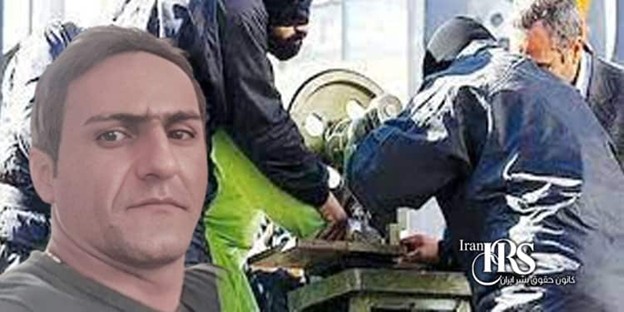
Iran’s regime executed hand amputation sentences for three prisoners in Urmia Prison, violating human rights. Learn about this cruel punishment and its impact.
Iran Human Rights Society, Thursday, July 31, 2025 – On July 31, 2025, Iran Human Rights Society reported a horrific act: the execution of hand amputation sentences for three prisoners in Urmia Central Prison. This shocking event highlights the ruling regime’s insistence on enforcing brutal, medieval punishments despite global outcry. Hadi Rostami, Mehdi Sharafian, and Mehdi Shahivand faced amputation of four fingers on their right hands, a punishment carried out on July 30, 2025. This article explores the details, context, and human rights violations tied to these hand amputation sentences, urging international action.
The regime’s leaders enforce hand amputation sentences to instill fear and suppress dissent. On July 30, 2025, authorities summoned Hadi Rostami, Mehdi Sharafian, and Mehdi Shahivand from their ward at 10 p.m. Handcuffed, shackled, and blindfolded, they endured the amputation via a mechanical guillotine device after receiving anesthetic injections. Paiman Khanzadeh, the prison warden, Saeid Nouri, the deputy prosecutor, and medical staff oversaw this act. Consequently, this inhumane punishment reflects the regime’s disregard for human dignity.
The sentences originated on November 19, 2019, from the Special Criminal Branch for Juveniles and Adolescents, charging the prisoners with theft. Branch 13 of the Supreme Court, led by Judge Ali Shoushtari, upheld the ruling in May 2020. Amnesty International condemned these hand amputation sentences as “cruel, irreversible, and contrary to human dignity,” calling for urgent global intervention.
Are These Prisoners Criminals or Victims?
Many prisoners facing hand amputation sentences suffer from Iran’s economic collapse, driven by the regime’s policies. Widespread poverty and unemployment push individuals toward minor crimes like theft. For example, Hadi Rostami, one of the sentenced prisoners, wrote a heartfelt letter from prison. He denied involvement in the alleged thefts, claiming authorities tortured him into signing confessions. Furthermore, Rostami explained his inability to pay billions of tomans to secure the complainants’ consent, a requirement to avoid punishment. He stated, “How can I obtain consent when my family and I live in poverty? They want to cut off my hand for something I didn’t do.”
This situation reveals a harsh truth: the regime punishes the poor while ignoring systemic issues. Therefore, these prisoners are often victims of predatory economic policies rather than hardened criminals.
The Real Thieves: Regime Leaders and Corruption

Ironically, while ordinary citizens face hand amputation sentences for minor thefts, regime leaders and their allies engage in massive embezzlement without consequences. Structural corruption and the looting of national resources fuel poverty, driving desperate acts like theft. For instance, billion-dollar scandals involving officials go unpunished, yet citizens like Rostami face brutal penalties. This double standard exposes the regime’s hypocrisy. Instead of addressing corruption, it targets the vulnerable, using hand amputation sentences to maintain control.
A Disturbing Trend in Urmia Prison
Urmia Prison has a troubling history of enforcing hand amputation sentences. In November 2024, authorities amputated the hands of two other prisoners, Mehrdad and Shahab Teymouri. After the procedure, officials transferred them to a hospital. Urmia’s prosecutor, Hossein Majidi, and warden Paiman Khanzadeh directly pressured the enforcement of these sentences. This pattern shows the judiciary’s defiance of domestic and international criticism. Rather than reforming, it intensifies these cruel punishments, ignoring calls for change.
International Community Must Act
The repetition of hand amputation sentences demands urgent action from human rights organizations and global leaders. The United Nations and European Union should impose sanctions on officials like Khanzadeh and Majidi, who oversee these violations. Additionally, severing legal ties with Iran’s judicial system could pressure the regime to halt such practices. Silence is no longer an option. The international community must stand with victims and condemn these atrocities.
Hand Amputation Sentences Violate Global Human Rights Laws
Hand amputation sentences in Urmia Prison breach several international human rights laws, emphasizing the need for accountability. These violations include:
- Universal Declaration of Human Rights (1948):
Article 5 prohibits torture and cruel, inhuman, or degrading treatment. Amputation, a painful and irreversible punishment, violates this principle. - Convention Against Torture (1984):
Article 1 defines torture as acts causing severe physical or mental suffering. Hand amputation sentences clearly fall under this definition. - International Covenant on Civil and Political Rights (1966):
Article 7 bans cruel and degrading punishments. Amputation contradicts this covenant’s commitment to human dignity. - Nelson Mandela Rules:
These UN standards require dignified treatment of prisoners. Amputation threatens physical and mental health, making it unethical and illegal.
These laws highlight the regime’s disregard for global standards. Hand amputation sentences are not only inhumane but also illegal under international frameworks.
A Call for Justice and Reform
The execution of hand amputation sentences in Urmia Prison exposes the regime’s brutal tactics and systemic failures. Poverty, corruption, and a lack of judicial fairness drive these punishments, targeting vulnerable citizens while sparing the elite. The international community must act swiftly to sanction those responsible and advocate for the victims.
Follow Iran Human Rights Society on social networks:
Telegram /Twitter /Instagram / YouTube / Facebook
Join Iran Human Rights Society on Twitter





Discussion about this post