
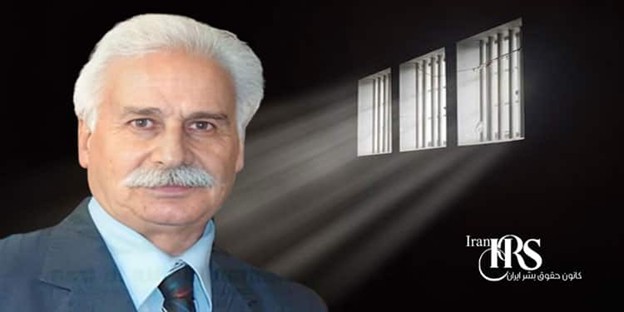
Mohammad Bannazadeh Amirkhizi, a 71-year-old former political prisoner, faces arrest and solitary confinement in Iran. Learn about this human rights violation.
Iran Human Rights Society, Friday, July 31, 2025 – On July 28, 2025, security forces arrested Mohammad Bannazadeh Amirkhizi, a 71-year-old former political prisoner, at his Tehran home. Without a judicial warrant, they transferred him to Qom’s Intelligence Agency detention center, where he remains in solitary confinement. This arrest signals Iran’s intensified crackdown post-ceasefire, aiming to suppress dissent and create public fear. Despite serious health issues, including prostate cancer and heart problems, authorities deny him medical care. This article examines the Mohammad Bannazadeh Amirkhizi arrest, its context, and the urgent need for international action to address these human rights violations.
A History of Persecution: Mohammad Bannazadeh Amirkhizi’s Struggles
Mohammad Bannazadeh Amirkhizi, born in 1954, endured arrests in 2009 and 2016 for supporting the People’s Mojahedin Organization of Iran (PMOI/MEK). He served nearly 10 years in Evin and Gohardasht prisons, released in 2021 under restrictive conditions, including exile. As a survivor of the 1980s massacres’ families, his re-arrest underscores the regime’s targeting of dissenters. Security forces provided no reason for his detention, nor allowed family contact. Consequently, this arbitrary arrest highlights the regime’s relentless pursuit of silencing voices, even those of elderly, ill individuals.
Health Crisis in Solitary Confinement
Mohammad Bannazadeh Amirkhizi suffers from prostate cancer, heart issues, and a torn meniscus. Solitary confinement in Qom’s detention center, with minimal medical facilities and summer heat, endangers his life. His family reports no updates on his condition or charges, and authorities deny phone contact. This treatment, known as “white torture,” inflicts severe psychological and physical harm. Furthermore, neglecting his medical needs violates international standards for prisoner treatment, raising alarms among human rights advocates.
Post-Ceasefire Crackdown: A Climate of Fear
The Mohammad Bannazadeh Amirkhizi arrest aligns with Iran’s post-ceasefire strategy to prevent public protests. The regime employs selective arrests, family threats, and cyberspace restrictions to foster fear. By targeting figures like Bannazadeh, connected to the 1980s crackdowns, authorities signal that dissent carries a high cost, even decades later. This approach aims to deter social and political activism, stifling potential movements before they emerge.
Violations of International Human Rights Laws
The arrest and detention conditions of Mohammad Bannazadeh Amirkhizi breach several international laws:
- Article 9, International Covenant on Civil and Political Rights: Arbitrary detention is prohibited. No warrant or reason justifies his arrest.
- Article 7, International Covenant: Torture and cruel treatment are banned. Solitary confinement under harsh conditions constitutes “white torture.”
- Article 10, International Covenant: Prisoners deserve humane treatment. Denying medical care violates this principle.
- Article 14, International Covenant: The right to a fair trial includes legal representation, which Bannazadeh lacks.
These violations highlight the regime’s disregard for global human rights standards, demanding urgent accountability.
Calls for Action from Family and Human Rights Groups
Mohammad Bannazadeh’s family demands transparent information, his immediate release, and accountability from security and judicial authorities. They express grave concern for his health, given his critical conditions. International organizations, such as Amnesty International and the United Nations, must pressure Iran to end these unlawful practices. Moreover, global sanctions on officials responsible for such arrests could push for reform and protect vulnerable prisoners.
A Broader Pattern of Repression
The Mohammad Bannazadeh Amirkhizi arrest reflects a broader policy of repression. The regime targets activists, former prisoners, and families of past victims to maintain control. By denying medical care, legal access, and communication, authorities weaponize detention as a tool of fear. However, this strategy only underscores the need for international intervention to challenge Iran’s human rights abuses.
Standing Against Injustice
The Mohammad Bannazadeh Amirkhizi arrest exposes Iran’s brutal tactics to silence dissent. His detention, without charges or medical care, violates human rights and international law. The global community must act swiftly to demand his release and hold the regime accountable. By standing with Bannazadeh and others, we can challenge this cycle of repression and advocate for justice.
Follow Iran Human Rights Society on social networks:
Telegram /Twitter /Instagram / YouTube / Facebook
Join Iran Human Rights Society on Twitter



Discussion about this post