
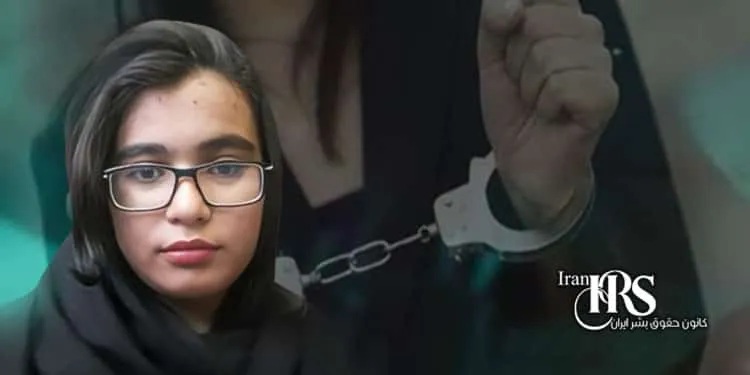
Arghavan Fallahi, who has been deprived of medical treatment and access to medication since her arrest, is currently facing serious physical dangers.
Iran Human Rights Society, Monday, June 30, 2025 – With the passage of several days since the transfer of political prisoner Arghavan Fallahi from Ward 209 of Evin Prison to an unknown location, there is still no precise information about her status. Informed sources have reported that she was secretly transferred from the IRGC intelligence ward and is being held in solitary confinement without informing her family or lawyer. In a brief phone call on 8 Tir 1404 (June 29, 2025), she informed her family that she is being held in solitary confinement but is unaware of her exact location; she speculated that she might be in Qarchak Prison in Varamin.
Serious Concerns About Health and Human Rights
Arghavan Fallahi, who has been deprived of medical treatment and access to medication since her arrest, is currently facing serious physical dangers. A source close to her family confirmed that she lives with a chronic illness, and the neglect of her physical condition by security authorities could have irreversible consequences. Under international law, particularly Article 25 of the Universal Declaration of Human Rights and the United Nations Standard Minimum Rules for the Treatment of Prisoners (Nelson Mandela Rules), depriving prisoners of medical care is considered a form of indirect torture and inhuman treatment.
Silence of Official Media and Denial of Information to the Family
Since Arghavan Fallahi’s arrest on 6 Bahman 1403 (January 26, 2025), no official information has been provided regarding her charges, judicial process, or place of detention by judicial or security institutions. During this time, the Fallahi family has faced various pressures and restrictions, and their efforts to obtain answers from judicial authorities have been fruitless. This process is part of a broader policy in which the confidentialization of the detention location of political prisoners is used as a tool for psychological pressure against families and civil society.
Social Media Reactions and Concerns About Arghavan’s Fate
Following the recent bombing of Evin Prison, the status of many prisoners, especially in Ward 209, remained unknown for some time. Arghavan Fallahi was one of the figures who received particular attention from users on the social media platform X (formerly Twitter). Hashtags bearing her name, in support of her basic rights and demanding transparency about her status, gained traction among Iranian users and human rights activists. However, the responsible authorities have shown no clear response to this public demand.
A Family in Chains; Imprisonment for Father and Daughter
One of the painful aspects of this case is the situation of Nasrollah Fallahi, Arghavan’s father, who is currently serving his sentence in Evin Prison. He, too, has no information about his daughter’s whereabouts. He was injured during the bombing of Evin Prison. The compounded suffering endured by this family reflects the structural pressure imposed by the ruling regime in Iran on the families of protesters and political prisoners. These conditions place not only the prisoners themselves but also their loved ones at risk of psychological, social, and even economic harm.
Family History of Political Arrests
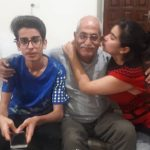
The arrest of Arghavan Fallahi is not unprecedented. The Fallahi family had previously been targeted by security apparatus in Aban 1401 (November 2022). At that time, Arghavan, her father Nasrollah, her brother Ardevan, and a family friend, Parvin Mirasan, were arrested in Shiraz and transferred to Tehran. They were tried in Branch 26 of the Revolutionary Court, presided over by Judge Iman Afshari, and faced heavy prison sentences. In this case, Nasrollah Fallahi was sentenced to four years, Arghavan to two years, Ardevan to one year, and Parvin Mirasan to four years in prison.
Violation of Fair Trial Principles; Continuation of a Concerning Trend
Arghavan Fallahi’s case is a clear example of the violation of fair trial and defendants’ rights in the judicial system of the ruling dictatorship. Lack of access to a lawyer, prolonged solitary confinement, uncertainty about the place of detention, and psychological and physical pressures are all contrary to Articles 9 and 14 of the International Covenant on Civil and Political Rights, which the leaders of this regime have also signed.
Conclusion: Let Us Not Silence the Voice of Prisoners
Arghavan Fallahi’s case is just one example of thousands of brave women and men who, in their pursuit of freedom, justice, and human dignity, have faced overt suppression. The lack of information about her place of detention, the silence of official media, and the inhumane treatment of her family are reminders of the repressive structure of the ruling dictatorship’s judicial and security apparatus.
Until her status is clarified and necessary guarantees are provided to preserve her health and life, the full responsibility for any harm that befalls her lies directly with the country’s security and judicial institutions.
Ongoing Human Rights Violations and Systematic Disregard for International Standards
Arbitrary detention, prolonged solitary confinement, lack of access to a lawyer, the family’s ignorance of her place of detention, and deprivation of medical care are among the clear instances of human rights violations in Arghavan Fallahi’s case.
Violated Human Rights Provisions in Arghavan Fallahi’s Case:
– Article 9 of the Universal Declaration of Human Rights:
Arbitrary detention and holding in an unknown location violate the right to personal freedom and security.
– Article 5 of the Universal Declaration of Human Rights:
Prolonged solitary confinement and deprivation of medical care constitute inhuman and degrading treatment.
– Article 10 of the Universal Declaration of Human Rights:
Lack of access to a lawyer and deprivation of a public and fair trial violate the right to a fair trial.
– Article 25 of the Universal Declaration of Human Rights:
Deprivation of medication and medical care violates the right to an adequate standard of living for health and well-being.
– Article 7 of the International Covenant on Civil and Political Rights (ICCPR):
The prohibition of torture and inhuman treatment is violated by solitary confinement and severance of contact with the outside world.
Follow Iran Human Rights Society on social networks:
Telegram /Twitter /Instagram / YouTube / Facebook
Join Iran Human Rights Society on Twitter





Discussion about this post