
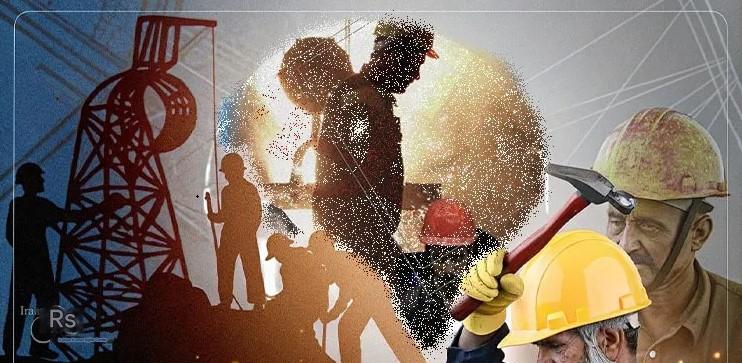
Honoring International Workers’ Day and All Working People (May 1st)
We commemorate International Workers’ Day (May 1st) in Iran under dire circumstances for the working class.
- Introduction
- History of the Naming
- Observance of International Workers’ Day in Iran
- An Overview of Workers’ Conditions in Iran and the World
- A Look at the Livelihood of Iranian Workers Compared to Other Countries
- Child Labor
- The Unemployment Crisis in Iran
- The Status of Female Workers in Iran
- Labor Protests in Iran
- Conclusion
May 1st – Honoring International Workers’ Day
- Introduction
We commemorate International Workers’ Day in Iran under dire circumstances for the working class. Most workers live far below the subsistence line, earning meager wages, with minimal purchasing power and no job security.
Constant threats of dismissal, months—even years—of unpaid wages, and increasing poverty have made life unbearable. These pressures force many workers to live in daily shame and distress, unable to provide for their families with dignity.
This is the reality of more than 20 million Iranian workers, living in one of the richest countries in the world, yet enduring some of the worst labor conditions globally. Politically and socially, workers in Iran face ongoing suppression; any form of protest or strike often met with imprisonment, torture, and dismissal.
- History of the Naming
Following the Industrial Revolution in the late 18th and early 19th centuries, a major shift occurred from feudal to capitalist systems. A large portion of the labor force moved from agriculture to industrial factories, giving rise to the modern working class in Europe and North America. Unlike peasants who bound to land and landlords, workers under capitalism had to sell their labor to the “new lords”—factory owners—in order to survive.
To maximize profit, capitalists exploited workers with low wages and grueling hours. As industry expanded and demand for labor grew, workers began organizing unions to push back. Their central demand was reducing the workday from 12 to 8 hours without loss of pay. This demand faced severe resistance from factory owners and supportive governments.
On May 1, 1886, American workers launched a nationwide strike and protest, with its epicenter in Chicago. Over 90,000 workers took part. On May 4, a bomb exploded during a demonstration, leading to a brutal police crackdown. Eight labor leaders arrested, and four executed. Though their movement violently suppressed, it sowed the seeds of global solidarity.
By May 1, 1890, another large-scale labor demonstration held at the call of U.S. labor unions, sparking annual international observances of the day. From the 20th century onward, May Day recognized in many countries as a day to advocate for workers’ rights and justice.
- International Workers’ Day in Iran
In Iran, the first known celebration of International Workers’ Day occurred in 1921 during the Constitutional era. These commemorations lasted for a decade until Reza Shah Pahlavi, hostile toward labor movements, banned such events.
In later years, with brief political openings, labor unions and workers’ syndicates resumed their efforts to honor the day annually.
Following the 1953 coup against Prime Minister Mohammad Mossadegh and the imposition of one-party rule, observances were again suppressed. However, after the 1979 anti-monarchical revolution—where workers played a key role in toppling the Shah—May Day was marked by massive demonstrations and celebrations, especially in Tehran, reflecting a short-lived era of political openness.
Khomeini, in an attempt to undermine labor movements and workers’ demands, famously said, “Even an ant is a worker!” Since the 1980s, workers in Iran have been denied the right to hold independent May Day events, with only state-run, regime-controlled ceremonies permitted.
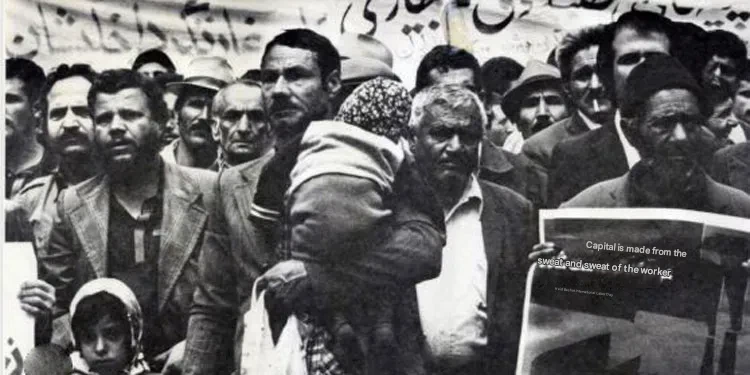
To this day, no independent labor unions or organizations officially allowed to operate, and government-affiliated bodies merely serve to enforce the regime’s anti-worker policies and suppress labor activists.
- A Look at the Situation of Workers in Iran and the World
In the latest report by the International Trade Union Confederation (ITUC), which annually publishes a comprehensive report on the condition of workers worldwide and identifies the worst countries for workers, it states:
“The situation of workers around the world is deteriorating, and over the nine-year period used for comparison in this report, the worsening of conditions across most indicators—with the rise of authoritarian governments and the weakening of civil and labor institutions in many countries—shows a shocking increase, unprecedented since World War II.”
The report shows: “Between 66% and 87% of countries, on average, deny workers the right to strike, the right to collective bargaining, the right to form or join unions, the right to engage in union activities, and access to legal justice. In 69 countries, workers’ civil liberties restricted, and labor activists face the risk of arrest; in 50 countries, they subjected to beatings.”
The anti-labor government in Iran does not recognize international workers’ rights.
Certainly, one of these countries that recognizes no legal rights for workers is the dictatorial regime ruling Iran.Which, in addition to imposing the lowest wages, subjects Iranian workers to systematic repression and extreme political restrictions.
In this report, Iran is classified in Category 5 with a red status, meaning among the worst countries, with only a few countries experiencing civil war and chaos ranked worse marked in darker red.
Category 5 divided into two subgroups:
Normal Category 5: Countries in normal conditions where workers are not guaranteed their rights.
Category 5+: Countries experiencing political and legal breakdown (e.g., due to internal conflicts) where workers not guaranteed their rights.
Violations of workers’ rights in the world’s worst countries, including Iran, listed as follows:
Criminalization of the right to strike, leading to prosecution, arrest, and sometimes dismissal, with numerous examples in Iran.
Erosion of collective contracts and serious restrictions on collective bargaining.
Deprivation of the right to legal protections.
Restricted access to justice.
Ban or severe limitations on forming unions and labor organizations.
Attacks on freedom of expression and assembly, even in virtual spaces.
Arbitrary arrests, detentions, and imprisonment.
Iran listed among the countries where arbitrary arrest, detention, and imprisonment of labor activists occur. The report states: “Currently, 44 leaders and members of the Coordinating Council of Iranian Teachers’ Unions (CCITTA) arbitrarily detained for their union activities.”
Violent attacks on workers’ protest gatherings and strikes, with many incidents reported in recent years in places like Haft Tappeh, Arak, Isfahan, and others.
- Workers’ Living Conditions in Iran Compared to Other Countries
In most developed countries, the minimum wage is determined in accordance with living expenses and inflation. In Iran, the official minimum wage is far below the poverty line and fails to meet even the most basic human needs such as food, housing, and healthcare. Inflation, currency devaluation, and lack of government support have made survival increasingly difficult for workers. In some countries, workers can save and even travel; in Iran, they struggle daily to make ends meet.
Globally, labor conditions vary greatly, but in many countries, laws and unions protect workers’ rights. In contrast, Iranian workers face low wages, unsafe work environments, lack of job security, and limited legal protections. While in many nations, workers enjoy insurance, pension plans, unemployment benefits, and the right to unionize, Iranian workers systematically deprived of these basic rights.
A. Wages
In Western Europe (France, UK, Germany, Scandinavian countries), the US, and Canada, workers earn about $13 to $15 per hour.Iranian workers’ wages rank 160th in the world, nearly at the bottom, with a 1 to 100 wage gap compared to top-ranking countries. While Swiss workers earn over $6,000 per month, Iranian workers earn between $70 and $80 per month.
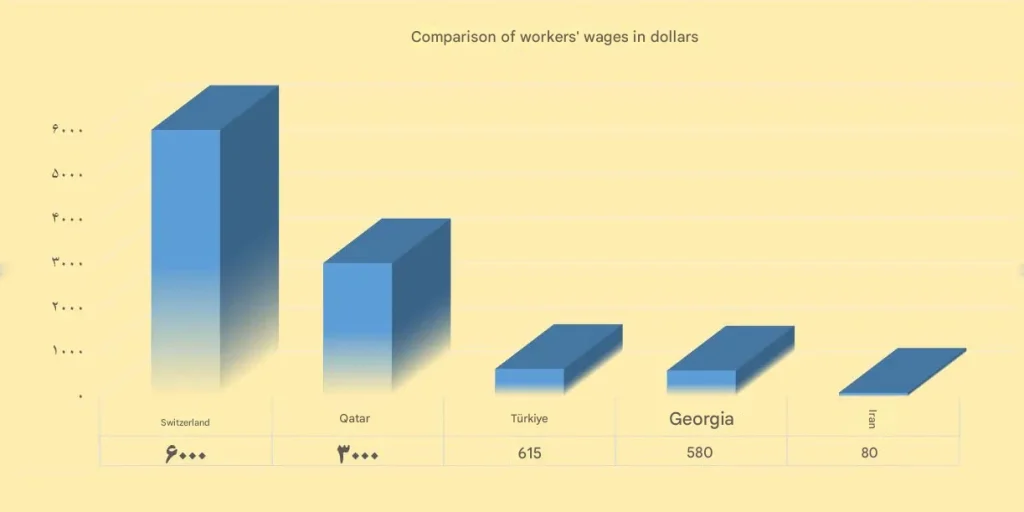
In Arab countries such as Qatar, workers receive more than $3,000 per month in wages.
In other neighboring countries of Iran, such as Turkey and Georgia, the situation is also significantly better than in Iran. This is because the minimum wage for workers in Turkey is $615 per month. And for workers in Georgia it is $580 per month.
It is one of the ironies of our time that a wealthy country like Iran, after 45 years of the rule of the Supreme Leader, has fallen to the bottom of the table in terms of social welfare, reaching a status comparable to aid-dependent African countries.
It is worth noting that even the meager wages of $60 to $70 per month are often delayed, and workers have to protest and gather to receive their rightful pay. Meanwhile, in countries like Germany, Canada, and the United States, wages and salaries are paid regularly every fifteen days.
Due to the chronic unemployment prevailing in Iran’s labor market, many contract and informal workers, just to have a job at all, are forced to work for the lowest wages and under harsh conditions reminiscent of slavery, while being deprived of retirement benefits, insurance, and other legal rights.
B. Laws
Labor laws in Iran, compared to other countries—especially developed countries— considered anti-labor laws.
In 1944, because of persistent struggles by independent labor unions in Iran. The government approved a labor law bill and sent it to parliament.
However, the parliament only began reviewing it two years later, and in 1946 finally passed it. But the Anglo-Iranian Oil Company refused to accept this law, leading to strikes among oil industry workers and widespread clashes between workers and the police, causing the law’s implementation to be suspended.
Then in 1958 (1337) the government approved a new law, sent it to parliament, and on March 17, 1959 (26 Esfand 1337) parliament passed it, replacing the previous law.
After the 1979 Revolution, amending labor law became one of the main demands of labor groups who had played a significant role in the revolution’s victory. From 1979 to 1990 (1358 to 1369), in practice, there was no labor law in Iran.
In the third parliament, a new labor law was passed, but the Guardian Council rejected it. Finally, in November 1990 (Aban 1369), the Expediency Council completed the review of the labor law, and after 12 years, the official labor law was established, which banned any sit-ins, strikes, demonstrations, and prohibited the existence of independent labor unions.
Some of the most important changes, mostly in favor of employers and those in power, listed below:
The law prohibiting any labor protests, passed in 1993 (1372).
In recent years, the first workshops with fewer than 5 workers, and later those with fewer than 10 workers completely excluded from the scope of labor law. With this amendment, hundreds of thousands of workers across the country lost access to health insurance and retirement benefits.
One of the shortcomings of the current labor law is that private employers can sign one-month contracts and extend them month by month, thereby depriving workers of benefits stipulated in the labor law, and whenever the employer chooses not to renew the contract, the worker is dismissed and becomes unemployed. This is happening constantly across the country, with workers receiving no government protection.
C. Other Benefits
Compared to workers in industrialized countries such as the United States, the United Kingdom, France, Japan, and Canada. Iranian workers deprived of many benefits or receive only a minimal share. These include job security, insurance, pensions, healthcare, family allowances, paid leave. And also, more, each of which would require a separate discussion beyond the scope of this article.
- Child Labor
One of the most heartbreaking consequences of poverty and lack of social support is the rise of child labor. In Iran, thousands of children—sometimes as young as five or six— forced to work in garbage collection, street vending, or workshops under harsh and exploitative conditions. These children are denied education, safety, and a normal childhood, and are often vulnerable to abuse and trafficking.
Child Labor
Child labor refers to children who, instead of enjoying education, play, and the company of their families, sent from a young age to work in factories, on the streets, or in garbage dumps. This is another human tragedy that we are extensively witnessing in Iran as well.
Originally, the term child labor referred to employing children in factories. However, today this term generally applies to any work performed by children, especially work that deprives them of education or harms their health. Since these children are unable to defend their rights like adults—and no one defends them—they often subjected to exploitation and abuse by employers.
Poverty is the phenomenon of child labor in Iran
The main source of the emergence of the phenomenon of child labor in Iran is poverty, unemployment. And also increasing exploitation resulting from the plundering of the people’s wealth by a handful of those in power.
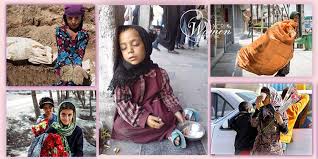
The solution to eradicating this devastating phenomenon must be sought in the realm of politics. For example, in Iran—undoubtedly one of the richest countries in the world. More than 60 percent of its population lives under absolute poverty, and there are over one million child laborers. These are children who, with their frail bodies, through exhausting labor and meager income, help cover the bare survival costs of their families.
In their childhood world, there is no play, joy, entertainment, education, or sitting at a school desk. Instead, they struggle and strive to earn a few coins to bring home at the end of the day.
In Iran, according to official statistics, 380,000 children aged 10 to 14 have permanent jobs across the country. And about 370,000 children of the same age work as seasonal laborers. This means that officially, more than 700,000 child laborers are working in Iran. However, these statistics published by government centers undoubtedly differ significantly from reality. And at the very least, the actual figure should be considered 2 to 3 times the reported number.
Every year in Iran, a percentage of children drop out of school
Every year in Iran, a percentage of children drop out of school for various reasons. And turn to jobs such as shoe shining, cleaning car windows, selling fortune-telling cards, balloons, gum, collecting stale bread. And scrap metal from garbage, or selling prayers at intersections, markets, or crowded and busy places. Spending long hours exposed to social hazards.
Overall, child labor in the long term can cause irreversible physical and psychological harm to them. Children involved in such activities, due to long working hours and exposure to physical, social, and psychological stress, deprived of using the inherent potential of their childhood.
- The Problem of Unemployment in Iran
Unemployment is a critical issue in Iran. Official statistics may understate the reality, as many underemployed or in informal work with no rights or contracts. Economic mismanagement, international sanctions, and systemic corruption have severely impacted job creation. Many university graduates left without jobs in their fields, and older workers face job insecurity with no safety net.
Unemployment Rate in Iran
A vast majority of workers in Iran are unable to secure employment or even earn meager wages that employed workers receive. The government and employers exploit this fear and anxiety as the most effective tool to suppress labor protests and keep workers subdued.
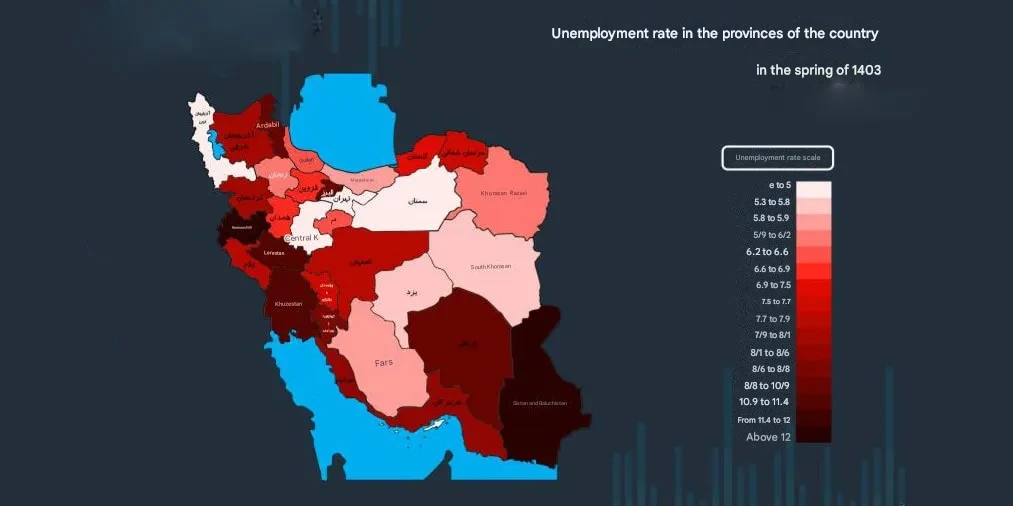
The meaning and concept of unemployment is the same worldwide: it refers to individuals who are ready to enter the labor market but are not hired. However, measuring the number of unemployed individuals at any given moment in any country is a complex, challenging, and varied process.
The ruling system in Iran has always taken advantage of this complexity and ambiguity to present statistics that show Iran’s unemployment rate at its lowest possible level. Official figures claim Iran’s unemployment rate is around 10 percent globally—roughly two million people eligible for work. Yet, according to statements by economic experts affiliated with the regime, the actual unemployment rate in Iran is about 45 percent, meaning over 20 million people unemployed.
One regime-affiliated expert explains this discrepancy: “The Statistical Center of Iran reports the population aged 15 and above at about 65 million people. Of this number, 27 million are classified as active and over 38 million as inactive. In this calculation, 30 percent of the population—equivalent to 20 million people—are excluded from employment statistics.” He adds: “If these individuals added to the count of unemployed, the number of unemployed would exceed 22 million people, raising the unemployment rate to 45 percent.”
With these statistics, Iran ranks at the top among countries with the highest unemployment rates.
This government expert further notes: “Many individuals, due to a lack of hope for economic improvement and the creation of stable jobs, turn to unstable, informal jobs that have no insurance coverage or legal protections.”
Thus, unemployment and the lack of jobs and income is another major problem for the people of Iran. And alongside high prices and inflation, causing immense suffering for workers and Iranian families.
The Status of Female Workers in Iran
Female workers in Iran endure conditions far worse than those faced by male workers. Women are the first victims of workforce downsizing, unequal wages, and gender discrimination.
In Iran, women workers are in much harsher conditions compared to men. Iranian women workers considered the cheapest labor force in the country.
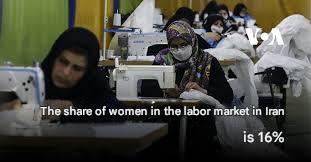
In addition to holding low-paying, labor-intensive jobs with long and often illegal working hours. And receiving lower wages than men for equal work—female workers are also the first to be laid off.
Official statistics indicate that women workers make up about 10 to 15 percent of the total workforce. However, since most work in the informal sector, they are often absent from official statistics and overlooked.
The greatest blows women workers have suffered under the rule of the Supreme Leader have been their forced confinement to the home and unemployment.
The dominance of male-oriented employment in Iran has severely restricted job opportunities for women, such that fewer than one-fifth of Iran’s workforce are women. Considering the active female population for employment is estimated at 32 million, the employment rate of women in Iran is under 10 percent. This means that for every 100 Iranian women willing to join the labor market, only 10 find jobs while the remaining 90 remain unemployed. Globally, the average female employment rate is 49 percent; thus, apart from Afghanistan and Iraq, Iranian women have the lowest employment rate in the world.
The average insured wage for men higher than for women
Women face double oppression in the Iranian labor market. Despite high education rates among women, their participation in the workforce remains low. Those who are employed often endure wage inequality, gender discrimination, harassment, and a lack of maternity protection. In factories, agriculture, and domestic labor, women are often underpaid and overworked with minimal rights.
- Labor Protests in Iran
Due to harsh economic conditions and violations of labor rights, Iran witnessed a surge in labor protests in recent years. Teachers, retirees, factory workers, and contract employees regularly protest unpaid wages, job insecurity, and unfair working conditions. The regime, however, responds with repression—arrests, beatings, and sometimes long prison sentences. Independent labor unions banned, and organizing often criminalized.
In 2024 (1403 in the Iranian calendar), widespread protests carried out by permanent, temporary, contract, project-based, unemployed, private, and public sector workers and employees. The majority of these protests stemmed from demands for unpaid wages, skyrocketing inflation, low wages. And also salaries, wage arrears, and, in short, the struggle of living below the poverty line.
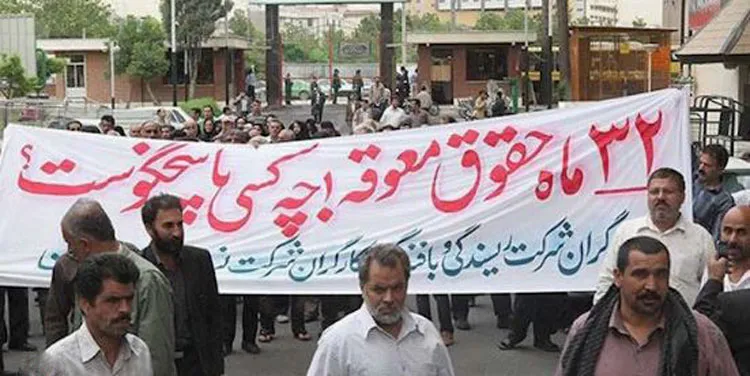
According to recorded statistics, there were 2,400 labor protests and 170 labor strikes over the past year.
These protests took place across 30 provinces and at least 80 cities throughout the country.
In response, the government and employers met all these protests with suppression, firings, arrests, and imprisonment.
- Conclusion. Final Words
International Workers’ Day is a time to recognize the value of labor and demand justice, dignity, rights for all workers. In Iran, this day is a reminder of both the suffering and the resilience of millions of workers. While they continue to be oppressed and silent, their struggle for fairness and dignity persists. The international community must stand in solidarity with Iranian workers and amplify their voices. No society can claim justice while its workers are hungry, silenced, and crushed under the weight of oppression.
In conclusion, workers in Iran endure the worst and harshest conditions in terms of employment, livelihood. And access to even the most basic internationally recognized rights for workers. They are deprived of the right to protest, strike, and to form or join labor unions and syndicates. Iranian workers and laborers oppressed, harassed, and imprisoned by regime forces.
The struggles of workers, farmers, and other laborers in Iran—like all the suffering of the Iranian people—rooted in the oppressive rulers who have seized Iran’s wealth and plunder it for their own sinister purposes. Naturally, meeting the demands of the Iranian people, including those of the workers, requires a change in the ruling political system.
Follow Iran Human Rights society on social networks:
Telegram /Twitter /Instagram / YouTube / Facebook
Join Iran Human Rights Society on Twitter






Discussion about this post