
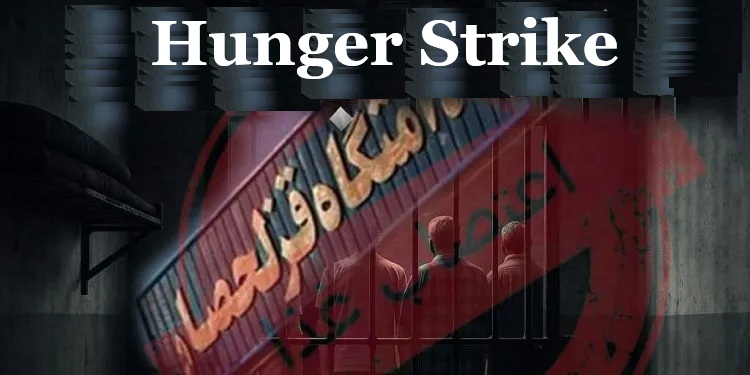
On the fifth day of a collective hunger strike, political prisoners in Qezel Hesar, despite being held in solitary confinement and deprived of basic human rights, continue to stand firm against executions, repression, and systematic violence.
Iran Human Rights Society, July 30, 2025 –Since July 26, 2025, dozens of political prisoners in Qezel Hesar Prison have sustained a hunger strike. This action responds to a violent raid on Unit 4, where authorities beat and transferred inmates to solitary confinement. The strike also protests the executions of Mehdi Hassani and Behrouz Ehsani on July 27, 2025. These prisoners, part of the “No to Execution Tuesdays” campaign, faced death without fair trials. Saeed Masouri, a key figure, was exiled to Zahedan Prison, a facility notorious for its harsh conditions.The prisoners’ health deteriorates alarmingly. Reports indicate severe physical strain, yet authorities ignore their plight. The regime’s silence aims to suppress news of the strike, but the prisoners’ defiance grows stronger, amplifying their call for justice.
Violent Raid Targets Political Prisoners
On July 26, 2025, over 100 armed guards, IRGC intelligence, and security personnel stormed Unit 4 of Qezel Hesar Prison. They handcuffed prisoners, placed black bags over their heads, and dragged them to solitary cells in Unit 3. The raid targeted activists like Saeed Masouri, aiming to crush the “No to Execution Tuesdays” campaign. This brutal crackdown reflects the regime’s intent to silence dissent amid growing opposition to executions nationwide.
Prisoners resisted fiercely, chanting slogans and barricading wards. Their courage forced a temporary retreat, but the regime persists with repression. The raid’s violence and Masouri’s exile to Zahedan Prison signal a deliberate strategy to break political resistance.
“No to Execution Tuesdays”: A Nationwide Movement
The hunger strike aligns with the “No to Execution Tuesdays” campaign, now in its 79th week. Active in 48 prisons across Iran, this movement unites prisoners against judicial violence.
Executions of Mehdi Hassani and Behrouz Ehsani

On July 27, 2025, authorities executed Mehdi Hassani and Behrouz Ehsani without notifying their families. Charged with membership in the People’s Mojahedin Organization of Iran, they faced a sham trial under Judge Iman Afshari. The Supreme Court upheld their death sentences on January 7, 2025, without a retrial. The regime buried their bodies in secret, denying families closure.
This act of cruelty mirrors past injustices, like the 1988 massacre. Families sought retrials and updates, but authorities stonewalled them. The executions highlight the regime’s disregard for fair judicial processes, intensifying calls for international accountability.
Human Rights Violations in Qezel Hesar Prison
The regime’s actions in Qezel Hesar Prison violate international human rights standards. Key breaches include:
- Article 5, Universal Declaration of Human Rights: Torture and inhumane treatment, such as black bags over heads and solitary confinement, defy this principle.
- Article 10, Universal Declaration of Human Rights: Executions without fair trials violate the right to due process.
- Article 14, ICCPR: Denying access to lawyers and trial information breaches this covenant.
- Prohibition of Collective Punishment: Beating and exiling prisoners for their activism constitutes illegal collective punishment.
These violations demand urgent global scrutiny. Qezel Hesar’s conditions—overcrowding, poor sanitation, and torture—exacerbate the crisis.
Prisoners’ Resilience Amid Brutality
Despite solitary confinement and physical strain, Qezel Hesar’s prisoners remain steadfast. Their hunger strike symbolizes resistance against a regime that uses executions to instill fear. The prisoners’ silence speaks louder than words, echoing their demand to end executions and torture.
Qezel Hesar: A Symbol of Resistance
Qezel Hesar Prison embodies the struggle for human rights in Iran. The prisoners’ hunger strike, now on its fifth day, defies brutal repression. Their courage in solitary confinement inspires hope, resonating across Iran and beyond. The “No to Execution Tuesdays” campaign has become a beacon of resistance, challenging the regime’s authority.
The world must listen. Qezel Hesar’s prisoners face death, torture, and exile, yet they persist. Their fight demands urgent action to stop executions and uphold human rights. Let their silent cry ignite global solidarity before more lives are lost.
Follow Iran Human Rights Society on social networks:
Telegram /Twitter /Instagram / YouTube / Facebook
Join Iran Human Rights Society on Twitter








Discussion about this post