

The rushed trial and failure to observe due process recall that senior judicial and security officials had explicitly stated that there would be “no mercy” in dealing with protesters and those arrested during the nationwide protests.
Iran Human Rights Society, Wednesday, January 28, 2026 – In continuation of judicial proceedings related to the recent nationwide protests in Iran, the Judiciary’s media center reported the holding of a court session for several of those arrested in these protests in Malard County. The trial, held on charges of murdering a law enforcement officer, has been accompanied by legal ambiguities and widespread criticism from the outset. This session took place amid prior promises by judicial authorities of “harsh and merciless action” against protesters and detainees—promises whose heavy shadow is now evident in the proceedings of this case.
Heavy charges in an ambiguous case
According to the official published report, the first defendant in this case is introduced as Mohammad Abbasi, accused of involvement in the death of a law enforcement officer named Shahin Dehghani during the recent protests in Malard. During the hearing, the judge added new charges, escalating the accusations, claiming that the first defendant is charged with “direct perpetration of murder,” “creating fear and terror,” and even “cooperation with Israel, the United States government, and hostile groups”—charges raised without providing documented and transparent details.
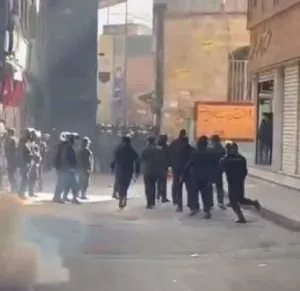
In this session, two of the arrested protesters were tried, but no information has been released about the identities of the other defendants in the case, the manner of their arrests, or the details of the roles attributed to each. This has heightened concerns about the transparency and impartiality of the judicial process.
A rushed trial and concerns over judicial errors
Legal observers emphasize that holding this court session quickly and intensively—in a security-laden and tense atmosphere following the nationwide protests—increases the likelihood of serious judicial mistakes. According to jurists, in cases involving heavy charges and severe punishments, full adherence to fair trial principles, thorough examination of evidence, and safeguarding defendants’ rights are of double importance—something clearly lacking evident signs of in this case.
At the end of the first hearing, the judge announced that the date of the next session would be announced later but did not specify whether the defendants would be given sufficient opportunity to examine the evidence, mount an effective defense, and respond to the new charges.
Absence of chosen counsel and ineffective defense
One of the most prominent and concerning aspects of this trial is the absence of chosen counsel for the defendants. The lawyer present at the session was appointed by the judicial system, not selected by the defendants themselves. According to reports, this lawyer did not provide an effective defense for his clients, and no reasoned or convincing response was given to the heavy charges raised during the session.
This issue once again highlights the deprivation of those arrested in the nationwide protests of the right to access independent and chosen counsel—a fundamental right recognized in domestic laws and international human rights instruments.
Fair trial under question
The holding of this trial is a clear example of widespread concerns about human rights violations in the processing of cases related to the nationwide protests. Rushed trials, sudden escalation of charges, absence of chosen counsel, lack of transparency regarding evidence and other defendants, and the display of images of the killed officer’s body in the courtroom are all signs of a process far removed from fair trial standards. In such circumstances, the risk of issuing unfair verdicts based on political and security pressures increases—especially since the defendants are being tried in an environment where judicial officials have previously spoken of “harsh action” and “decisive confrontation.”
The shadow of official threats over the judicial process
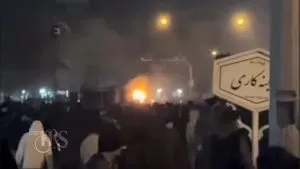
Previously, senior judicial and security officials had explicitly stated that there would be “no mercy” in dealing with protesters and those arrested during the nationwide protests. Critics now argue that these official positions can affect the independence of judges and the impartiality of courts, paving the way for heavy and rushed verdicts.
While any murder case requires precise, independent, and apolitical examination, the current process of this trial raises serious questions about adherence to legal and humanitarian principles. Human rights organizations have repeatedly stressed that trials of protesters must fully respect defense rights, free access to counsel, and complete transparency—standards whose fulfillment in this case remains in doubt.
Human rights violations in Iran’s nationwide protests
Following the nationwide protests in Iran, reports indicate widespread arrests of protesters, imposition of heavy security charges, rushed trials, and deprivation of defendants of basic fair trial rights—a trend that has raised serious human rights concerns both domestically and internationally.
- Article 9 of the Universal Declaration of Human Rights – Prohibition of arbitrary detention
The detention of protesters during the nationwide protests, without clear documentation and precise information about charges, constitutes arbitrary detention and a violation of the right to individual liberty.
- Article 10 of the Universal Declaration of Human Rights – Right to fair trial
Holding rushed trials, sudden escalation of charge titles during hearings, and lack of transparency in the proceedings seriously undermine the principle of fair and impartial trial.
- Article 11 of the Universal Declaration of Human Rights – Presumption of innocence
Attributing heavy security and political charges to defendants before a final verdict and displaying images in the courtroom setting constitute a violation of the presumption of innocence and prejudgment against defendants.
- Article 14 of the International Covenant on Civil and Political Rights – Right to chosen counsel
Depriving defendants of having their own selected lawyer and imposing a lawyer approved by the judicial system is a clear violation of the right to effective defense and one of the fundamental pillars of a fair trial.
- Article 19 of the Universal Declaration of Human Rights – Freedom of expression
Prosecuting citizens for participating in nationwide protests and expressing political discontent represents a serious restriction on freedom of expression and the right to protest.
- Article 20 of the Universal Declaration of Human Rights – Freedom of peaceful assembly
Security handling of protest gatherings and converting civil protests into heavy judicial cases directly violates citizens’ right to peaceful assembly.
See also the below articles:
- The 105th week of the “Tuesdays No to Execution” campaign in 56 prisons
- Abolfazl Jamshidi Critical Condition in Dastgerd Prison Amid Nationwide Protests Crackdown
Follow Iran Human Rights Society on social networks:
Telegram /Twitter /Instagram / YouTube / Facebook
Join Iran Human Rights Society on Twitter

Discussion about this post