
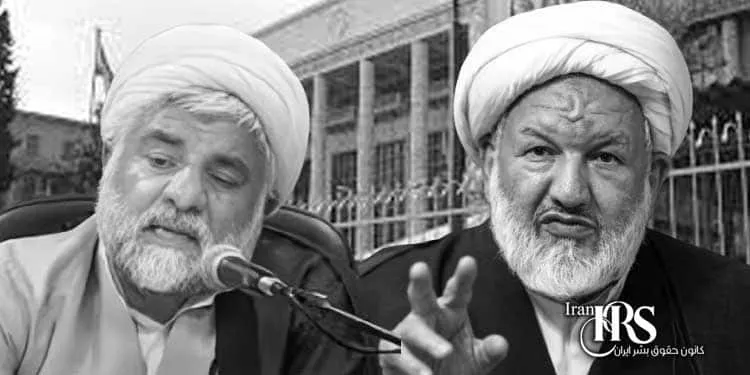
Ali Razini and Mohammad Moghiseh, who involved in issuing numerous death sentences for the youth of the country and widespread human rights violations, killed.
The “Death Judges” and Members of the Death Committee in the 1988 Massacre January 18, 2025. Human Rights the Death of Razini and Moghiseh, Two Human Rights Violators in Tehran
The Iran Human Rights Society reported on Saturday, January 18, 2025, that the two judiciary judges, Ali Razini and Mohammad Moghiseh, who involved in issuing numerous death sentences for the youth of the country and widespread human rights violations, have been killed. In this incident, another judge named Miri injured. The assailant committed suicide after the attack.
This incident occurred on the morning of Saturday, January 18, 2025, in front of the Justice Palace.Ali Razini, a member of the Death Committee in the 1988 massacre, and Mohammad Moghiseh, the “Death Judge” in Tehran, were killed by a man in front of the Justice Palace.
Ali Razini – 40 Years of Crime in the Dark Reign of the Regime
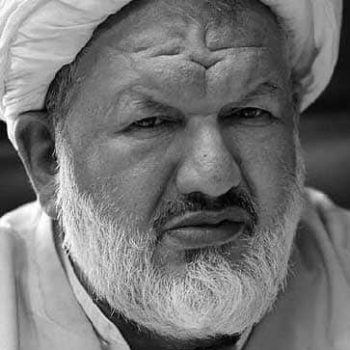
Ali Razini, a disciple of Khalkhali and a close associate of Lajevardi and Ghalibaf, was born in 1953 in Razan, Hamedan. He is currently the head of Branch 41 of the Supreme Court. Razini, who joined the newly established regime under Khomeini at the age of 26, quickly rose through the ranks of the judiciary.
From September 1981, for five months, he served as the Sharia judge in Mashhad, issuing death sentences for political prisoners. According to testimonies from close relatives of three executed girls in Vakilabad Prison in Mashhad, Sima Matlabi, Mandana, and Mitra Majaverian, they sentenced to death in brief trials without legal representation.
A prison guard visited the families a few days after the executions, offering flowers and sweets, announcing that the girls had been married to Pasdaran brothers before execution. Sima Matlabi had written on her leg that she was raped.
In an interview with Tasnim News Agency, Razini mentioned Sadegh Khalkhali as his role model and praised Lajevardi as a great servant of the regime. He proudly recounted his actions in Bojnord in 1981, where he swiftly issued death sentences for 43 members of the Erani group.
Razini’s image seen in a video of the stoning of three men, where he is the first to throw a stone. He described Lajevardi, the executioner of political prisoners, as a great servant of the regime.
Previous Positions Held by Razini:
Judge of the Revolutionary Court of Tehran (1979-1980)
Judge of the Revolutionary Court of Bojnord (1981)
Head of the Revolutionary Court of Mashhad (1981-1983)
Tehran Revolutionary Prosecutor (1983)
Head of the Political-Ideological Organization of the IRGC (1986)
Head of the Armed Forces Judicial Organization (1986-1992)
Sharia Judge of the Special Clerical Court (1987-2011)
Head of the War Crimes Court (1988)
Dean of the Faculty of Judicial Sciences (1993-1994)
Head of Tehran’s Judiciary (1994-1999)
Executive Deputy of the Supreme Court (1999-2004)
Head of the Administrative Justice Court (2004-2009)
Representative of Hamedan in the Fourth Assembly of Experts (2006-2016)
Deputy Legal and Judicial of the Judiciary (2009-2014)
Besides his judicial roles, Razini involved in educational institutions, holding positions such as:
Member of the Supreme Leader’s Representatives Council in Universities (appointed by Khamenei)
Member of the Board of Trustees of the Islamic Sciences Center for Women (Jamiat al-Zahra)
Founding Member of the Faculty of Islamic Studies affiliated with Jamiat al-Zahra
Member of the Faculty of Islamic Azad University, Tehran
Founding Member of Payame Noor University, Razan, Hamedan
One of the goals of such individuals’ dominance over educational centers was to eliminate, purge. And exile opponents of the regime while appointing loyalists to the Supreme Leader in universities.
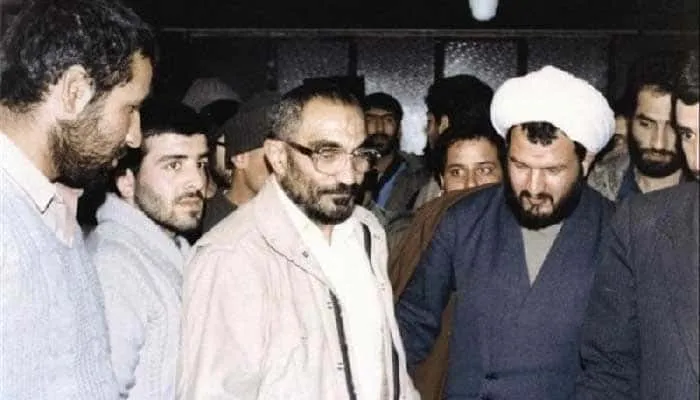
Mohammad Moghiseh – A Judge of All Eras of the Regime
Mohammad Moghiseh, also known as Naseri, was one of the influential judges in the judiciary. Whose name tied to extensive human rights violations, suppression of political opponents, and unjust sentencing. He played a direct role in suppressing protesters, issuing heavy sentences, and participating in mass executions during the 1980s, making him one of the judiciary’s controversial and feared figures.
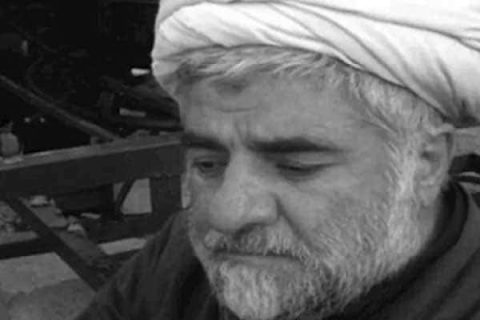
Moghiseh, known as Naseri, served as the head of a branch and judge in the Supreme Court. He was one of the “Death Judges” in 1988, responsible for the mass execution of prisoners in Evin and Gohardasht prisons. Afterward, he continued to issue death sentences and other harsh rulings in Revolutionary Courts.
In 2020, he transferred to the Supreme Court, where he continued his duties. Moghiseh (Naseri) listed as a terrorist by the European Union and the U.S. Treasury.
Moghiseh’s Role in the 1980s Executions In the 1980s
Moghiseh served as the deputy warden of Evin Prison and played a key role in the mass executions of that era, primarily targeting political prisoners, often sentenced without fair trials and based on vague charges. He was a member of the Death Committee, established by Khomeini to expedite the execution of political prisoners.
Ali Razini and the Planned Massacre of Opponents in 1988
In August 1988, Khomeini issued a directive to Razini, instructing him to form a special war crimes court and deal with offenses without adhering to restrictive regulations.
The text of Khomeini’s decree to Razini is as follows:
“1- Form a special war crimes court in all war zones and handle the offenders’ crimes according to Sharia law without adhering to any of the cumbersome regulations.
2- Any action that, in the court’s judgment, leads to the defeat of the Islamic front or causes bodily harm shall be punishable by execution.”
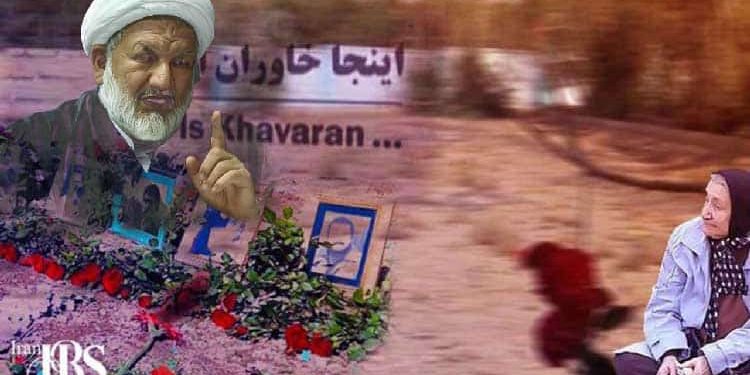
Following this, Razini resorted to establishing “field courts” and, under this decree, executed many members of the Mojahedin-e Khalq Organization (MEK) who were captured during Operation Eternal Light (Forugh Javidan) in cities far from Tehran, such as Islamabad and Kermanshah.
Razini, with the brazen shamelessness typical of criminals, in an interview with the Jamaran website, responded to the question of how many people tried and executed during the Mersad Operation by saying, “We didn’t count. I don’t remember. At that time, we were busy and didn’t have time to count.”
He also mentioned:
“One of the very significant outcomes of this law was that the opponents who had come during the Mersad Operation were dealt with in these courts. That means we didn’t bring any of the Mojahedin captured during the Mersad Operation to Tehran or Ahvaz for trial. They were tried and punished in the same war zones where they were captured.”
Razini also stated that the execution of the MEK forces aimed to boost the morale of the combatant forces.
On August 11, 2016, the website of Ayatollah Montazeri’s office released an audio file containing his conversation with four members of the Death Committee. In this conversation, it emphasized that the plan for the massacre of political prisoners, especially the MEK supporters, had no connection to Operation Eternal Light (Mersad) and had been planned years in advance.

These executions, which violated many international treaties, conventions, and domestic laws, were so extensive that they garnered significant opposition. The most prominent of these opponents at the time was Hossein Ali Montazeri, who was dismissed from his position as Khomeini’s designated successor for criticizing this inhumane practice.
Eyewitnesses report that Moghiseh personally attended interrogations and torture sessions and condemned many prisoners to death. He supported the use of psychological and physical pressure to extract forced confessions from detainees.
Suppressing Political and Social Protesters in Modern Times
After the 1980s executions, Moghiseh continued as a judge in Tehran’s Revolutionary Courts. And then issuing severe and ruthless sentences, particularly in political cases. Some notable examples include:
Trials of 2009 Post-Election Protesters:
Moghiseh played a significant role in the trials and heavy sentencing of protesters from the Green Movement. Many political and civil activists, including journalists, students, and human rights activists, sentenced to long-term imprisonment or even execution in his courts.
Suppressing Women’s Rights Activists and Religious Minorities:
Moghiseh frequently issued heavy sentences against women’s rights activists and members of religious minorities such as Baha’is and Gonabadi dervishes, often accusing them of “propaganda against the regime” or “acting against national security.”
Trials of Protesting Workers:
In cases related to labor protests, such as those of the Haft-Tappeh workers. Moghiseh issued harsh punishments, including lashes, long-term imprisonment, and heavy fines.
Human Rights Violations Accusation:
Moghiseh repeatedly accused of human rights violations by domestic and international human rights organizations. These accusations include:

Failure to Observe Fair Trial Principles:
Many defendants in Moghiseh’s courts were tried without access to a lawyer or the opportunity for proper defense.
Issuing Death Sentences for Children and Adolescents:
Moghiseh has, in some cases, even sentenced underage defendants to death.
Torture and Forced Confessions:
Numerous reports indicate that Moghiseh relied on confessions obtained under torture in his rulings.
International Reactions:
Moghiseh’s actions have provoked widespread reactions from the international community. The European Union and the United States have placed him on their sanctions lists for human rights violations, including asset freezes and travel bans.
Testimonies from Former Prisoners
Many former prisoners and the families of victims testified that Moghiseh not only acted as a judge but also as an interrogator and torturer. One former prisoner stated: “Mohammad Moghiseh had no mercy for prisoners. He ruthlessly issued death sentences or long-term imprisonments and supported torture to extract forced confessions.”
Follow Iran Human Rights society on social networks:
Telegram /Twitter /Instagram / YouTube / Facebook
Join Iran Human Rights Society on Twitter,Telegram and Instagram








Discussion about this post