Branch 15 of the Tehran Revolutionary Court has sentenced Vahid Khan Sanami to death on the charge of “Moharebeh” (enmity against God); he has been imprisoned in the Greater Tehran Prison since February/March 2026.
Iran human rights Society, Saturday, July 4, 2026 – Vahid Khan Sanami, one of the detainees of the December 2025 – January 2026 nationwide protests currently held in the Greater Tehran Prison, has been sentenced to death on the charge of “Moharebeh” by Branch 15 of the Tehran Revolutionary Court, presided over by Judge Abolghasem Salavati. According to received information, his case hearing was held in April/May 2026, and the death sentence has been officially served to him.
Why was Vahid Khan Sanami sentenced to death?
According to received information, Vahid Khan Sanami was sentenced to the death penalty by Branch 15 of the Tehran Revolutionary Court, presided over by Judge Abolghasem Salavati, on the charge of “Moharebeh.”
An informed source close to the prisoner’s family confirmed the news, stating that his court hearing took place in April/May 2026, and following the conclusion of the judicial proceedings, the death sentence was issued against him.
So far, no further details have been published regarding the case evidence, the nature of the proceedings, or the status of any appeal against this verdict.
When was Vahid Khan Sanami arrested?
Vahid Khan Sanami was arrested in February/March 2026 in connection with the December 2025 – January 2026 nationwide protests. Following his arrest, he was transferred to the Greater Tehran Prison, where he has been held ever since.
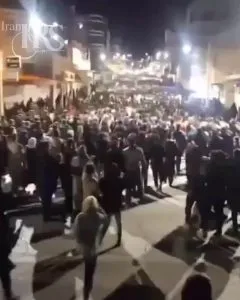
The issuance of the death sentence for this political prisoner comes amid rising concerns in recent months over the issuance and implementation of harsh sentences against detainees of nationwide protests.
What role does the charge of “Moharebeh” play in this case?
The charge of “Moharebeh” is one of the heaviest charges in Iranian criminal law and can carry the death penalty if the legal conditions are met.
In Vahid Khan Sanami’s case, the published information only refers to the issuance of the death sentence based on this charge, and no details regarding the evidence, documentation, or the court’s reasoning have been made public so far.
Legal Review of the Case Under Domestic Laws
Introduction
In the legal review of this case, a distinction must be made between domestic laws and international human rights standards. Although many existing criminal regulations, particularly in security and political cases, are heavily criticized by human rights organizations, numerous reports indicate that even these domestic laws are not fully implemented in many instances.
Given the irreversible nature of the death penalty, issuing such a sentence in protest-related cases requires full compliance with legal formalities, fair trial standards, and the absolute guarantee of the defendant’s rights. In these cases, adherence to the principles of the Constitution and the Criminal Procedure Code is of paramount importance.
Legal Ambiguities of the Case
Based on available information, there are severe ambiguities surrounding the proceedings of Vahid Khan Sanami’s case. For instance, details of the evidence backing the charge, the method of assessing proof, effective access to a lawyer, and the court’s specific grounds for issuing the death sentence have not yet been publicly disclosed.
Relevant Legal Articles
- Article 32 of the Constitution: The arrest of individuals must be carried out strictly in accordance with the law, and they must be immediately informed of the reasons for the charges.
- Article 35 of the Constitution: In all courts, the parties to a lawsuit have the right to select a lawyer.
- Article 37 of the Constitution: Innocence is presumed, and no one shall be considered guilty unless their crime is proven in a competent court.
- Article 165 of the Constitution: Trials must be held openly, except in rare cases explicitly exempted by law.
Violations of Law
- Ambiguity in the publication of evidence and the underlying reasons for issuing the death sentence.
- The urgent necessity to review full compliance with the right to defense and effective access to a lawyer.
- The necessity to precisely verify all legal elements of the “Moharebeh” charge before issuing a capital sentence.
- The absolute requirement to respect fair trial standards in cases involving punishments that deprive an individual of life.
Which Human Rights May Have Been Violated in This Case?
The issuance of death sentences for protest detainees is always monitored with particular sensitivity by human rights organizations, especially when concerns are raised regarding the trial process or the respect for the defendant’s rights.
Violated Articles
Article 3 of the Universal Declaration of Human Rights The right to life is one of the most fundamental human rights, and issuing a death sentence requires strict compliance with all legal and judicial guarantees.
Article 10 of the Universal Declaration of Human Rights Everyone is entitled to have their case heard by an independent and impartial tribunal, with full adherence to the principles of a fair trial.
Article 14 of the International Covenant on Civil and Political Rights (ICCPR) This article emphasizes the right to a fair trial, access to a lawyer, and the possibility of an effective defense at all stages of judicial proceedings.
Article 6 of the International Covenant on Civil and Political Rights (ICCPR) In countries that maintain the death penalty, the application of this punishment must only occur within the framework of the strictest legal and judicial guarantees.
See also the below articles:
- Nationwide Protests; Repression After Death; Seized Bodies and Hidden Graves
- Arghavan Falahi Death Sentence Sparks Global Outcry Over Iran Political Prisoners
Follow Iran Human Rights Society on social networks:
Telegram /Twitter /Instagram / YouTube / Facebook
Join Iran Human Rights Society on Twitter