
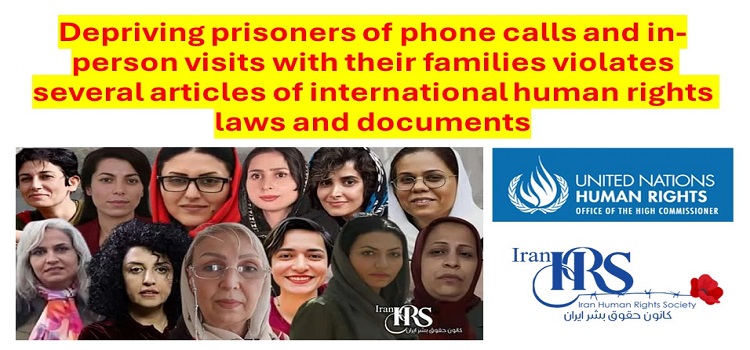
Following two protest actions and sit-ins by the women’s ward in Evin Prison on July 23 and August 6, 2024, in response to the issuance of the death sentence for Pakhshan Azizi and the execution of Reza Rasaei, 17 female political prisoners have been punished with the suspension of phone calls and in-person visits for periods ranging from one to three months.
According to the Iranian Human Rights Society’s report on Friday, August 23, 2024, the phone and visitation rights of these 17 political prisoners in Evin Prison’s women’s war suspended as a result of the protests. The suspended prisoners include Elaheh Fouladi, Pakhshan Azizi, Narges Mohammadi, Zahra Safaei, Maryam Asadollahi, Azam Khezri Jowadi, Sarina Jahani, Mahboubeh Rezaei, Reyhaneh Ansari, Sakineh Parvaneh, Varisha Moradi, Golrokh Iraee, Pariwash Moslemi, Samaneh Asghari, Hoora Nikbakht, Maryam Yahyavi, and Sanaz Yekta.
Among them, Elaheh Fouladi faces the longest suspension, with a three-month ban on phone calls and visits, starting from August 17, 2024. Pakhshan Azizi, Reyhaneh Ansari, Narges Mohammadi, Mahboubeh Rezaei, and Golrokh Iraee sentenced to two months of suspension, while the other female political prisoners will face a one-month suspension.
Suspension of Phone Calls and In-Person Visits According to the Official Notification from Evin Prison Authorities
Based on the official notice given on August 17, 2024, the political prisoners in the women’s ward of Evin Prison have been subjected to restrictions on phone calls and in-person visits as follows:
- Elaheh Fouladi: 3 one-month periods
- Pakhshan Azizi: 2 one-month periods
- Reyhaneh Ansari: 2 one-month periods
- Mahboubeh Rezaei: 2 one-month periods
- Varisha Moradi: 2 one-month periods
- Narges Mohammadi: 2 one-month periods
- Golrokh Iraee: 2 one-month periods
- Zahra Safaei: 1 one-month period
- Sakineh Parvaneh: 1 one-month period
- Pariwash Moslemi: 1 one-month period
- Samaneh Asghari: 1 one-month period
- Hoora Nikbakht: 1 one-month period
- Maryam Yahyavi: 1 one-month period
- Maryam Asadollahi: 1 one-month period
- Azam Khezri Jowadi: 1 one-month period
- Sarina Jahani: 1 one-month period
- Sanaz Yekta: 1 one-month period
It is worth noting that on Tuesday, August 6, 2024, coinciding with the weekly anti-execution protests and the prisoners’ strike, female political prisoners in Evin Prison staged a protest in response to the execution of Reza Rasaei in Dieselabad Prison, Kermanshah. The women prisoners chanted slogans such as “Death to the dictator” and “Death to the executioner government.”
Earlier, on Wednesday, July 24, 2024, women prisoners in Evin staged a sit-in in the prison yard, chanting slogans to protest the issuance of the death sentence for Pakhshan Azizi.
Violation of International Humanitarian Law
Depriving prisoners of phone calls and in-person visits with their families violates several articles of international human rights laws and documents, as outlined below:
Article 10 of the International Covenant on Civil and Political Rights (ICCPR):
*Humane Treatment of Prisoners: * This article emphasizes that all individuals deprived of their liberty should treated with humanity and respect for their inherent human dignity. Maintaining contact with family and the outside world is a fundamental aspect of ensuring humane treatment of prisoners.
**United Nations Standard Minimum Rules for the Treatment of Prisoners (Nelson Mandela Rules): **
- *Rule 58: * This rule stresses that prisoners should be allowed to communicate with their family and friends through regular correspondence and telephone calls. In-person visits with family should also be facilitated as much as possible. Denying these rights is a clear violation of these rules.
- *Rule 43: * This rule states that disciplinary isolation should not include a complete prohibition on contact with family.
Article 37 of the Convention on the Rights of the Child (CRC):
*Maintaining Contact with Family: * This article, concerning the treatment of children in detention, stipulates that any child deprived of liberty should be able to maintain regular contact with their family through visits and correspondence. This principle can extended to adult prisoners, as humane principles must be upheld in the treatment of detainees.
**Article 17 of the Universal Declaration of Human Rights (UDHR): **
*Right to Privacy and Family Life: * This article refers to the right to privacy, family life, and correspondence. And prohibits arbitrary interference with these rights. Denying prisoners contact with their family is a violation of this right.
**Article 7 of the ICCPR: **
*Prohibition of Torture and Inhuman Treatment: * Any form of inhuman or degrading treatment or punishment prohibited. Denying access to communication and visits with family can considered a form of psychological torture.
These human rights regulations emphasize the importance of respecting human dignity and the right of prisoners to maintain contact with their family and friends. Depriving prisoners of these rights constitutes a clear violation of these fundamental principles.







Discussion about this post