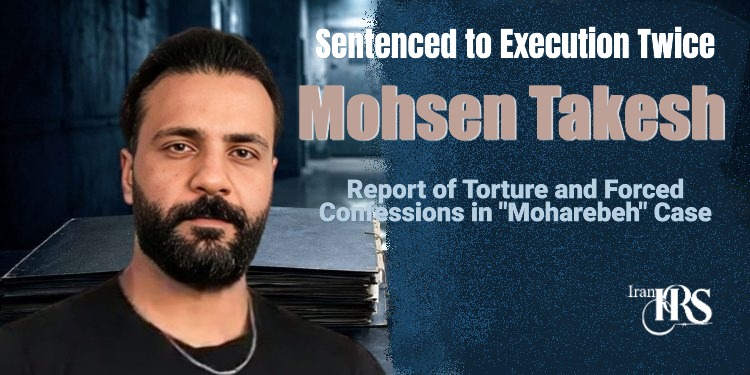
Mohsen Takesh, a 33-year-old citizen and one of the detainees of the January 2026 protests in Isfahan, was sentenced to execution twice in a case that, according to informed sources, lacks any evidence other than confessions obtained under torture.
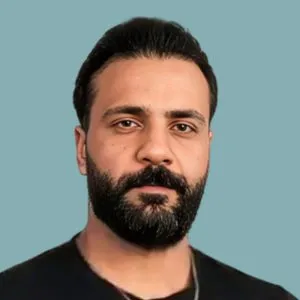
Iran Human Rights Society, Wednesday, August 19, 2026 – Mohsen Takesh, a 33-year-old citizen residing in Dizicheh, Isfahan, has been sentenced to execution twice on charges of “Moharebeh” (enmity against God). This sentence was issued in connection with a case formed following his arrest during the suppression of the January 2026 protests.
Reports indicate that Mohsen Takesh was severely tortured during his detention and his arm was broken as a result of torture. According to an informed source, interrogators forced him under physical and psychological pressure to accept the attributed charges, and these very forced confessions formed the basis for the case and the issuance of execution sentences.
Apart from these disputed confessions, there is no other evidence or document in the case to prove the charges raised against Mohsen Takesh. So far, no information has been published regarding the branch issuing the sentence, details of the charges, the appeal process, and the extent of his access to a chosen lawyer.
What You Read in This Report
- Issuance of two execution sentences for Mohsen Takesh on charges of “Moharebeh”
- Report of severe torture and the breaking of his arm in detention
- Obtaining forced confessions under physical and psychological pressure
- Four months of ignorance by the family regarding his whereabouts
- Absence of any evidence other than confessions alleged to be under torture
- Examination of instances of violation of domestic laws and human rights standards
Information Box | Mohsen Takesh’s Case
| Subject | Case Information |
| Name | Mohsen (Mehrdad) Takesh |
| Age | 33 years old |
| Place of Residence | Dizicheh, Isfahan |
| Time of Arrest | Final week of January 2026 |
| Charge | Moharebeh |
| Issued Sentence | Execution twice |
| Declared Location of Detention | Ward A-T (Alef-Ta) of Dastgerd Prison, Isfahan |
| Reported Physical Condition | Broken arm due to torture |
| Occupation Prior to Arrest | Motorcycle mechanic |
Arrest During the Suppression of the January Protests

Mohsen Takesh was arrested in the final week of January 2026, simultaneously with the expansion of the suppression of protests. Following his arrest, his family had no exact information regarding his location of detention, physical status, and judicial situation for about four months.
This long period of lack of information ended after Mohsen Takesh called his family from Ward A-T of Dastgerd Prison in Isfahan. It is not clear where he was held during the first four months of detention and whether he had access to a lawyer, doctor, or contact with his family during this period.
Concealing the location of detention of a detainee, especially during the interrogation phase, increases the risk of torture, forced confession, and deprivation of defense rights, and also limits the possibility of documenting the individual’s physical condition.
Broken Arm of Mohsen Takesh Under Torture
According to an informed source, Mohsen Takesh was subjected to severe torture during his detention and his arm was broken as a result of this torture. Interrogators also forced him to accept charges attributed to him.
According to the same report, confessions obtained under pressure served as the main basis for case formation and sentence issuance, and no other independent evidence exists in the case to prove the charge of “Moharebeh.”
Issuing two execution sentences based on statements claimed to have been taken under torture creates serious concern regarding the validity of the judicial process and the risk of executing an irreversible sentence. Any physical sign resulting from torture, including a broken arm, must be immediately examined by independent doctors and documented based on forensic medical criteria.
Prior to his arrest, Mohsen Takesh owned a motorcycle repair shop in Dizicheh and made a living through this means.
Legal Review of Mohsen Takesh’s Case Based on Domestic Laws
The laws of the dictatorship ruling Iran in past years have been criticized repeatedly due to conflict with standards of fair trial, ambiguity in handling security cases, and the use of forced confessions. Reviewing Mohsen Takesh’s case based on domestic laws does not mean confirmation of these laws; the goal is to show instances where even these same laws have not been observed by security institutions and the judicial system.
Legal Ambiguities of the Case
The most important ambiguity is the manner of obtaining confessions and the extent of the court’s reliance on these statements. The claim of severe torture and a broken arm calls into question the validity of any confession obtained during detention.
It is also not clear based on what specific actions the two execution sentences were issued, what the trial branch was, and to what extent Mohsen Takesh had access to a chosen lawyer during the interrogation and court stages.
Related Legal Articles
- Article 32 of the Constitution: Emphasizes the legality of arrest and immediate notification of charges.
- Article 35 of the Constitution: Recognizes the right to have a lawyer.
- Article 38 of the Constitution: Prohibits torture for obtaining confessions or acquiring information and declares confessions resulting from torture void of validity.
- Article 39 of the Constitution: Prohibits the violation of honor and dignity of detainees and prisoners.
- Article 60 of the Code of Criminal Procedure: Prohibits compulsion, coercion, insult, and asking suggestive questions during interrogation.
- Article 169 of the Islamic Penal Code: Considers confessions obtained under coercion, compulsion, torture, or physical and psychological harassment void of value and validity.
Cases of Law Violation
- Severe torture and the breaking of Mohsen Takesh’s arm;
- Obtaining forced confessions under pressure;
- Reliance on confessions claimed to be under torture for sentence issuance;
- Four months of lack of news by the family regarding his location of detention;
- Ambiguity regarding access to a chosen lawyer;
- Absence of independent evidence to prove the charges;
- Issuance of two execution sentences in a non-transparent process.
Reviewing Mohsen Takesh’s Case from the Perspective of Human Rights and Cases of Violation of International Standards
From the perspective of human rights, issuing an execution sentence in a case based on confessions obtained under torture is a serious violation of the right to life, the prohibition of torture, and the right to enjoy a fair trial. The punishment of execution has an irreversible nature, and its implementation in such a case can lead to the arbitrary deprivation of the right to life.
Related International Documents
- Article 5 of the Universal Declaration of Human Rights: Prohibition of torture and cruel or humiliating behavior.
- Articles 10 and 11 of the Universal Declaration of Human Rights: The right to a fair trial and the presumption of innocence.
- Article 6 of the International Covenant on Civil and Political Rights: Protection of the right to life.
- Article 7 of the International Covenant on Civil and Political Rights: Prohibition of torture and inhuman behavior.
- Article 14 of the International Covenant on Civil and Political Rights: The right to enjoy a fair court, a lawyer, and prohibition of compelling the accused to confess against themselves.
- Article 15 of the Convention Against Torture: Prohibition of judicial reliance on statements resulting from torture.
- Nelson Mandela Rules: Prohibition of torture and the necessity of prisoner access to treatment, a lawyer, and the possibility of contact with family.
See also the below articles:
- Humanitarian Crisis in Ward 2 of Karaj Central Prison
- Execution of Shahram Sadeghi: Confessions & Due Process Inquiries
Follow Iran Human Rights Society on social networks:
Telegram /Twitter /Instagram / YouTube / Facebook
Join Iran Human Rights Society on Twitter