
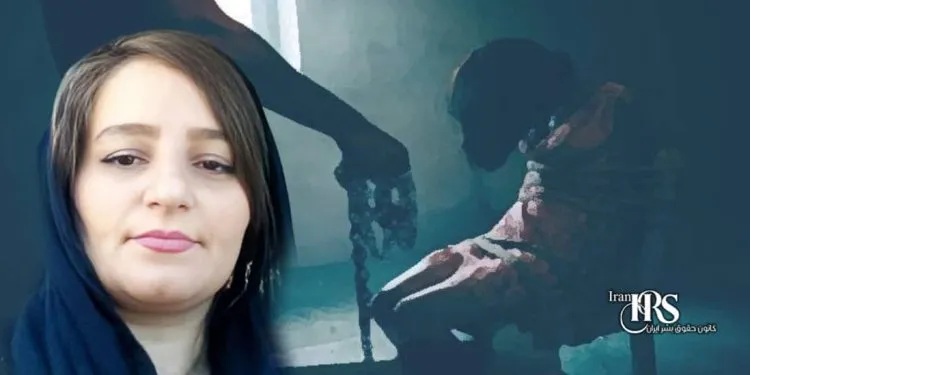
Masoumeh Sanobari, a political prisoner in Fardis Prison, Karaj, faced brutal violence after chanting protest slogans during an Ashura ceremony. This incident highlights the Iranian regime’s harsh treatment of political prisoners and its fear of dissent, even within prison walls. The violent response to Sanobari’s actions underscores ongoing human rights violations in Iran’s prison system, raising urgent concerns about prisoner treatment and the suppression of free expression.
Iran Human Rights Society, Wednesday, July 9, 2025 – On July 6, 2025, during an Ashura ceremony in the women’s ward courtyard of Fardis Prison, also known as Kachuei Prison, Masoumeh Sanobari and other prisoners chanted slogans like “Death to Khamenei” and “Curse on Khomeini” to protest the regime. These actions followed the ceremony’s conclusion, reflecting dissent against systemic oppression. In response, Kulivand, the head of the women’s ward, summoned Sanobari to the ward office. There, she endured a severe physical assault, returning with visible bruises on her face and body, unable to stand for hours. This violent reaction reveals the regime’s intolerance for any form of protest, even during religious events.
Enduring Solitary Confinement in Fardis Prison
Masoumeh Sanobari, a mother from Tabriz with a teenage daughter, was arrested on December 13, 2022, during Iran’s nationwide protests. Security forces detained her in Karaj and subjected her to 40 days of intense interrogations at the Intelligence Department. In January 2023, authorities transferred her to Fardis Prison, where she has spent significant time in solitary confinement. The Karaj Revolutionary Court sentenced her to 90 months for charges like “membership in the Mujahedin-e Khalq Organization” and “propaganda against the regime,” plus an additional 18 months, totaling nine years. Such harsh sentencing, often without fair legal representation, exemplifies the regime’s efforts to silence dissent.
A History of Torture and Repression

Sanobari’s suffering is not new. In March 2019, IRGC Intelligence forces arrested her in Ilkhchi, subjecting her to brutal torture. Continuous lashings caused severe leg injuries, blurred vision, and mobility issues. In February 2020, authorities arrested her at her sister’s home in Tabriz without a judicial summons, transferring her to an intelligence detention center. Released on bail in 2021, she remained under surveillance. While in Tabriz Prison in October 2020, Sanobari contracted COVID-19 but received no proper medical care or quarantine, further endangering her health. These repeated abuses highlight a pattern of targeting political prisoners with physical and psychological harm.
Political Slogans as a “Double Crime”
Chanting political slogans during a religious ceremony like Ashura is viewed by Iran’s security institutions as a “double crime.” The regime fears the combination of civil dissent and religious expression, which could amplify public unrest. Consequently, authorities respond with extreme measures, such as the beating of Masoumeh Sanobari, to suppress any challenge to their control. This approach stifles peaceful demands and reveals the regime’s insecurity, even in controlled environments like prisons. The harsh response to Sanobari’s protest underscores the broader clampdown on freedom of expression.
Human Rights Violations in Fardis Prison
Masoumeh Sanobari’s treatment violates several international human rights standards, including:
– Freedom of Expression (Article 19, ICCPR): Sanobari’s slogans, though political, do not justify violent punishment.
– Prohibition of Torture (Article 7, ICCPR): The physical assault without judicial process constitutes torture.
– Right to Health (Article 12, ICESCR): Lack of medical care post-beating and prior neglect during her COVID-19 infection endanger her well-being.
– Right to Fair Trial (Article 14, ICCPR): Heavy sentences without adequate legal defense breach fair trial rights.
– Prohibition of Arbitrary Detention (Article 9, ICCPR): Her 2020 arrest without a valid judicial order was unlawful.
These violations reflect systemic issues in Iran’s treatment of political prisoners, demanding urgent international attention.
A Call for Justice
The brutal beating of Masoumeh Sanobari in Fardis Prison is a stark reminder of Iran’s ongoing human rights abuses. Her courage in chanting slogans, despite the risk, highlights the resilience of political prisoners. However, the regime’s violent response reveals its fear of dissent, even in sacred settings like Ashura ceremonies. International organizations must act swiftly to address these violations. Calls for Sanobari’s immediate release urge global intervention to protect her and others from further abuse. The world must not ignore the plight of political prisoners like Sanobari, who face torture and isolation for demanding freedom.
Follow Iran Human Rights Society on social networks:
Telegram /Twitter /Instagram / YouTube / Facebook
Join Iran Human Rights Society on Twitter






Discussion about this post