
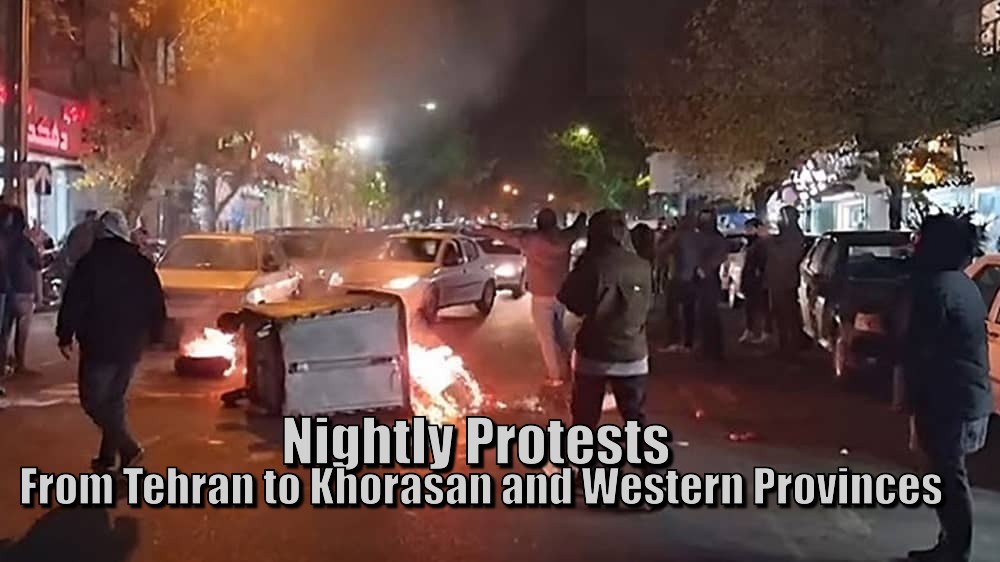
Nightly protests escalated across Iran on January 7, 2026. Citizens clashed with forces, burned government centers, and forced security retreats in dozens of cities. Widespread unrest signals growing discontent.
Iran Human Rights Society, Friday, January 9, 2026 – Field reports from the night of Thursday, January 7, 2026, indicate that protests continued with intensity in Tehran and numerous cities across the country. In Tehran, neighborhoods such as Zibashahr and Haft-Hoz witnessed clashes between protesters and law enforcement forces. Published images show that in some areas, riot police (Yegan-e Vizhe) were forced to retreat under the pressure of the protesting crowds.
In Aligudarz, the clashes in Mahmoud Square turned into street hit-and-run confrontations. In Ilam, particularly in the cities of Sarableh and Lumar, protesters pulled down images of Khamenei and symbolically occupied some government centers, including banks. These symbolic actions are seen as indicators of the radicalization of slogans and demands among the protesters.
Mashhad; Center of Widespread Clashes and Destruction of Government Centers
The city of Mashhad was one of the main focal points of the protests on Thursday night. Reports from various parts of the city—including Fajr Bridge, Tabarsi Street, Kazemabad Police Station, Amir Neighborhood, and Northern Kheyam—describe intense clashes between protesters and security forces. During these protests, several vehicles and police containers belonging to the law enforcement were set on fire, and some centers affiliated with government institutions were targeted.
Reports have also emerged of the burning of at least two banks and one store belonging to the Islamic Revolutionary Guard Corps (IRGC). In some areas, security forces withdrew from the scene after prolonged confrontations. The geographical spread of these incidents in Mashhad indicates that the protests have moved beyond localized control and reached a nationwide scale.

Western Provinces; Continuation of Protests and Street Clashes
In the western provinces, including Kermanshah, Gilangharb, Bijar, Khorramabad, and Izeh, protests have continued with high intensity. In Kermanshah, neighborhoods such as Dolatabad, Rudaki, Dieselabad, and Shahrek Mahdiyeh saw widespread clashes. In Bijar, protesters set fire to the Governor’s Office building. In Rasht, Motahari Square and Municipality Square were under the control of protesters for several hours.
In Khorramabad, Alavi Street became the scene of clashes between protesters and riot police, while in Izeh, reports describe direct confrontations between people and law enforcement and Basij forces. These events show that protests are no longer limited to provincial capitals; smaller cities have also actively joined the movement.
South and Central Iran; Destruction of Government Symbols and Anti-Regime Slogans
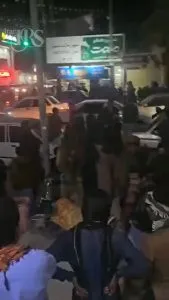
In cities such as Shiraz, Fasa, Kazerun, Shushtar, and Isfahan, nightly protests were accompanied by the destruction of government symbols and slogans of “Death to Khamenei.” In Shiraz, the Bani-Hashem neighborhood witnessed the retreat of law enforcement forces. In Shushtar, a symbol of Qasem Soleimani was set on fire.
In Isfahan, particularly in the Baharestan area, reports indicate that Basij and police forces fled after protesters threw incendiary materials. These developments demonstrate that the protests have entered a phase of more direct confrontation with security structures.
Order to Shoot and Intensification of Suppression
In some cities, including Borujerd, reports have surfaced of direct orders being issued to shoot at protesters. According to local sources, law enforcement commanders, feeling threatened by the spread of protests, ordered equipment to be moved to rooftops and squares to be “decisively” cleared. These orders have heightened concerns about an increase in human casualties.
Human Rights Violations During the Nationwide Protests
What has occurred during the recent nights of protests is a clear example of widespread human rights violations and the disproportionate use of force against protesting citizens.
- Article 3 of the Universal Declaration of Human Rights – Right to Life- Reports of direct shooting, issuance of shoot-to-kill orders, and bloody clashes have seriously endangered the lives of protesters and violated their fundamental right to life.
- Article 5 of the Universal Declaration of Human Rights – Prohibition of Torture and Inhuman Treatment- The use of extreme violence, threats, beatings, and intimidation against protesters in the streets constitutes inhuman and degrading treatment.
- Article 19 of the Universal Declaration of Human Rights – Freedom of Expression- The suppression of protests, violent treatment of slogan chanters, and dismantling of peaceful gatherings clearly violate citizens’ right to freedom of expression and opinion.
- Article 20 of the Universal Declaration of Human Rights – Freedom of Peaceful Assembly- Preventing protest gatherings and the security response to citizens’ presence in the streets systematically violates the right to peaceful assembly.
The protests on the night of Thursday, January 7, 2026, demonstrated that the scope of public discontent has not subsided; on the contrary, despite severe repression, it is continuing in a broader and more organized manner—a trend that could carry profound political and social consequences for the country’s future.
See also the below articles:
- Suppression of Protests in Zahedan After Friday Prayer; Direct Shooting by Security Forces at Baluch Protesters
- Names of More Than 50 Detainees in Various Cities of Iran; The Necessity of Publicizing Arrests to Prevent Violation of Citizens’ Rights
Follow Iran Human Rights Society on social networks:
Telegram /Twitter /Instagram / YouTube / Facebook
Join Iran Human Rights Society on Twitter






Discussion about this post