Iran executed political prisoners Pouya Ghobadi and Babak Alipour in Qezelhesar Prison on March 31, 2026. This follows the hangings of Akbar Daneshvar Kar and Mohammad Taghavi. The wave raises serious human rights concerns amid reports of prison attacks and transfers.
Iran Human Rights Society, Tuesday, April 1, 2026 – This morning, two political prisoners, Pouya Ghobadi and Babak Alipour, were executed in Qezelhesar Prison; executions that took place only one day after the execution of Akbar Daneshvar Kar and Mohammad Taghavi in the same prison. These prisoners, who had been in prison for years, were executed in conditions where reports indicate increased pressure on political prisoners, an attack on Ward 4 of Qezelhesar Prison, and the transfer of prisoners to unknown locations. Observers believe that these executions have been carried out in order to create an atmosphere of terror and fear and to intensify repression.
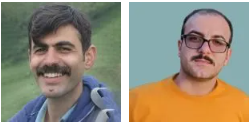
Execution of Pouya Ghobadi and Babak Alipour in Qezelhesar Prison
According to published reports, this morning two political prisoners named Pouya Ghobadi and Babak Alipour were executed in Qezelhesar Prison. These executions took place while the day before, two other political prisoners, Akbar Daneshvar Kar and Mohammad Taghavi, had also been executed in the same prison.
The execution of Pouya Ghobadi and Babak Alipour has been carried out in conditions where they had been in prison for years, but the implementation of their death sentences in the current circumstances has created a lot of concerns. Some observers believe that these executions are carried out with the aim of creating an atmosphere of fear in society and preventing the formation of protests.
Pouya Ghobadi; From Arrest to Execution
Pouya Ghobadi, born in 1992 and a graduate in electrical engineering, was last arrested on December 22, 2023, and transferred to Ward 209 of Evin Prison. During this period, he was interrogated and, according to sources, subjected to torture, and after that he was transferred to the general ward of Evin Prison.
Pouya Ghobadi’s trial, along with several other political prisoners including Babak Alipour, Seyed Mohammad Taghavi, Vahid Bani Ameyrian, Ali Akbar Daneshvar Kar, and Abolhassan Montazer, was held in Branch 26 of the Tehran Revolutionary Court.
Finally, Pouya Ghobadi, along with several other political prisoners, was sentenced to death.
The charges brought against Pouya Ghobadi included “acting against national security through membership and cooperation with the Mujahedin-e Khalq Organization”, “propaganda against the regime”, “destruction of government property”, and “assembly and collusion against the country’s security”.
Pouya Ghobadi had also previously had a history of arrest, and in past years he had been arrested and imprisoned several times. In one of his previous cases, he had been sentenced to 10 years in prison and had spent years in prison.
Babak Alipour; Years of Prison and Repeated Arrests
Babak Alipour, born in 1991 and holding a bachelor’s degree in law, was also a political prisoner who had been arrested and imprisoned several times. Babak Alipour was first arrested in 2018 and sentenced to 7 years in prison on charges of membership in the Mujahedin-e Khalq Organization and insulting the leadership.
Babak Alipour was released after serving part of his sentence, but was arrested again and returned to prison.
During his years in prison, Babak Alipour faced physical problems including intestinal infection and prostate disease, and according to sources, he was kept in prison for a long time without proper medical care.
Babak Alipour was arrested for the third time in January 2024 and transferred to Ward 209 of Evin Prison, where he was held for several months in a security detention center.
Finally, Babak Alipour was also sentenced to death in the same case in which Pouya Ghobadi and several other prisoners were present.
Executions as a Continuation of the Wave of Repression
The execution of Pouya Ghobadi and Babak Alipour took place while the day before, Akbar Daneshvar Kar and Mohammad Taghavi had also been executed in Qezelhesar Prison. The carrying out of several executions in a short period of time has increased concerns about the situation of other political prisoners sentenced to death.
Some observers believe that carrying out these executions in wartime conditions could be aimed at creating an atmosphere of terror and fear in society and preventing the formation of protests. These prisoners had been in prison for years, but the implementation of their death sentences at this point in time has created a lot of concerns.
Attack on Ward 4 of Qezelhesar Prison
Reports also indicate that on Sunday evening, prison guard forces attacked Ward 4 of Qezelhesar Prison, the place where political prisoners are held. According to sources, during this attack, the prisoners were beaten and then transferred to unknown locations.
Among the prisoners in this ward, a number of prisoners sentenced to death were held, and their transfer to unknown locations has increased concerns about their situation.
Prisoners Who Were Members of the “Tuesdays Against Execution” Campaign
According to reports, Akbar Daneshvar Kar, Mohammad Ghobadi, Pouya Ghobadi, and Babak Alipour were among the prisoners who had participated in the “Tuesdays Against Execution” campaign.
This campaign was formed by prisoners to protest against the death penalty, and the prisoners announced their opposition to execution through hunger strikes and protest actions. Human rights activists say that pressure on the prisoners who are members of this campaign has increased in recent months.
Human Rights Violations in the Execution of Political Prisoners
The execution of Pouya Ghobadi and Babak Alipour, as well as the beating of prisoners and their transfer to solitary confinement and unknown locations, is noteworthy from a human rights perspective and is considered a violation of human rights laws.
Violation of the Right to Life – Article 3 of the Universal Declaration of Human Rights: The death penalty is considered a violation of the right to life by many human rights institutions.
Violation of the Prohibition of Torture – Article 5 of the Universal Declaration of Human Rights: Reports about the torture and beating of prisoners can be an example of inhuman and degrading treatment.
Violation of the Right to a Fair Trial – Article 10 of the Universal Declaration of Human Rights: The implementation of the death sentence without sufficient notification to the lawyer and family can be a violation of fair trial.
Violation of the Prohibition of Arbitrary Detention – Article 9 of the Universal Declaration of Human Rights: The transfer of prisoners to unknown locations and holding them in solitary confinement without informing the family can be an example of arbitrary detention.
Concerns About the Situation of Other Political Prisoners
The execution of Pouya Ghobadi and Babak Alipour in Qezelhesar Prison, only one day after the execution of Akbar Daneshvar Kar and Mohammad Taghavi, has increased concerns about the situation of political prisoners and the possibility of continued executions.
These prisoners, who had been in prison for years, were executed in conditions where reports indicate increased pressure on prisoners, an attack on Ward 4 of Qezelhesar Prison, and the transfer of prisoners to unknown locations.
See also the below articles:
- Increase in Concerns about Prisoners in Qezelhesar Prison After Executions
- Reaction of Mai Sato to the Execution of Akbar Daneshvar Kar and Mohammad Taghavi; Warning about the Execution of Other Prisoners in the Shadow of War
Follow Iran Human Rights Society on social networks:
Telegram /Twitter /Instagram / YouTube / Facebook
Join Iran Human Rights Society on Twitter