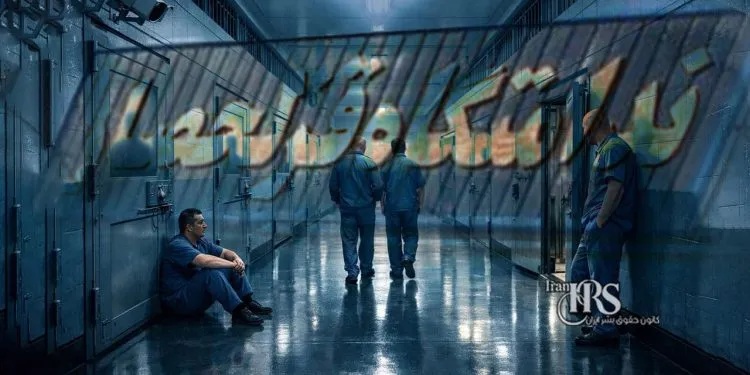
Sudden transfer of 10 to 20 political prisoners to the quarantine of Qazalhasar Prison and complete cutoff of contact with families; concerns about psychological pressure and severe reduction of facilities have increased.
Iran Human Rights Society, Friday, April 17, 2026 – According to received reports, a group of political prisoners from Evin Prison have been transferred to the quarantine of Qazalhasar Prison. These transfers have been accompanied by a complete cutoff of communication of the prisoners with their families and concerns about the conditions of detention, health and situation of these individuals have increased.
What details about the transfer of prisoners to Qazalhasar Prison have been published?
According to available information, during recent days between 10 to 20 persons of political prisoners from Evin Prison have been transferred to the quarantine of Qazalhasar Prison. This transfer has been carried out suddenly and since the time of relocation, these prisoners have had no contact with their families.
Reports indicate that these individuals are probably being held in solitary cells or Unit 3 of this prison. Lack of informing about the exact place of detention and conditions of these prisoners has increased the concerns of families to a considerable extent.
How has the situation of Mohsen Pirayesh after the transfer been reported?
One of the transferred prisoners is Mohsen Pirayesh whose family since the time of transfer has received no kind of contact from him. This is while he before this had been in contact with his family on a daily basis.
Mohsen Pirayesh, born in 1368 and resident of Tehran, about six months ago on the date of 10 Aban in the Janatabad area had been arrested. He after transfer to the police station and passing the first few days, was transferred to Evin Prison and until before the recent transfer, had preserved his communication with the family.
How has the process of handling the case of this prisoner been?
According to reports, the initial ruling for Mohsen Pirayesh has been issued in absentia and based on the confessions of one of his arrested friends and included two years of imprisonment. In continuation also another ruling from the court of appeal has been issued which has increased the total conviction of him to about two years and nine months.
It is said that he during the process of handling the case, has been deprived of access to a lawyer. This issue, alongside issuance of ruling based on confessions of others, has created serious ambiguities about the process of trial and observance of legal principles.
Have similar transfers also been reported?
Before this also reports about transfer of other prisoners had been published. Including Miryousef Younesi who has been transferred to an unknown place. Also names such as Mehdi Vafaei Sani and Mohsen Pirayesh are seen among the transferred prisoners.
These transfers have been carried out simultaneously and without transparent informing and it seems to be part of a broader process in the relocation of prisoners.
What consequences does the relocation of prisoners have for them?
Sudden relocation of prisoners, especially transfer to quarantine and solitary cells, can create numerous problems for them. Cutoff of communication with family, lack of information from legal status and conditions of detention, are among the consequences of these transfers.
Also these relocations can be used as a tool for applying psychological pressure and even physical pressure on prisoners. Detention in solitary conditions and restriction in access to facilities, are among the cases that can make the situation of prisoners more difficult.

How have the conditions of prisons in the recent period been reported?
Reports show that in the period of war and after it, welfare facilities in prisons have been severely reduced. This situation has caused prisoners to be in harder conditions and to face numerous problems in supplying basic needs.
Reduction of facilities, alongside frequent relocations and detention in quarantine, has made the conditions more complicated for prisoners and has increased concerns about the status of their physical and mental health.
Violation of prisoners’ rights in transfer to Qazalhasar Prison and conditions of detention
Sudden transfer of prisoners to quarantine, cutoff of contact with family and detention in unknown conditions, alongside reduction of welfare facilities, is indicative of serious violation of prisoners’ rights and increase of psychological and physical pressures on them.
Violated materials:
- Violation of prisoners’ rights in transfer to Qazalhasar Prison and detention conditions Sudden transfer of prisoners to quarantine, cutoff of contact with family and detention in unknown conditions, along with reduction of welfare facilities, indicate serious violation of prisoners’ rights and increase of psychological and physical pressures on them.
- Violated articles: Violation of prohibition of torture – Article 5 of the Universal Declaration of Human Rights: Detention in solitary cell, cutoff of communication with family and exerting psychological pressure, can be considered as an instance of torture or inhuman and degrading treatment.
- Violation of the right to fair trial – Article 10 of the Universal Declaration of Human Rights: Deprivation of access to a lawyer and issuing sentence based on confessions of others, seriously violates the principles of fair trial.
- Violation of freedom and personal security – Article 9 of the Universal Declaration of Human Rights: Transfer to an unknown location and lack of information about the detention status, can be a sign of arbitrary detention and violation of personal security.
- Violation of human dignity – Article 1 of the Universal Declaration of Human Rights: Hard detention conditions, reduction of welfare facilities and restrictive behaviors, seriously damage the human dignity of the prisoners.
See also the below articles:
Follow Iran Human Rights Society on social networks:
Telegram /Twitter /Instagram / YouTube / Facebook
Join Iran Human Rights Society on Twitter