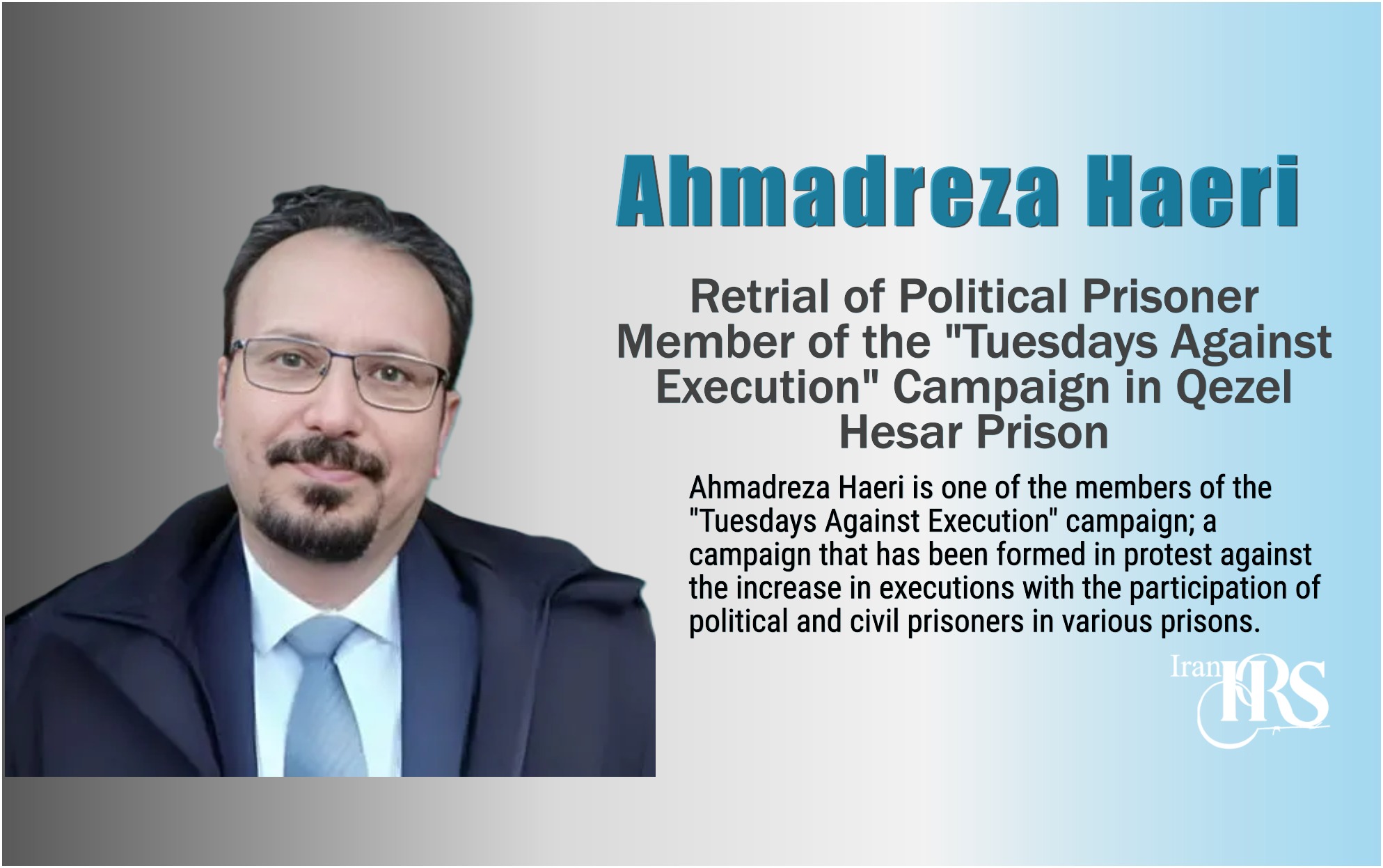
Ahmadreza Haeri, Political Prisoner and Member of the “Tuesdays Against Execution” Campaign, Faces New Case and Charge of “Propaganda Against the Regime” Again in Qezel Hesar Prison
Iran Human Rights Society, Thursday, May 21, 2026 – Ahmadreza Haeri, political prisoner held in Qezel Hesar Prison in Karaj, while facing a new case for the fifth time during his imprisonment as he is serving his fourth year in prison. According to reports, this political activist was tried on May 20, 2026 via video conference in Branch One of the Public and Revolutionary Prosecutor’s Office of Karaj on the charge of “propaganda against the regime”; a charge that, according to his close associates, has been raised only because of his activities against the death penalty and defending the rights of political prisoners.
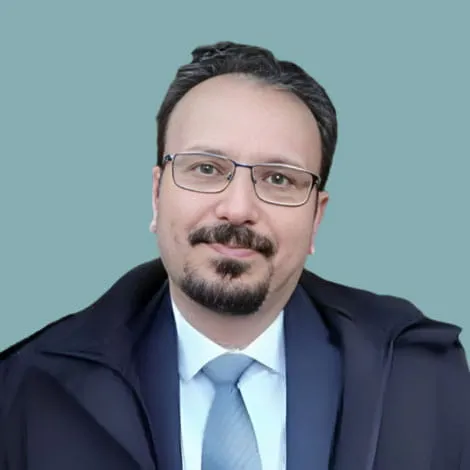
What is the reason for Ahmadreza Haeri’s retrial in Qezel Hesar Prison?
According to published information, the session for reviewing Ahmadreza Haeri’s new case was held via video conference and without transferring him to the court.
Human rights sources say that security and judicial institutions have repeatedly used the formation of new cases against political prisoners in recent years as a tool to increase pressure and prevent their release.
Ahmadreza Haeri is one of the members of the “Tuesdays Against Execution” campaign; a campaign that has been formed in protest against the increase in executions with the participation of political and civil prisoners in various prisons.
Human rights activists say that bringing the charge of “propaganda against the regime” against prisoners who inform about the situation of prisons or opposition to execution is part of the policy of suppressing the voice of opponents in prisons.
Why has pressure on political prisoners intensified after the start of the war?
The new case against Ahmadreza Haeri is taking place at a time when, simultaneously with the start of the war and the intensification of the security atmosphere, pressure on political prisoners in Iran’s prisons has increased.
In recent months, numerous reports of severe restrictions on prisoners’ contact with family, increased summons and interrogation, transfer to solitary confinement, and formation of new cases against political prisoners have been published.
Civil activists say that the government, in critical conditions and simultaneously with increased concerns about social protests, is trying to suppress any critical voice or information about the situation of prisons.
According to these activists, many political prisoners only face new cases because of publishing letters, protesting prison conditions, or opposing execution.
Dire situation of prisons and increased concerns
Published reports from various prisons, especially after the start of the war, indicate the worsening of the conditions for keeping prisoners.
Lack of medical facilities, restricted access to medicine, severe overcrowding of prisoners, and increased security pressures are among the problems that have been repeatedly raised by prisoners and their families.
Qezel Hesar Prison in Karaj, where Ahmadreza Haeri is held, is one of the prisons about which numerous reports on harsh conditions and pressure on political prisoners have been published.
Human rights activists have warned that the continuation of security pressures and the restriction of prisoners’ communication with the outside world have made the mental and physical condition of many political prisoners critical.
What is the reason for pressure on families of political prisoners?
Security pressures are not limited only to political prisoners themselves, and their families have also become targets of judicial actions.
Some time ago, Sajjad Haeri, the brother of Ahmadreza Haeri, was also sentenced to two years and six months in prison and supplementary punishments on charges such as “propaganda activity against the regime” and “disturbing public opinion.”
Human rights activists say that increasing pressure on families of political prisoners is done with the aim of preventing information dissemination, forced silence, and creating psychological pressure on prisoners.
According to these activists, judicial action against members of families of political prisoners has become one of the common tools of security institutions in recent years.
Human rights violation; Case-building against opponents of execution
Ahmadreza Haeri’s case is an example of continuous pressure on political prisoners and opponents of the death penalty in Iran.
Violated articles:
- Violation of the right to freedom of expression – Article 19 of the Universal Declaration of Human Rights:Bringing charges due to activities against the death penalty and informing about the situation of prisons violates the right to freedom of expression and opinion.
- Violation of the right to fair trial – Article 10 of the Universal Declaration of Human Rights:Forming multiple cases during imprisonment and holding non-transparent trial sessions violates the principles of fair trial.
- Violation of the right to liberty and personal security – Article 9 of the Universal Declaration of Human Rights:Using security case-building to increase the imprisonment period of political prisoners is an example of judicial pressure and arbitrary deprivation of liberty.
- Violation of the rights of prisoners’ families – Article 12 of the Universal Declaration of Human Rights:Judicial pressure on members of families of political prisoners due to informing or following up on the situation of their relatives violates the right to security and privacy of families.
See also the below articles:
- Omid Bayat Sarmadi Receives 25 Years Prison Sentence
- Ghazal Marzban Sentenced to 9 Years and 8 Months in Prison
Follow Iran Human Rights Society on social networks:
Telegram /Twitter /Instagram / YouTube / Facebook
Join Iran Human Rights Society on Twitter