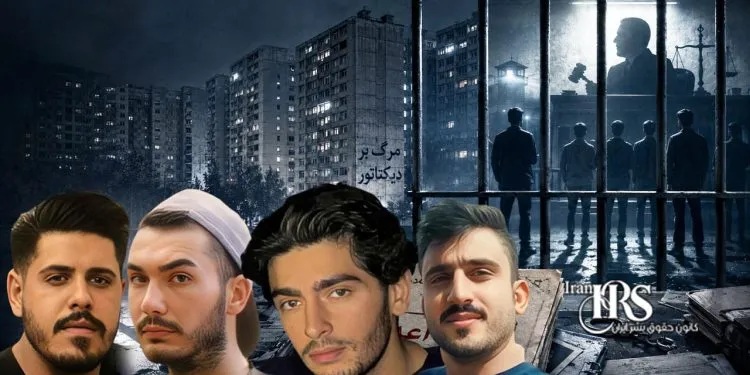
Four of the defendants in the case known as “Ekbatan Town” were sentenced to death by Branch 15 of Tehran Revolution Court on the charge of “Moharebeh”; a ruling that was issued while another part of this case had previously been accompanied by the annulment of the death sentence and issuance of prison and blood money sentences in the criminal court.
Iran Human Rights Society, Sunday, May 24, 2026 – Tehran Revolution Court, presided over by Judge Abolghasem Salavati, sentenced four of the defendants in the “Ekbatan Town” case to death on the charge of “Moharebeh”. According to reports, Milad Armoun, Navid Najaran, Mehdi Imani, and Seyyed Mohammad Mehdi Hosseini have faced the death sentence, and four other defendants have also been sentenced to prison and supplementary punishments. This is while the criminal section of the same case had previously been annulled in the Supreme Court, and in the re-examination, some defendants had been acquitted of the charge of intentional murder. Human rights activists say the process of handling the “Ekbatan Town” case has been accompanied by serious ambiguities, restrictions on lawyers’ access, and security pressures.
Death Sentence in Revolution Court
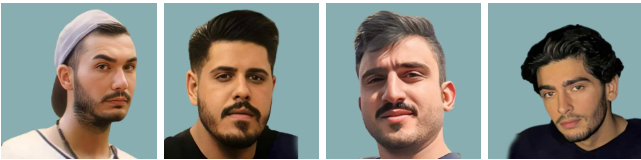
According to the ruling issued by Branch 15 of Tehran Revolution Court presided over by Judge Salavati, Milad Armoun, Navid Najaran, Mehdi Imani, and Seyyed Mohammad Mehdi Hosseini have been sentenced to death on the charge of “Moharebeh”.
Also, Amir Mohammad Khosh Eghbal, Alireza Barmarz Pournak, Alireza Kafaei, and Hossein Nemati were each sentenced to five years in prison on the charge of “assembly and collusion”, two years in prison on the charge of “propaganda against the system”, and two years of deprivation from activity in virtual space and residence in Tehran and Alborz.
The file of these individuals is related to the nationwide protests of the year 1401 and the events of Ekbatan Town in Tehran.
Human rights activists say the issuance of death sentences in the Revolution Court, especially after the annulment of part of the case in the criminal court, has increased concerns about the political nature of the trial process.
Verbal Notification of the Ruling Without the Presence of Lawyers
An informed source has stated that the issued ruling was verbally notified to the defendants without the presence and information of the case lawyers.
According to this source, so far no official version of the ruling has been provided to the case lawyers, and this issue has practically made registering the request for appeal difficult.
It has also been reported that lawyers of security cases in Branch 15 of Tehran Revolution Court face extensive restrictions and in many cases do not have the possibility of full access to the file and effective presence in the trial process.
Human rights activists say depriving lawyers of access to files is one of the signs of violation of fair trial in political and security cases.
Difference Between Criminal Court Ruling and Revolution Court Ruling
The “Ekbatan Town” case had been divided into criminal and security sections.
In the criminal section, six defendants of this case had previously been sentenced to death by Branch 13 of Tehran Criminal Court, but this ruling was annulled in September 2025 in the Supreme Court. After referring the case to the parallel branch and holding a re-examination session, new rulings were issued. According to the new ruling of the criminal court, Milad Armoun, Alireza Kafaei, and Amir Mohammad Khosh Eghbal were sentenced to pay equal shares of the full blood money of one human and five years in prison.
Also, Alireza Barmarz Pournak, Hossein Nemati, and Navid Najaran were acquitted of the charge of participation in intentional murder due to “lack of sufficient evidence”.
Despite this, now Tehran Revolution Court has issued a death sentence for four of the same defendants; an issue that, according to human rights activists, shows a serious contradiction between the trial process in the two judicial authorities.
Concern About the Trial Process in Salavati Branch

Branch 15 of Tehran Revolution Court presided over by Judge Abolghasem Salavati has previously also issued heavy rulings in many political and security cases.
Human rights activists say restrictions on lawyers’ access, declaring cases confidential, and lack of transparency in the trial process are among the most important problems of the cases of this branch.
According to sources close to the case, some of the defendants during detention have faced security pressures and restrictions on contact with family.
Also, legal activists have warned that using the charge of “Moharebeh” against those arrested in protests can prepare the ground for issuing heavy and political rulings.
Lawyers of the Ekbatan Town case defendants have also raised other narratives of how Judge Abolghasem Salavati dealt with the process of handling this case. Mohammad Pak Nia, lawyer of Alireza Barmarz Pournak, has announced that despite his presence from the prosecutor’s stage to the criminal court as the official lawyer of the case, he did not get permission to attend the trial sessions of Branch 15 of Revolution Court. He said about this:
“I was the lawyer of Alireza Barmarz Pournak’s case from the prosecutor’s stage, I was also present as a lawyer in the criminal court, but Mr. Salavati did not let me into any of the trial sessions. He also did not provide any legal argument in this regard. Is it possible that you do not let the lawyer into the trial session and not into the ruling notification session? There is no form of trial in this process.”
Previously, Ali Sharifzadeh, one of the other lawyers of Milad Armoun, had also reported the prevention of his presence in the trial sessions by the head of Branch 15 of Revolution Court. However, Saleh Nikbakht Aghasi, another lawyer of Milad Armoun, was present in some court sessions.
Process of the Case From the 1401 Protests Until Today
The “Ekbatan Town” case goes back to the events of November 2022; a time when during the nationwide protests and after the killing of one of the Basij forces named Arman Ali Vardi, dozens of young residents of Ekbatan Town were arrested.
According to reports, more than 50 people were arrested in this connection and an indictment was issued for 14 of them.
In May 2023, the spokesman of the Judiciary announced the accusation of “Moharebeh through resorting to cold weapons and action against national security” for some of the defendants.
The file of these individuals was then divided between Branch 13 of Tehran Criminal Court One and Branch 15 of Tehran Revolution Court.
Human rights activists say from the very beginning, this case was accompanied by a severe security and media atmosphere and a lot of pressure was exerted on the defendants and their families.
Violation of Human Rights; Deprivation of Effective Defense and Issuance of Death Sentences
The “Ekbatan Town” case has been described by human rights institutions as an example of widespread violation of the rights of those arrested in protests in Iran.
Violated Articles:
- Violation of the right to fair trial – Article 10 of the Universal Declaration of Human Rights:Lack of effective access of lawyers to the file and verbal notification of rulings violates the principles of fair trial.
- Violation of the right to access a lawyer – Fundamental principles of fair trial:Extensive restrictions for case lawyers have reduced the possibility of effective defense of the defendants.
- Violation of the right to life – Article 3 of the Universal Declaration of Human Rights:Issuance of death sentences in a case with judicial ambiguities and contradictions has created serious concerns about the violation of the right to life.
- Violation of the principle of judicial independence:Security pressures and the political atmosphere governing the case have questioned the independence and impartiality of the judicial process.
See also the below articles:
- Ahmadreza Haeri Retrial Exposes Prison Pressure in Iran
- Omid Bayat Sarmadi Receives 25 Years Prison Sentence
Follow Iran Human Rights Society on social networks:
Telegram /Twitter /Instagram / YouTube / Facebook
Join Iran Human Rights Society on Twitter