
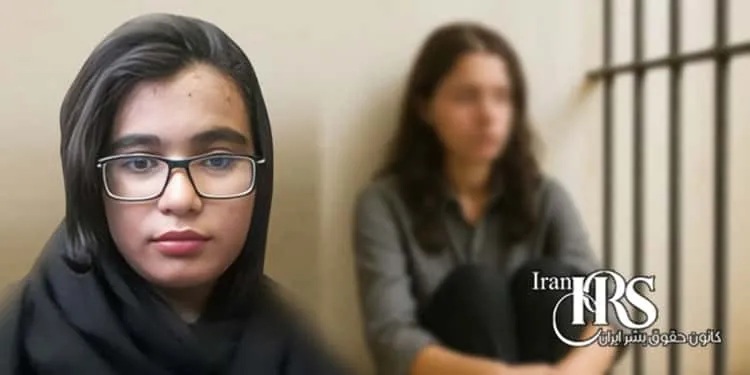
Arghavan Fallahi, a political prisoner, faces torture and enforced disappearance in Iran. Her transfer to an unknown location sparks urgent human rights concerns.
Iran Human Rights Society – Tuesday, August 7, 2024– Iran’s authorities intensify their crackdown on dissent, targeting Arghavan Fallahi, a 24-year-old activist. After six months of torture and interrogation, they transferred her to an unknown location. This alarming case underscores Iran’s ongoing human rights violations, including enforced disappearances and denial of medical care. Her family’s desperate search for answers highlights the urgent need for international action to address these abuses.
Arghavan Fallahi’s Arrest and Initial Detention
On January 25, 2025, authorities arrested Arghavan Fallahi in Tehran, charging her with “propaganda against the state” and “supporting the Mojahedin-e Khalq (MEK).” She endured solitary confinement in Ward 241 of Evin Prison, under the Islamic Revolutionary Guard Corps’ Intelligence Unit. Harsh interrogations and psychological torture marked her detention, raising fears for her safety. Her case reflects Iran’s pattern of targeting young activists.
Transfer to Fashafouyeh and Enforced Disappearance

After a bombing at Evin Prison, authorities moved Arghavan to solitary confinement in Fashafouyeh Prison. Recently, they transferred her again to an undisclosed location without notifying her family or lawyer. This sudden move aligns with Iran’s tactic of enforced disappearance, designed to isolate prisoners and intimidate families. Such actions violate international human rights standards and amplify concerns about her well-being.
Health Risks Amid Denial of Medical Care
Arghavan suffers from a chronic medical condition, yet authorities deny her access to medication and healthcare. This neglect endangers her life, especially in solitary confinement. Article 25 of the Universal Declaration of Human Rights guarantees healthcare for all prisoners. Similarly, the Nelson Mandela Rules demand equitable medical treatment. Iran’s failure to provide care constitutes indirect torture and inhumane treatment.
Psychological Warfare Against Arghavan’s Family
For six months, Arghavan’s family has received no updates on her judicial process, detention location, or charges. Their attempts to visit or gain information have failed. Security forces intimidate and pressure them, creating a climate of fear and uncertainty. This psychological tactic, common against political prisoners’ families, aims to silence dissent and suppress protests across Iran.
A Voice for Iran’s Youth
Arghavan Fallahi represents Iran’s protesting generation, engaging in political and social activism during recent civil movements. Authorities often use vague charges like “supporting the Mojahedin-e Khalq” to target young activists. These accusations create fear among students and youth who protest executions, arbitrary detentions, and systemic corruption. Despite repression, Arghavan’s activism inspires continued resistance.
Urgent Demand for Transparency
Iran’s judiciary remains silent on Arghavan’s case, offering no explanations about her status. This unaccountable system violates both domestic and international laws. Human rights organizations warn of widespread torture and enforced disappearances in Iran. The UN Special Rapporteur on the Situation of Human Rights in Iran must act to hold the regime accountable and demand transparency in Arghavan’s case.
Urgent Demand for Transparency
Given Iran’s history of torture in detention centers like Evin, Fashafouyeh, and Rajai Shahr, fears for Arghavan’s life grow. Her family and civil society demand immediate information about her location, health, and judicial process. This is not only a humanitarian necessity but also a legal right under international law. Denying family and lawyer contact violates fundamental human rights principles.
Human Rights Violations in Arghavan’s Case
Iran’s treatment of Arghavan Fallahi breaches several international human rights standards:
- Article 3, Universal Declaration of Human Rights: Everyone has the right to life, liberty, and security. Arbitrary detention and enforced disappearance violate this principle.
- Article 5, Universal Declaration of Human Rights: No one shall face torture or cruel treatment. Prolonged solitary confinement and denial of medical care constitute torture.
- Article 9, International Covenant on Civil and Political Rights: Arbitrary arrest and detention are prohibited. Arghavan’s lack of formal charges or legal access violates this.
- Article 10, International Covenant on Civil and Political Rights: Prisoners deserve humane treatment and dignity. Inhumane conditions and isolation defy this standard.
- Nelson Mandela Rules: Prisoners must access healthcare, family contact, and fair proceedings. Iran’s actions in Arghavan’s case clearly violate these rules.
Follow Iran Human Rights Society on social networks:
Telegram /Twitter /Instagram / YouTube / Facebook
Join Iran Human Rights Society on Twitter





Discussion about this post