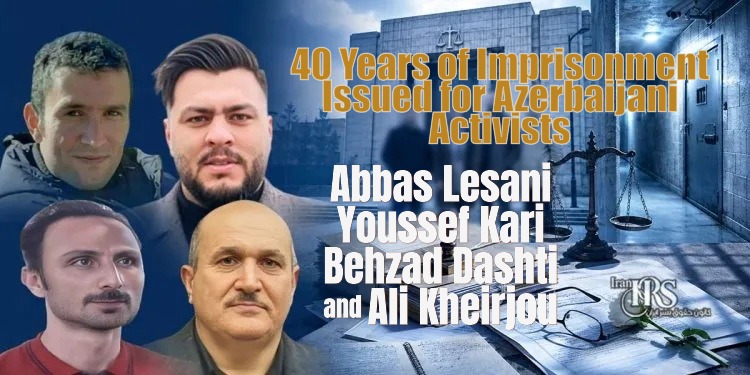
Four Azerbaijani activists—Abbas Lesani, Youssef Kari, Behzad Dashti, and Ali Kheirjou—have been sentenced to a combined total of 40 years in prison by Branch 28 of the Tehran Revolutionary Court. Issued under security-related charges, these sentences have once again heightened concerns regarding the judicial prosecution of civil and cultural identity activists.
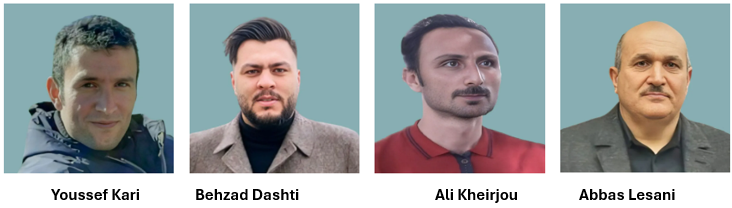
Iran Human Rights Society, Tuesday, August 4, 2026 – Four Azerbaijani activists—Abbas Lesani, Youssef Kari, Behzad Dashti, and Ali Kheirjou—were sentenced to a total of 40 years’ imprisonment by Branch 28 of the Tehran Revolutionary Court, presided over by Judge Amuzad. According to the verdict, these sentences were handed down in connection with security charges, including “forming and leading a group with the aim of disrupting national security,” “membership in a group,” and “assembly and collusion to commit crimes against national security.”
What Sentences Were Issued to the Azerbaijani Activists?
According to the court ruling:
- Abbas Lesani: Sentenced to 15 years in prison and confiscation of his mobile phone.
- Behzad Dashti: Sentenced to 10 years in prison.
- Youssef Kari: Sentenced to 10 years in prison.
- Ali Kheirjou: Sentenced to 5 years in prison.
The cumulative total of these sentences reaches 40 years in prison—a matter that once again brings security cases against civil and cultural identity activists into the spotlight.
Breakdown of the Verdicts
According to the terms of the ruling:
- Abbas Lesani: Received 10 years in prison for “forming and leading a group with the aim of disrupting national security” and 5 years in prison for “assembly and collusion to commit crimes against national security.” The court also ordered the confiscation of his mobile phone.
- Youssef Kari and Behzad Dashti: Each received 5 years in prison for “membership in a group with the aim of disrupting national security” and an additional 5 years for “assembly and collusion to commit crimes against national security.”
- Ali Kheirjou: Sentenced to 5 years in prison for “assembly and collusion to commit crimes against national security.”
Fact Box | Sentences Issued for Azerbaijani Activists
| Parameter | Details |
| Sentenced Individuals | Abbas Lesani, Youssef Kari, Behzad Dashti, Ali Kheirjou |
| Adjudicating Court | Branch 28 of the Tehran Revolutionary Court |
| Presiding Judge | Judge Amuzad |
| Total Sentences | 40 years’ imprisonment |
| Abbas Lesani | 15 years in prison + confiscation of mobile phone |
| Youssef Kari | 10 years in prison |
| Behzad Dashti | 10 years in prison |
| Ali Kheirjou | 5 years in prison |
| Primary Charges | Forming and leading a group, membership in a group, assembly and collusion against national security |
Why Are the Sentences of Azerbaijani Activists Drawing Attention?
These sentences come amidst a trend over recent years where numerous cases have been opened against civil, cultural, and identity activists under security charges.
Human rights organizations have repeatedly warned against the broad application of security labels in civil activists’ cases, emphasizing that such charges often serve to restrict peaceful civil, cultural, and social activities.
Furthermore, issuing long-term prison sentences against civil activists has consistently been a focal point of concern for United Nations Special Rapporteurs and international human rights organizations.
What Charges Were Brought in the Case?
According to the verdict, the central charges in this case consist of:
- “Forming and leading a group with the aim of disrupting national security”
- “Membership in a group with the aim of disrupting national security”
- “Assembly and collusion to commit crimes against national security”
However, further details regarding the evidence in the case file, judicial proceedings, defense arguments, and the court’s legal reasoning have not been publicly disclosed, and the full text of the ruling remains inaccessible to the public.
Concerns Over the Treatment of Civil Activists
The heavy sentences handed down to these Azerbaijani activists have renewed concerns regarding the status of civil and cultural identity activists.
Human rights organizations have repeatedly stated in recent years that using security charges against civil and cultural figures can severely restrict freedom of expression, freedom of association, and peaceful civil activities.
Accordingly, these organizations call for full adherence to fair trial standards, guaranteed defense rights, unimpeded access to defense counsel, and complete transparency in proceedings involving civil activists.
Legal Review of the Case
The legal framework enforced by the ruling dictatorship in Iran regarding civil and cultural activists has faced persistent criticism concerning the arbitrary attribution of security charges and non-compliance with fair trial principles. In the case of these Azerbaijani activists, severe prison sentences based on security charges raise significant questions regarding the proportionality of charges, procedural transparency, and the protection of defense rights.
Legal Ambiguities
- The complete text of the court judgment and case documentation have not been published.
- Details regarding the defendants’ legal defenses and how evidence was evaluated remain inaccessible to the public.
- Information regarding the extent of the defendants’ access to chosen legal counsel and effective defense facilities has not been disclosed.
Relevant Domestic Statutory Provisions
- Article 32 of the Constitution: Prohibits arbitrary arrest and mandates prompt notification of charges.
- Article 35 of the Constitution: Guarantees the right to legal representation.
- Article 37 of the Constitution: Protects the presumption of innocence.
- Article 168 of the Constitution: Mandates public trials for political and press offenses in the presence of a jury.
Human Rights Violations Regarding the Azerbaijani Activists
The sentencing of these Azerbaijani activists raises severe concerns from an international human rights perspective. The application of broad security charges against civil and cultural activists and the issuance of lengthy prison sentences are practices repeatedly condemned by international bodies.
Relevant International Legal Instruments
- Article 9 of the Universal Declaration of Human Rights (UDHR): Prohibition of arbitrary arrest or detention.
- Article 10 of the UDHR: Right to a fair and public hearing by an independent tribunal.
- Article 19 of the UDHR: Right to freedom of opinion and expression.
- Article 20 of the UDHR: Right to freedom of peaceful assembly and association.
- Articles 14, 19, 21, and 22 of the International Covenant on Civil and Political Rights (ICCPR): Guarantee the right to a fair trial, freedom of expression, freedom of peaceful assembly, and freedom of association.
See also the below articles:
- Sikan Roshani Death Sentence Issued for Detained Kurdish Protester
- Evin Prison Guard Raid: Political Prisoners Assaulted and Disappeared
Follow Iran Human Rights Society on social networks:
Telegram /Twitter /Instagram / YouTube / Facebook
Join Iran Human Rights Society on Twitter