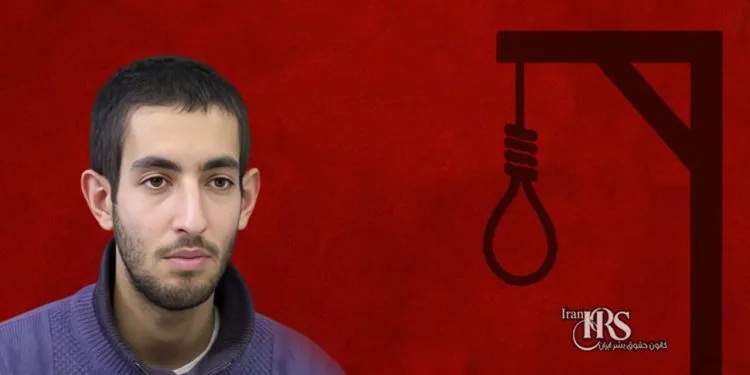
Abbas Akbari Feyz-Abadi, political prisoner from Naein, was executed at dawn on May 25, 2026; while the details of his arrest process, court and judicial proceedings were never published transparently and his family was also under security pressure
Iran Human Rights Society, Monday May 25, 2026 – Mizan News Agency, affiliated with the Judiciary, at dawn on Monday May 25, 2026 reported the execution of Abbas Akbari Feyz-Abadi. This government media introduced him as one of the “leaders of nationwide protests” in Naein county and raised charges such as “enmity against God (moharebeh)”, “deliberate destruction of public property”, “disruption of public order and security” and “assembly and collusion against internal security” against him. However, human rights activists say the process of handling Abbas Akbari’s case was carried out in a completely security-oriented and non-transparent atmosphere and there is no accurate information about the court proceedings, the manner of defense or his trial process.
Execution of Abbas Akbari after a security process
According to the report published by Mizan News Agency, Abbas Akbari Feyz-Abadi was executed at dawn today. Government media claimed that he had a “leadership” role in Naein county of Isfahan province during the nationwide protests.
The charges raised against Abbas Akbari include “enmity against God (moharebeh)”, “deliberate destruction of public property with the intention of confronting the Islamic Republic system”, “disruption of public order and security” and “assembly and collusion to commit a crime against internal security”.
However, so far no transparent information about the exact time of arrest, the manner of interrogation, court sessions or the documents of Abbas Akbari’s case has been published.
Human rights activists say this level of confidentiality and lack of transparency has increased concerns about the judicial process of the case.
Complete lack of news from the court process
According to human rights sources, there is almost no independent information about the proceedings of Abbas Akbari’s court. It is not clear on what date the trial sessions were held, what evidence was presented against him and whether the possibility of effective defense was provided for him or not.
Human rights activists emphasize that in many security and political cases, revolutionary courts issue heavy sentences, including execution, without publishing details of the trial process.
According to these activists, Abbas Akbari’s family also refrained from publicizing the case and informing about his situation due to security threats. They say pressure on families of political prisoners for media silence is one of the common methods of security institutions in sensitive cases.
One of the most important concerns about Abbas Akbari’s case has been described as his deprivation of access to a chosen lawyer. Human rights activists say in many cases related to protests, defendants only have the possibility of using lawyers approved by security and judicial institutions and are deprived of freely choosing a lawyer.
According to these activists, the absence of an independent lawyer and limited access to the case file takes away the possibility of effective defense from the defendants. They warn that in cases with the charge of “moharebeh” which carries the death penalty, deprivation of an independent lawyer can make the trial process extremely unfair.
Revolutionary courts and the influence of security institutions
Civil and legal activists believe that revolutionary courts do not have the necessary judicial independence in political and security cases and operate under the hegemony of the Islamic Revolutionary Guard Corps and the Ministry of Intelligence. According to these activists, in such cases, security institutions play the main role in the arrest process, interrogation, preparing the indictment and even directing the verdicts.
They emphasize that the trial process in Abbas Akbari’s case also had signs of a non-transparent and security-oriented trial and legal principles were not observed in it. Human rights activists say the widespread use of charges such as “moharebeh” against those arrested in protests has become a tool for issuing heavy sentences and creating an atmosphere of fear in recent years.
Increased concerns about execution sentences for protesters
Abbas Akbari’s execution was carried out in conditions where in recent months concerns about issuing and implementing execution sentences for those arrested in protests have increased. Human rights institutions have repeatedly warned that the use of the death penalty in political and security cases, especially in a non-transparent atmosphere, violates fundamental principles of human rights.
According to these institutions, many defendants in security cases are tried in conditions where they do not have the possibility of free access to a lawyer, effective defense and public trial.
Human rights violation; Execution after non-transparent trial
Abbas Akbari’s case has been described by human rights activists as an example of widespread violation of the rights of political defendants in Iran.
Violated articles:
- Violation of the right to fair trial – Article 10 of the Universal Declaration of Human Rights:Lack of transparency in the court process and keeping the case details confidential violates the principles of fair trial.
- Violation of the right to access to a lawyer – Fundamental principles of fair trial:Depriving Abbas Akbari of a chosen lawyer has taken away the possibility of effective defense from him.
- Violation of the right to life – Article 3 of the Universal Declaration of Human Rights:Carrying out the execution sentence after a non-transparent and security-oriented process violates the fundamental right to life.
- Violation of the principle of judicial independence:The influence of security institutions in the trial process of revolutionary courts questions the independence of the judiciary and turns the judicial process into a security process.
See also the below articles:
- Ali Ajarlou Held in Chubindar Prison: Five Months of No News and Heavy Threats
- Ekbatan Town Case: Death Sentences Issued in Tehran Revolution Court
Follow Iran Human Rights Society on social networks:
Telegram /Twitter /Instagram / YouTube / Facebook
Join Iran Human Rights Society on Twitter