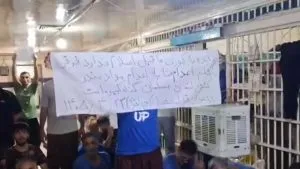
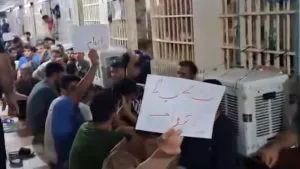
The hunger strike and sit-in of approximately 1,500 death-row prisoners in Unit 2 of Ghezel Hesar Prison has entered its third day. Holding placards reading “No to Execution,” the prisoners demanded a halt to the implementation of death sentences, particularly in drug-related cases. Meanwhile, reports have been published regarding the deployment of guard forces, the installation of jamming devices, and the intensification of communication restrictions in this prison.
Iran human rights Society, Wednesday, July 15, 2026 – The widespread hunger strike and sit-in of approximately 1,500 death-row prisoners in Unit 2 of Ghezel Hesar Prison in Karaj entered its third day on Wednesday, July 15, 2026. This protest, which began in response to the transfer of six death-row prisoners to solitary confinement cells, has now turned into a comprehensive protest against the process of issuing and implementing death sentences, particularly in drug-related cases.
Third Day of Hunger Strike in Ghezel Hesar Prison
According to information received by the Iran human rights Society, approximately 1,500 death-row prisoners in Unit 2 of Ghezel Hesar Prison continued their hunger strike and sit-in for the third consecutive day.
This protest action began on Monday, July 13, when six death-row prisoners from this unit were transferred to solitary confinement cells for execution. In protest of this action and in opposition to the continuation of the execution process, the prisoners refused to receive prison food and went on a sit-in. According to informed sources, this protest has continued so far without any positive response from prison authorities.
Protest Against Drug-Related Executions
According to the protesting prisoners, the goal of the hunger strike is not only to prevent the execution of their cellmates’ sentences but also to protest the policy of the widespread use of the death penalty in drug-related cases.
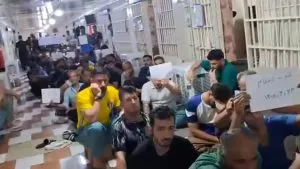
They have demanded an immediate halt to the implementation of death sentences, a review of laws related to drug offenses, and the elimination of the death penalty from this category of cases.
The prisoners also emphasized that many of the convicts in these cases belong to underrepresented and low-income sectors of society and entered this cycle due to poverty, unemployment, livelihood problems, and the lack of economic opportunities. According to them, the death penalty has not only failed as a solution to combat drug trafficking but has also failed to prevent the spread of this phenomenon over the past years.
Sit-in with “No to Execution” Placards
Received reports indicate that the protesting prisoners sat on the ground in the ward’s courtyard, holding placards with the slogan “No to Execution,” demanding a halt to the implementation of death sentences in Ghezel Hesar Prison.
At the same time, prison guards entered the ward area to prevent the sending of images and videos of this protest outside the prison. According to informed sources, the atmosphere in the ward remains highly securitized, and despite the existing pressures,
the prisoners continue their sit-in and hunger strike.
Reports of Jamming Device Installations and Increased Communication Restrictions
According to reports received from inside the prison, jamming devices have been installed in the compound of Ghezel Hesar Prison to disrupt the prisoners’ communication with the outside world.
According to the prisoners, the operation of these devices, in addition to restricting communication, has caused physical health issues for some inmates, with several of them complaining of headaches and discomfort caused by the emitted waves. These reports have not yet been officially confirmed or denied by the responsible authorities.
Deployment of Guard Forces and Concerns Over a Ward Raid
Coinciding with the continuation of the hunger strike, sources inside the prison have reported a widespread deployment of guard forces around Unit 2.
According to the prisoners, it is suspected that these forces have been prepared to enter the ward and conduct searches with the aim of discovering and confiscating the prisoners’ mobile phones. Despite the increased presence of security forces, prison officials have so far taken no positive action to address the prisoners’ demands, and the protest, which has now entered its third day, continues.
Legal Review of the Case Based on Domestic Laws
Introduction
Before legally reviewing this issue, it must be noted that many of the criminal laws and procedures related to the implementation of the death penalty and the treatment of prisoners under the ruling dictatorship have been criticized by international human rights organizations for violating fair trial principles, the right to life, and the fundamental rights of prisoners. Nevertheless, even based on domestic laws, prison officials are obligated to preserve the health of prisoners, respect their human dignity, and provide legal conditions for peaceful protests within the framework of regulations.
Legal Ambiguities
In this case, the continuation of the hunger strike, reports concerning the installation of jamming devices, the restriction of prisoners’ communication with the outside world, the widespread deployment of guard forces, concerns over officers entering the ward, and the failure of officials to respond to the prisoners’ demands are among the most significant legal issues raised. Furthermore, the necessity of respecting the rights of prisoners during protests, preserving their health, and preventing any violent confrontation are matters that require independent and transparent monitoring.
Related Legal Articles
- Article 22 of the Constitution: Inviolability of the life, property, rights, and dignity of individuals.
- Article 29 of the Constitution: The right to benefit from medical services.
- Article 34 of the Constitution: The right to seek justice.
- Article 38 of the Constitution: Prohibition of torture and any degrading treatment.
- Article 39 of the Constitution: Prohibition of violating the dignity of prisoners.
- Executive Regulations of the Prisons Organization: The obligation to preserve the health, security, and dignity of prisoners and to provide access to medical services.
Potential Violations of Law
- Restricting the communication of prisoners with the outside world.
- Reports concerning the use of jamming devices.
- The possibility of security confrontations with protesting prisoners.
- Failure to address the demands of the prisoners.
- Threatening the physical and mental health of the hunger strikers.
Human Rights Violations in Addressing the Demands of Protesting Prisoners
The continuation of the hunger strike and sit-in of death-row prisoners in Ghezel Hesar Prison, accompanied by reports of communication restrictions, the installation of jamming devices, the deployment of guard forces, and the lack of an effective response to the prisoners’ demands, has raised serious human rights concerns.
If these reports are true, such actions could conflict with the principles of preserving human dignity, the right to health, the right to maintain communication with family and lawyers, and the prohibition of inhuman or degrading treatment toward individuals deprived of their liberty. Furthermore, the widespread use of the death penalty, particularly in drug-related cases, has consistently been criticized by international human rights organizations, which have emphasized the necessity of reviewing such punishments.
Related Human Rights Articles
- Article 3 of the Universal Declaration of Human Rights: The right to life, liberty, and security of person.
- Article 5 of the Universal Declaration of Human Rights: Prohibition of cruel, inhuman, or degrading treatment or punishment.
- Article 10 of the Universal Declaration of Human Rights: The right to a fair trial.
- Article 6 of the International Covenant on Civil and Political Rights: Protection of the right to life.
- Article 14 of the International Covenant on Civil and Political Rights: The right to a fair trial.
- The Nelson Mandela Rules: The right of prisoners to access medical services, the preservation of human dignity, communication with the outside world, and the protection of physical and mental health.
See also the below articles:
- Organized Suppression of Students in Iran: Expulsions, Suspensions, and Case-Building
- Mostafa Imani: Writer and Actor Held in Ghezel Hesar Prison with No Information
Follow Iran Human Rights Society on social networks:
Telegram /Twitter /Instagram / YouTube / Facebook
Join Iran Human Rights Society on Twitter