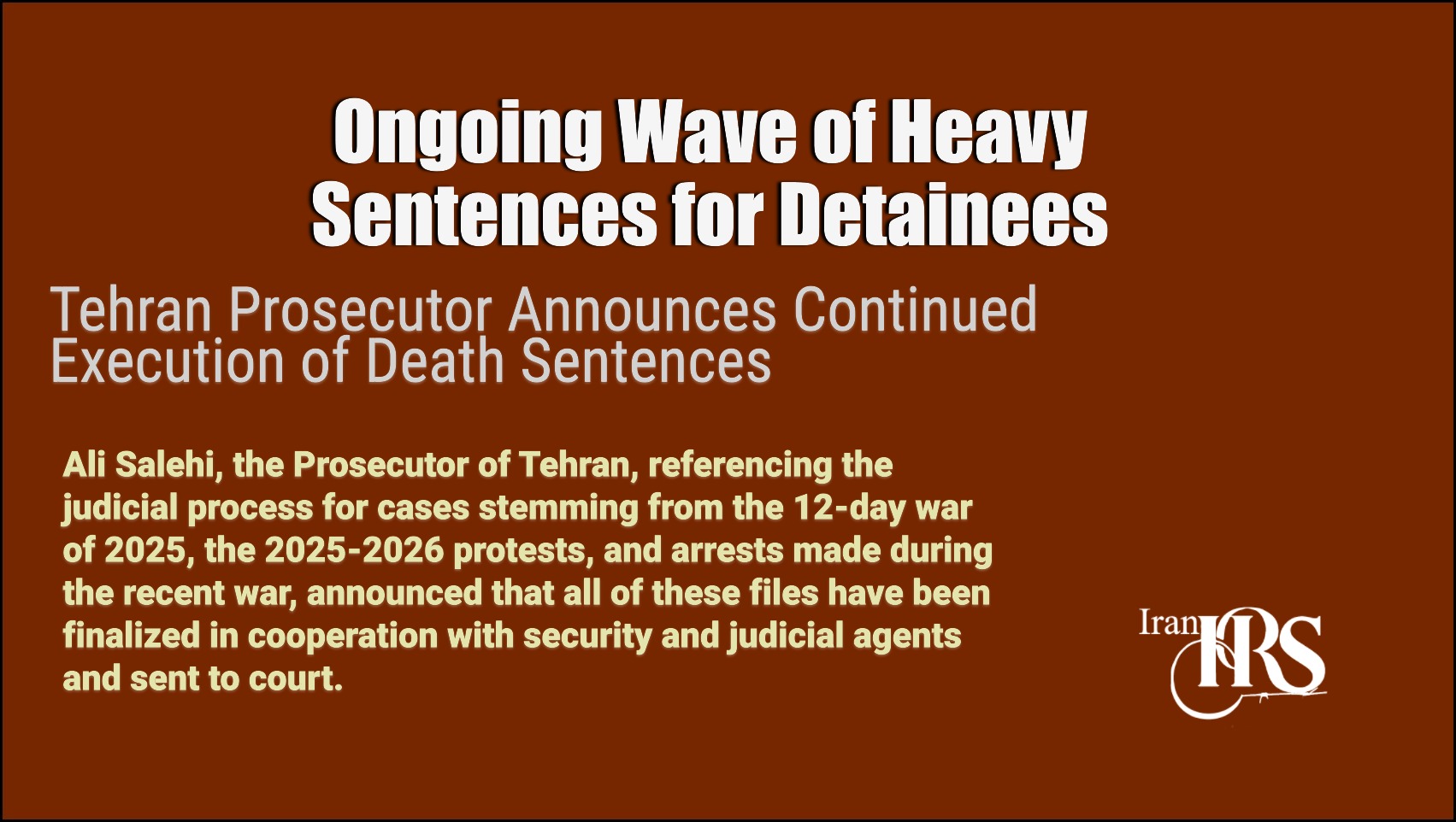
The Tehran Prosecutor announced the creation of special branches to handle cases related to the 12-day war, the 2025-2026 protests, and those detained in the recent war, stating that a portion of these cases has already resulted in the issuance and execution of death sentences. These remarks come as reports indicate a post-ceasefire surge in both the issuance and implementation of the death penalty in Iran.
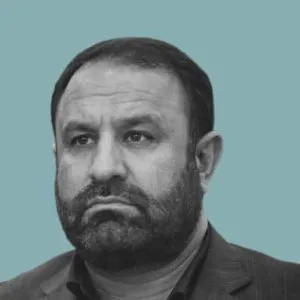
Iran human rights Society, Thursday, July 16, 2026 – Ali Salehi, the Tehran Prosecutor, has announced the continuation of issuing and implementing death sentences for a number of individuals detained during the nationwide protests of 2025-2026, the 12-day war, and the recent war. He stated that special branches were established to process these cases, and some of them, following judicial review, have culminated in executions and other final verdicts. The Tehran Prosecutor’s statements come amid mounting reports from human rights groups detailing an escalation in executions following the implementation of the ceasefire.
Tehran Prosecutor: Part of the Cases Have Concluded in Executions
Ali Salehi, the Prosecutor of Tehran, referencing the judicial process for cases stemming from the 12-day war of 2025, the 2025-2026 protests, and arrests made during the recent war, announced that all of these files have been finalized in cooperation with security and judicial agents and sent to court.
He further noted that, acting on directives from senior judiciary officials, these cases were processed with “precision and speed,” with a portion of them resulting in death sentences and other finalized rulings.
However, the Tehran Prosecutor provided no official statistics regarding the number of executed individuals, the identities of those condemned, the specific charges, the evidence used to secure convictions, or any details concerning the judicial process.
Formation of Special Branches to Process Cases
According to the Tehran Prosecutor, special branches have been set up within the Tehran Prosecutor’s Office specifically to handle cases linked to these events.
He emphasized that these cases have been prioritized for expedited processing. Despite this acceleration, no explanations were provided regarding the criteria for selecting these branches, the standards of review, the defendants’ access to a lawyer of their choice, or how their fundamental rights of defense are being safeguarded.
Escalation in the Issuance and Execution of Death Sentences
The statements by the Tehran Prosecutor align with reports published by human rights organizations showing an upward trend in the issuance and implementation of death sentences across Iran since the ceasefire went into effect.
In recent weeks, numerous reports have emerged regarding the execution of death row prisoners, as well as the issuance of new death sentences for political detainees and those arrested in connection with protests and security cases. Concurrently, international concerns over the expanding application of the death penalty under the guise of security and protest suppression have intensified.
Emphasis on “Expedited” Proceedings in Capital Cases
One of the most notable aspects of the Tehran Prosecutor’s remarks is his emphasis on the rapid processing of cases, some of which have already led to executions.
In cases where the prescribed punishment is the deprivation of life, the absolute implementation of fair trial standards—including free and effective access to an independent lawyer, adequate time to prepare a defense, rigorous examination of evidence, the practical ability to appeal, and an impartial tribunal—remains a fundamental legal prerequisite.
Nevertheless, the Tehran Prosecutor offered no explanation as to how these legal safeguards were respected in the expedited proceedings he referenced.
Concerns Over Using the Death Penalty in Times of Crisis
The Tehran Prosecutor’s declaration regarding the establishment of special branches and the push for expedited trials, combined with the rising numbers of executions, has sparked deep anxiety among human rights advocates.
Many human rights organizations argue that the widespread deployment of capital punishment during periods of social unrest, crisis, and heightened security situations is aimed at instilling fear and compliance throughout society. The synchronization of fast-tracked trials in specialized branches with the execution of irreversible sentences highlights the urgent need for external, independent monitoring of these judicial processes.
Legal Review of the Case Based on Domestic Laws
Introduction
Before delving into a legal review, it is critical to note that many criminal laws under the ruling system—particularly those governing political, security, and protest-related cases—have been condemned by international human rights bodies for systematically violating the rights to a fair trial, liberty, the prohibition of torture, and the basic rights of citizens. Nonetheless, even under existing domestic statutes, judicial bodies remain legally obligated to respect the defense rights of the accused, maintain judicial independence, prohibit coerced confessions, and guarantee due process.
Legal Ambiguities
In the statements made by the Tehran Prosecutor, while the issuance and execution of death sentences are confirmed, vital details regarding the exact number of those executed, their identities, the specific allegations, the supporting evidence, the trial conditions, access to chosen legal counsel, and adherence to legal formalities are entirely absent. Additionally, fast-tracking trials that carry the death penalty in specialized branches calls into serious question whether the minimum standards of a fair trial and the defendants’ rights of defense are being observed.
Related Legal Articles
- Article 32 of the Constitution: Prohibition of arrest outside of legal formalities.
- Article 34 of the Constitution: The right to seek justice and access competent courts.
- Article 35 of the Constitution: The right to select and be represented by a lawyer.
- Article 37 of the Constitution: The presumption of innocence.
- Article 38 of the Constitution: The absolute prohibition of torture to extract confessions.
- Article 39 of the Constitution: Prohibition of violating the honor and dignity of detainees.
- Related Articles of the Code of Criminal Procedure: The mandate to respect defense rights, conduct impartial hearings, and guarantee the right to appeal verdicts.
Potential Violations of Law
- Rushed and expedited proceedings in cases carrying the death penalty.
- A complete lack of transparency in the judicial process.
- Severe barriers blocking the accused from accessing independent legal counsel.
- Ambiguity surrounding how evidence is gathered, evaluated, and verified.
- An absolute restriction on public and independent monitoring of trial proceedings.
Human Rights Violations in the Statements of the Tehran Prosecutor and the Execution of Death Sentences
The formal announcement of specialized branches designed to fast-track trials stemming from protests and war, coupled with the confirmation of executions, raises profound human rights alarms. In cases where the penalty is irreversible, the strict application of fair trial guarantees is of paramount importance; any procedural lapse can lead to the wrongful deprivation of life.
The reported spike in executions following the ceasefire underscores the critical need for absolute transparency, access to independent lawyers, public trials, and effective oversight by international observers.
Related Human Rights Articles
- Article 3 of the Universal Declaration of Human Rights: The right to life, liberty, and security of person.
- Article 5 of the Universal Declaration of Human Rights: Prohibition of torture and cruel, inhuman, or degrading treatment or punishment.
- Article 9 of the Universal Declaration of Human Rights: Prohibition of arbitrary arrest and detention.
- Article 10 of the Universal Declaration of Human Rights: The right to a fair and public hearing by an independent and impartial tribunal.
- Article 6 of the International Covenant on Civil and Political Rights: Safeguarding the inherent right to life.
- Article 14 of the International Covenant on Civil and Political Rights: The right to a fair trial and proper defense.
- UN Safeguards Guaranteeing Protection of the Rights of Those Facing the Death Penalty: The requirement to adhere to the highest standards of due process before any sentence of death may be carried out.
See also the below articles:
- Ghezel Hesar Death Row Strike: 1,500 Inmates Protest Executions in Day Three
- Organized Suppression of Students in Iran: Expulsions, Suspensions, and Case-Building
Follow Iran Human Rights Society on social networks:
Telegram /Twitter /Instagram / YouTube / Facebook
Join Iran Human Rights Society on Twitter