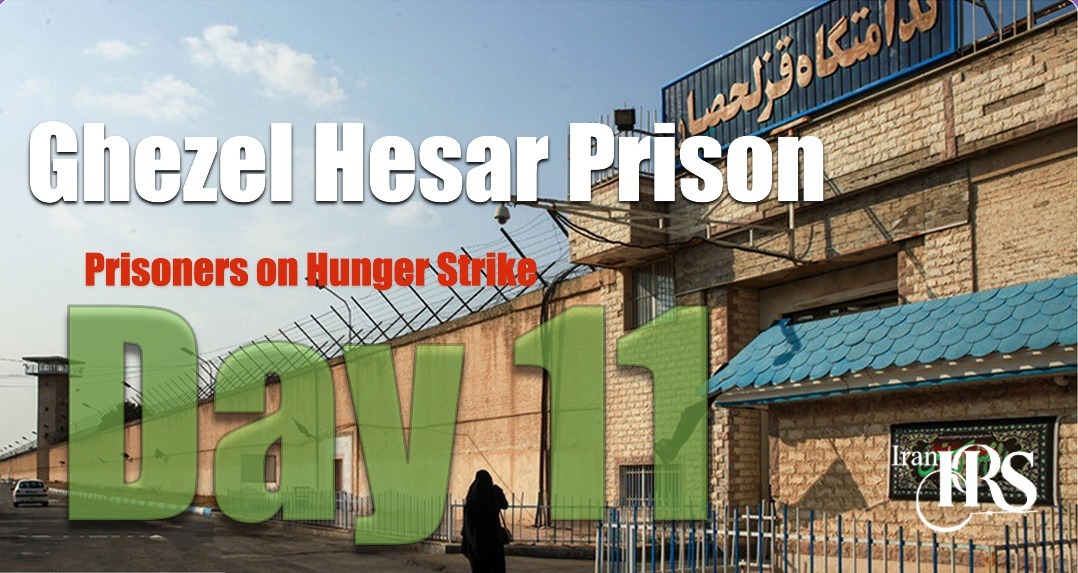
On the 11th day of a collective hunger strike involving approximately 1,500 death-row prisoners at Ghezel Hesar Prison, a newly released video shows inmates displaying “No to Execution” signs. Meanwhile, the physical condition of the strikers is deteriorating rapidly, accompanied by continued inaction from prison authorities and the judiciary.

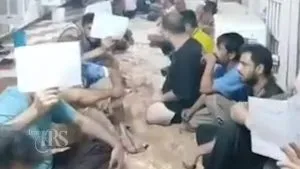
Iran Human Rights Society, Thursday, July 23, 2026 – The collective hunger strike of roughly 1,500 death-row prisoners in Karaj’s Ghezel Hesar Prison entered its 11th day on Wednesday. Concurrently, a new video from Unit 2 of the facility shows several prisoners holding papers inscribed with the slogan “No to Execution” in the hallway, affirming the continuation of their strike.
The prisoners state that their protest is a response to ongoing capital punishment and what they describe as a “growing wave of executions.” Their primary demands remain the immediate cessation of executions, respect for the fundamental right to life, and official engagement with their grievances.
Key Information | 11th Day of Ghezel Hesar Strike
| Subject | Details |
| Location | Unit 2, Ghezel Hesar Prison, Karaj |
| Number of Strikers | Approximately 1,500 death-row prisoners |
| Status | 11th day of hunger strike |
| Primary Demand | Immediate halt to execution of death sentences |
| Physical Condition | Severe weakness, low blood pressure, weight loss, dizziness |
| Communication Status | Severe jamming and disruption of phone calls and media transmission |
| Official Response | Lack of effective action or dialogue |
Protests Continue Under “No to Execution” Slogan
The newly released footage from inside Ghezel Hesar shows striking prisoners insisting on maintaining their peaceful protest. Over the past eleven days, inmates have used the hunger strike to draw public and official attention to the issue of capital punishment and rights violations.
Informants note that the protest remains collective and non-violent, with prisoners seeking dialogue with authorities to halt upcoming executions.
Deteriorating Physical Condition of Strikers
As the hunger strike reaches its 11th day, reports indicate a steady decline in the physical health of the inmates. Many strikers are suffering from acute weakness, hypotension, significant weight loss, and severe dizziness, rendering some unable to perform basic daily activities.
Human rights advocates warn that prolonged hunger strikes without continuous medical supervision pose immediate risks to life and long-term health. However, there are no reports of widespread medical intervention, hospital transfers, or protective health measures being implemented by prison management.
Official Inaction by Prison Authorities and Judiciary
Despite escalating health risks, authorities at Ghezel Hesar Prison and the judicial branch have taken no concrete steps to address the prisoners’ condition or engage with their demands.
Reports indicate an absence of dialogue between administration and inmates, with no positive response given to the strikers’ petitions. This lack of intervention persists even as several prisoners enter critical stages, raising concerns over irreversible outcomes.
Under both domestic regulations and international standards, prison administrators maintain a strict duty of care regarding the life and health of all individuals in custody.
Communication Blackouts Imposed at Ghezel Hesar
Concurrent with the strike, local sources report the installation of signal-jamming equipment at Ghezel Hesar Prison. This setup has severely restricted the transmission of video, photos, and regular telephone communications from inside the facility to the outside world.
Residents in areas surrounding the prison have also reported noticeable internet slowdowns and disruptions, indicating deliberate efforts to
limit independent reporting on the situation inside.
Visual materials sent out by inmates during the initial days played a key role in informing international rights monitors. With the latest restrictions, outbound communication has become increasingly difficult.
Domestic Legal Framework
Judicial and Administrative Obligations
Under Iranian domestic law, prison authorities and the judiciary remain obligated to protect the life, health, and dignity of inmates, irrespective of the underlying charges or protest motivations.
Relevant Constitutional and Statutory Provisions
- Article 22 of the Constitution: Protection of individual life, rights, and dignity.
- Article 34 of the Constitution: The right to seek judicial redress.
- Article 39 of the Constitution: Absolute prohibition against degrading the dignity or honor of detainees and prisoners.
- Executive Regulations of the Prisons Organization: Mandating adequate medical care and health protection for all inmates.
Apparent Legal Non-Compliance
- Failure to provide necessary medical care to hunger-striking prisoners.
- Lack of proactive measures to prevent severe medical complications or death.
- Imposition of communication blackouts restricting independent monitoring.
- Failure to engage with peaceful grievances submitted by detainees.
International Human Rights Framework
The ongoing strike and the absence of adequate medical care raise significant concerns under international human rights treaties and standard minimum rules for the treatment of prisoners.
Applicable International Standards
- Article 3, Universal Declaration of Human Rights (UDHR): Inherent right to life.
- Article 5, UDHR: Prohibition of cruel, inhuman, or degrading treatment or punishment.
- Article 10, International Covenant on Civil and Political Rights (ICCPR): Mandate for humane treatment of all persons deprived of liberty.
- UN Nelson Mandela Rules (Rules 24–35): Guarantees inmate access to appropriate and independent medical services.
- UN Nelson Mandela Rule 1: Absolute requirement to respect the inherent dignity of all prisoners.
See also the below articles:
- Ahad Shokohian Death Sentences: Detainee Handed Triple Capital Verdict
- Amirhasan Akbari-Monfared Death Sentence: Political Prisoner Sentenced in Evin
Follow Iran Human Rights Society on social networks:
Telegram /Twitter /Instagram / YouTube / Facebook
Join Iran Human Rights Society on Twitter