
Reports highlight mass arrests, torture, denied medical care, enforced disappearances, and threats of execution amid brutal crackdown.
Mass arrests following the nationwide protests
Following the bloody suppression of the nationwide protests which began on December 28, 2025, and escalated significantly in early January 2026, alarming reports have emerged about the situation of thousands of detainees. These individuals, arrested during the nationwide protests, are now held in prisons, detention centers, and unofficial facilities under the control of security institutions. Estimates from independent human rights organizations indicate that the number of detainees linked to the nationwide protests exceeds 30,000 (with some sources like HRANA reporting over 50,000 arrests), revealing the scale of a widespread human rights crisis.
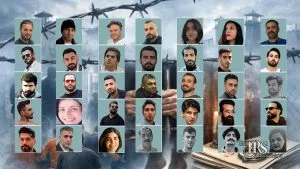
A significant portion of these detainees are held completely outside judicial oversight. Complete disconnection from families, lack of access to lawyers, lack of information about their location, and transfers to secret detention centers are common patterns reported by families across the country. This situation, amid the continuation of nationwide protests, has sharply increased concerns about the fate of the prisoners.
Mass and extrajudicial arrests; a tool to consolidate repression
Human rights activists emphasize that the widespread arrests following the nationwide protests have not followed legal procedures but have been carried out as mass, preemptive operations. Many detainees were arrested without judicial warrants, during nighttime raids or while present on the streets. This trend has intensified particularly after the street protests subsided, turning into a tool for social control and preventing new waves of protests.
Reports indicate that the names of some detainees have deliberately not been registered in official prison records; according to legal experts, this creates the conditions for torture, enforced disappearances, and even killings in custody. Failing to register detainees’ names effectively makes any legal oversight or follow-up impossible.
Show trials and threats of execution
Simultaneously with the escalation of suppression of the nationwide protests, senior judicial officials have openly spoken of “expedited trials” and “decisive punishments.” In this context, many detainees face charges such as “enmity against God” (moharebeh), “corruption on earth” (efsad-e fel-arz), “terrorism,” and “collaboration with foreigners”—charges that under existing laws can lead to death sentences.
Human rights activists warn that this process recalls past experiences in suppressing nationwide protests, where minutes-long trials, forced confessions, and pre-determined sentences became tools for the physical elimination of protesters. The widespread broadcasting of televised confessions—reportedly obtained under torture and psychological pressure—has heightened concerns about the repetition of extrajudicial executions.
Among the protesters at risk of charges leading to the death penalty are the following:
- Conscript soldier Javid Khales (reportedly sentenced to death for refusing to shoot at protesters)
- Salah Yousefi
- Shervin Bagherian (a 17-year-old protester accused in relation to events in Isfahan, with forced confession broadcast)
- Saeed Zare
- Mohammad Abbasi and his daughter
- Mohammadreza Tabari
- Dr. Sobhan Esmaildoost
- Shayan Shakibai
- Peyvand Naimi
- Venus Hosseininejad
- Ali Safari
- Ashkan Talebi
Forced confessions under torture and denial of medical treatment
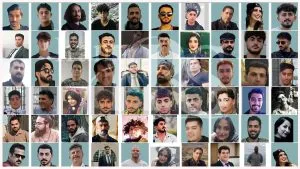
Numerous reports show that many detainees from the nationwide protests, especially the injured, have been deprived of medical services. In some cases, witnesses have reported deaths of detainees due to lack of medical care or “headshot” executions in custody. These reports reveal new dimensions of structural violence against detainees.
In addition, families have reported direct threats against detainees to extract forced confessions—confessions used as the basis for issuing heavy sentences, including executions. This pattern once again highlights the role of systematic torture and pressure in fabricating cases against detainees from the nationwide protests.
The necessity of publishing detainees’ names
Civil and human rights activists stress that publicly releasing the names of detainees is one of the most important ways to reduce the risk of torture and enforced disappearances. Past experiences show that detainees whose names and situations have been publicized face fewer extrajudicial actions. In contrast, forced silence by families gives interrogators free rein to apply pressure, torture, or even eliminate prisoners.
For this reason, families of detainees from the nationwide protests are urged—despite threats—to publish information about the time, place, and conditions of their children’s arrests and share it with independent organizations.
Denial of access to lawyers and family contact for detainees
One consistent pattern of the regime’s treatment of protesters is the systematic deprivation of detainees’ basic legal rights, including access to a lawyer and family contact. According to available information, only a portion of detainees deemed to have “lighter charges” by judicial authorities are allowed limited family contact. These individuals are often held in prisons such as Tehran Great Prison, where their situation—though concerning—is somewhat traceable.
In contrast, detainees with “heavier” charges are completely deprived of family contact and lawyer access. In many cases, even their place of detention is unknown, and responsible institutions refuse to provide any explanation about their fate. Reports indicate these individuals are at risk of pressure and torture, with serious danger of heavy sentences, including secret executions.
Enforced disappearances of protesters and families’ lack of information
At the same time, some families have stated that their loved ones left home to participate in protests and never returned. These families, after visiting various institutions, have neither found their relative’s name among hospital patients nor identified their body among those transferred to forensic centers. No official body has taken responsibility for their detention or provided information about their status—a situation that clearly matches the definition of enforced disappearance.
The lack of accountability, denial of arrests, and families’ confusion among various institutions not only increases their psychological suffering but also eliminates any effective legal follow-up. This trend is a sign of organized efforts to conceal the fate of arrested protesters.
Visual evidence of killings in custody and suspicious deaths
In addition, images and videos published from morgues of the deceased—including Kahrizak forensic center—on state television and social media reveal even more alarming dimensions. In these images, some bodies show clear injuries from headshots, while also bearing signs of hospitalization, such as hospital gowns, medical identification bracelets, and even vital signs monitoring equipment or breathing tubes.
Social media has also reported numerous cases where bodies were identified in forensic centers days after arrest or disappearance, with clear signs of torture visible on some. These collective pieces of evidence paint a disturbing picture of widespread violations of fundamental human rights and a lack of transparency and accountability from the authorities.
Call for intervention by international bodies
As the crisis of detainees from the nationwide protests grows daily, human rights activists have called for immediate intervention by international bodies. Specifically, the United Nations and Amnesty International have been urged to send fact-finding missions to visit prisons and detention centers and register detainees’ names.
Observers believe that global indifference to the situation of detainees from the nationwide protests could lead to repeated large-scale human tragedies. Officially registering prisoners’ names, applying diplomatic pressure on regime leaders, and pursuing accountability for human rights violators are actions that could save thousands of lives.
Widespread human rights violations against detainees from the nationwide protests
- Violation of Article 6 of the International Covenant on Civil and Political Rights – Right to life: Threats of execution against detainees, reports of killings in custody, headshots on injured detainees, and deliberate denial of medical care constitute clear violations of the right to life. States are obligated to protect the lives of those in custody, not place them in immediate danger through direct or indirect actions.
- Violation of Article 7 of the International Covenant on Civil and Political Rights and the Convention against Torture – Prohibition of torture and inhuman treatment: Widespread reports of physical and psychological torture, prolonged solitary confinement, threats, humiliation, forced confessions, and pressure on families are absolute violations of the prohibition on torture—an prohibition that cannot be suspended even in emergencies.
- Violation of Article 9 of the International Covenant on Civil and Political Rights – Right to liberty and security of person: Mass, extrajudicial arrests without warrants, transfers to unknown locations, failure to register names in official prison records, and enforced disappearances constitute clear violations of the right to liberty and security and the prohibition of arbitrary detention.
- Violation of Article 14 of the International Covenant on Civil and Political Rights – Right to a fair trial: Deprivation of detainees from independent lawyers, holding expedited and show trials, use of confessions obtained under torture, and issuing heavy sentences—including executions—without minimum fair trial guarantees violate the fundamental right to a fair trial.
- Violation of the International Convention for the Protection of All Persons from Enforced Disappearance: Failure to disclose detainees’ locations, complete lack of information for families about their loved ones’ fate, and prevention of independent oversight constitute enforced disappearance—a continuing crime until the person’s fate is clarified.
See also the below articles:
- Shocking Video of Security Forces Vehicle Running Over People in Ardabil During the Nationwide Protests of 2025-2026
- Arrest of Azar Mansouri by the IRGC Intelligence Organization in Qarchak
Follow Iran Human Rights Society on social networks:
Telegram /Twitter /Instagram / YouTube / Facebook
Join Iran Human Rights Society on Twitter




Discussion about this post