
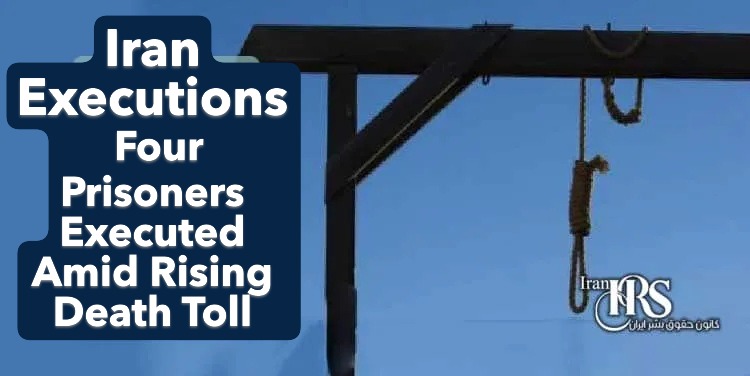
Iran executions reach 144 in past 3 weeks, with four prisoners killed in Ilam, Bojnurd, and Khorramabad.
Iran Human Rights Society, Friday, October 10, 2025 – Iran executions have surged to alarming levels, with 144 prisoners killed in past 3 weeks alone. This equates to over seven executions daily—one every three hours. On October 6 and October 10, 2025, authorities executed four prisoners in Ilam, Bojnurd, and Khorramabad prisons. These acts violate international human rights standards and reflect the regime’s strategy to suppress dissent. This article details the latest Iran executions, their circumstances, and their conflict with global human rights commitments.
Shocking Statistics of Iran Executions in October
In past 3 weeks, Iran executed at least 144 prisoners, averaging over seven deaths per day. This relentless pace—one execution every three hours—highlights a brutal policy. The regime claims these acts target serious crimes. However, human rights groups argue they aim to instill fear and silence opposition. The Iran Human Rights Society reported these figures on October 10, 2025, underscoring the crisis. Continuous uprisings fuel this surge, as the regime responds to demands for change with lethal force.
Homayoun Safari Executed in Ilam Prison
On October 11, 2025, Homayoun Safari faced execution at dawn in Ilam Prison. Authorities charged him with murder. They provided no details on his trial. Reports suggest rushed proceedings and limited legal access. Economic hardship often drives such cases, yet the regime opts for death over reform. This execution adds to the wave of Iran executions, leaving families devastated. Society feels the growing weight of these losses, yet resistance persists.
Hafez Rahmat Hanged in Khorramabad Prison
Hafez Rahmat died by hanging at dawn on October 11, 2025, in Khorramabad Prison. The charge was murder. The judicial process lacked transparency. Authorities denied him proper legal counsel. Economic struggles likely contributed to his situation, but the regime ignored these factors. This case mirrors broader patterns in Iran executions. It fuels public outrage. Communities quietly rally against this injustice, demanding change despite the risks.
Two Prisoners Executed in Bojnurd Prison
On October 7, 2025, Bojnurd Prison saw the execution of two prisoners at dawn. Ibrahim Azizi and an Afghan national faced death for narcotics-related charges. Arrested in a joint case, they received no fair trial. The regime often targets marginalized groups, including foreign nationals, in such cases. These executions reflect the broader strategy of Iran executions to control society through fear. Yet, public dissent continues to challenge this approach.
Executions Violate the Universal Declaration of Human Rights
Article 3 of the Universal Declaration of Human Rights states: “Everyone has the right to life, liberty, and security of person.” Iran executions directly contradict this principle. They strip individuals of their fundamental right to life. The irreversible nature of death penalties risks unfixable judicial errors. Some execution methods, like hanging, constitute inhumane treatment. These practices breach international standards, drawing condemnation from global human rights organizations.
Breaching International Human Rights Commitments
Iran, a signatory to the International Covenant on Civil and Political Rights, violates Article 6 with its execution practices. This article allows the death penalty only for serious crimes with full guarantees of a fair trial. Iran executions often lack transparency. Courts restrict defendants’ rights and operate without independence. Forced confessions and fabricated evidence are common. These flaws make Iran’s death penalty practices a clear violation of its international obligations.
The Broader Impact of Iran Executions
Iran executions extend beyond individual cases, deepening societal fear and distrust. Families of victims suffer immense trauma. Communities face growing anxiety, knowing justice is neither fair nor transparent. The regime’s reliance on executions to suppress dissent fails to quell unrest. Instead, it fuels public anger and strengthens calls for reform. International pressure and transparent reporting remain crucial to addressing this crisis.
See also the below articles:
- Iran Executions: The Regime’s Strategy to Suppress Dissent
- Ehsan Faridi Death Sentence Upheld by Iran’s Supreme Court: Urgent Calls for Justice Amid Unfair Trial Fears
Follow Iran Human Rights Society on social networks:
Telegram /Twitter /Instagram / YouTube / Facebook
Join Iran Human Rights Society on Twitter






Discussion about this post