
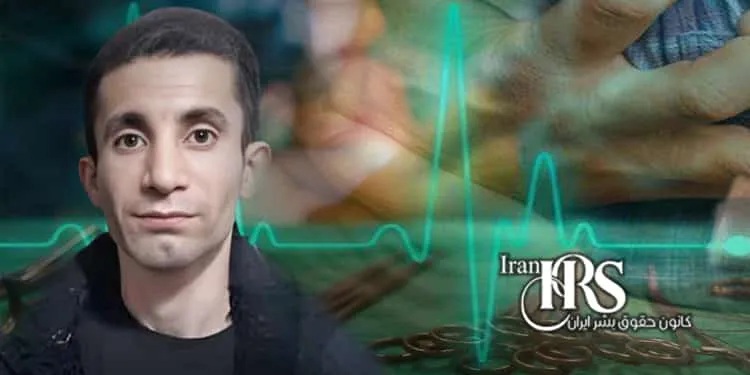
Motaleb Ahmadian, political prisoner in Evin Prison, suffers medical deprivation and white torture. Authorities block treatment and medications amid worsening health.
Iran Human Rights Society, Friday, 5 Azar 1404 – Motaleb Ahmadian, a political prisoner held in Evin Prison, despite suffering from a series of serious and chronic illnesses, continues to be deprived of access to specialized treatment, dispatch to medical centers outside the prison, and even receiving essential medications; a situation that, according to human rights observers, is a clear example of “white torture” and gradual pressure on the lives of sick prisoners.
Multiple Serious Illnesses Plague Motaleb Ahmadian
Motaleb Ahmadian suffers from many chronic illnesses. He deals with heart and lung problems. Severe digestive disorders affect him daily. Spinal injuries and nervous system issues add to his pain.
Specifically, doctors diagnose hernia and diaphragmatic rupture. Intestinal adhesion complicates matters. Gastrointestinal ulcers, including duodenal ulcer, pose risks of malignancy. Gastric reflux troubles him constantly. Moreover, pulmonary edema swells his lungs. Unstable blood pressure fluctuates dangerously. Irregular heartbeat threatens his life. Testicular infection and lumbar disc issues cause ongoing suffering. Each condition demands specialized care. However, authorities provide none.
On October 6, 2025, officials dispatched him to hospital. The doctor absent that day. They returned him without examination. No further dispatches occurred since.
Preventing Medication Delivery
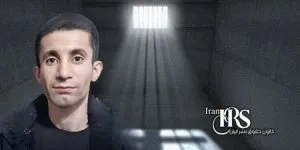
The deterioration of Motaleb Ahmadian’s physical condition has intensified at a time when his prescribed medications have run out. However, the protection officials at Evin Prison are preventing the delivery of medications that his family and relatives have prepared. This source close to the family says: “Currently, Mr. Ahmadian’s abdomen is swollen and he has severe and continuous pains, but even the entry of his essential medications into the prison is not allowed.”
Such actions, especially towards prisoners with chronic illnesses, have created serious concerns about life-threatening dangers and irreversible consequences for their health.
A Letter from Pain and Suffering
Recently, Motaleb Ahmadian in a letter from inside the prison reported the intensification of pains and deterioration of his physical condition. In part of this letter, he wrote:
“I am writing this text in a state where all parts of my body are in pain to the utmost degree, or at least I hope this level of pain is the final limit; because I have not experienced anything more painful in my life. Since the last letter I wrote, my physical condition has not only not improved but has gotten worse.”
This letter reflects conditions that many sick prisoners in Iran’s prisons face; conditions in which pain and illness become tools of pressure.
Hunger Strike in Protest Against Medical Deprivation
Motaleb Ahmadian had previously protested his treatment situation. In Ordibehesht of this year, in reaction to the Tehran Prosecutor’s opposition to suspending the execution of the sentence for treatment and the continuation of deprivation from medical care, he went on hunger strike. This protest action took place while doctors had previously warned about the deterioration of his physical condition.
Judicial History and Years of Imprisonment
Authorities sentenced Motaleb Ahmadian in 2018-2019. Branch One of Kurdistan Province Criminal Court charged him. “Participation in murder” brought eight years imprisonment and blood money. “Intentional assault” added one year and more payment. He started in Sanandaj Prison. Transfers moved him to Evin, then Rajaee Shahr in Karaj.
In August 2024, after Rajaee Shahr closure, he returned to Evin Prison. Other prisoners transferred too. Motaleb Ahmadian, about 39 years old, comes from Baneh county. In October 2010, authorities arrested him again. Charges included “moharebeh” via opposition group membership. They sentenced him to 30 years exile. He served time in Minab Prison, then Saqqez. Additional convictions mark his record.
In addition, Motaleb Ahmadian, about 39 years old and from Baneh county. He was also arrested in Mehr 1389 on charges of moharebeh through membership in one of the opposition groups and sentenced to 30 years in exile. He was imprisoned for years in Minab Prison and then in Saqqez Prison and has a record of other convictions in his file.
Human Rights Violation; Medical Deprivation as White Torture
The systematic deprivation of Motaleb Ahmadian from treatment and medication has seriously threatened his health and life and is a clear example of white torture and violation of human rights commitments.
- Article 5 of the Universal Declaration of Human Rights– No one shall be subjected to torture or to cruel, inhuman or degrading treatment or punishment; medical deprivation is an example of inhuman treatment.
- Article 25 of the Universal Declaration of Human Rights– Every human has the right to medical care and an adequate level of health; preventing treatment is a direct violation of this fundamental right.
- Article 7 of the International Covenant on Civil and Political Rights– Inflicting severe physical and mental suffering through lack of medical care is prohibited and an example of indirect torture.
- Article 10 of the International Covenant on Civil and Political Rights– Persons deprived of liberty must be treated with humanity and respect for the inherent dignity of the human person; therapeutic negligence violates this principle.
Concerns and Requests
The continuation of the current situation has aroused widespread concerns among the family, human rights activists, and public opinion. They demand the immediate dispatch of Motaleb Ahmadian to specialized medical centers, unobstructed access to medication, and the cessation of any punitive behavior under the cover of medical deprivation. Past experiences have shown that indifference to the health status of sick prisoners has repeatedly led to irreparable human tragedies.
In a situation where reports indicate the deterioration of the physical condition of this political prisoner, the continuation of medical deprivation not only puts Motaleb Ahmadian’s life in serious danger, but once again brings fundamental questions about the state of human rights and the treatment of sick prisoners in the prisons of the dictatorship ruling Iran to the forefront of public attention.
See also the below articles:
- Statistical Analysis and Review of Executions in Iran: Alarm Bell for Intensification of the Death Penalty
- UN Experts Demand Halt to Zahra Tabari Execution in Iran
Follow Iran Human Rights Society on social networks:
Telegram /Twitter /Instagram / YouTube / Facebook
Join Iran Human Rights Society on Twitter






Discussion about this post