
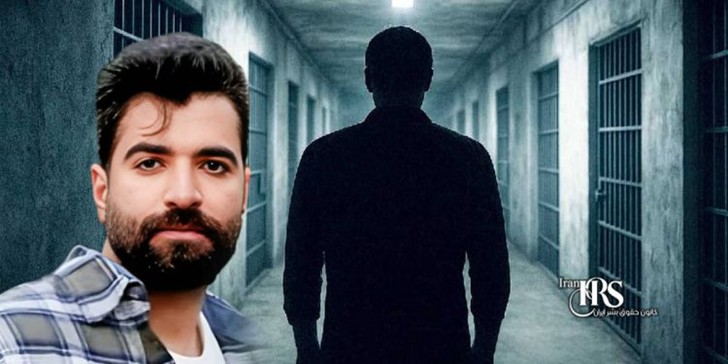
Ramin Rostami remains in indefinite detention in Evin Prison after more than 130 days. Deprived of lawyer access and facing serious charges, his case highlights ongoing human rights violations against cultural activists in Iran.
Iran Human Rights Society, Sunday, December 27, 2025 – As of late December 2025, Ramin Rostami, a Tehran-based independent cultural publisher, continues to endure prolonged and uncertain detention in Evin Prison. More than four months after his arrest on August 20, 2025, no formal indictment has been served, no court hearing has been scheduled, and he has been consistently denied access to a lawyer. This situation exemplifies the pattern of arbitrary detention and judicial opacity frequently reported in cases involving political and cultural activists in Iran.
Arrest, Initial Detention, and Transfer

Security forces arrested Ramin Rostami during a raid in Tehran on August 20, 2025. He was first transferred to Ward 209 — the notorious Ministry of Intelligence section inside Evin Prison — where most political prisoners undergo initial interrogation. After spending over three months in this high-security ward, he was moved to one of the general wards. Despite the transfer, the judicial status of his case remains completely unclear, raising serious concerns about the legality and transparency of the proceedings.
According to human rights sources, Ramin Rostami faces the charge of “cooperation with opposition groups against the regime.” However, no official document outlining the accusations has been presented to him or his family, and he has been prevented from mounting any meaningful defense.
Family-Wide Security Crackdown
The August 20 raid extended beyond Ramin himself. Several relatives and close associates were detained simultaneously, including his cousin Ehsan Rostami. In a related but separate case, Branch 5 of the Evin Prosecutor’s Office formally charged Ehsan with Baghy (armed rebellion against the state) — one of the most severe charges under Iranian law, carrying the possibility of capital punishment.
On October 2, 2025, both Ramin and Ehsan began a 23-day hunger strike to protest harsh interrogation methods, poor detention conditions, and persistent security pressure. The prolonged strike significantly deteriorated their health and intensified international concern.
The pressure campaign reached another family member when, on October 17, 2025, security forces arrested Jahangir Rostami, Ehsan’s 63-year-old retired teacher father, at his home in Harsin. Reports indicate he was severely beaten during the arrest, sustaining visible head and facial injuries. Two days later, authorities deliberately presented the bloodied Jahangir in front of his son — an act widely condemned as psychological torture and attempted coercion.

Public reaction was swift. Retired teachers’ organizations in Kermanshah and Harsin issued strong statements denouncing the violence. Jahangir’s case even became a symbol during protests by retired educators. Finally, on December 16, 2025, he was released on bail set at 1.5 billion tomans.
Background: Cultural Activism Under Increasing Pressure
Ramin Rostami, originally from Harsin, was known in Tehran’s intellectual circles as an independent publisher specializing in cultural, literary, and intellectual works. No credible reports have ever linked him to violence or armed activity. Nevertheless, Iranian security agencies have intensified scrutiny of cultural figures in recent years, frequently reinterpreting peaceful publishing and distribution efforts as threats to national security.
This trend reflects a broader clampdown on independent voices in Iran’s cultural sphere, where even non-political intellectual activities increasingly attract harsh security responses.
Clear Violations of International Human Rights Standards
The ongoing case of Ramin Rostami and his family illustrates multiple breaches of fundamental rights protected under international law:
- Article 9 of the Universal Declaration of Human Rights — protection against arbitrary arrest and detention — is violated through more than 130 days of imprisonment without formal charges or judicial oversight.
- Article 10 — the right to a fair and public hearing — is denied due to the complete lack of access to legal counsel and any form of effective defense.
- Article 5 — prohibition of torture and cruel, inhuman, or degrading treatment — is breached by reported physical violence, prolonged solitary confinement, psychological pressure, forced presentation of injured family members, and extended hunger strikes under duress.
See also the below articles:
- Statistical Analysis and Review of Executions in Iran: Alarm Bell for Intensification of the Death Penalty
- UN Experts Demand Halt to Zahra Tabari Execution in Iran
Follow Iran Human Rights Society on social networks:
Telegram /Twitter /Instagram / YouTube / Facebook
Join Iran Human Rights Society on Twitter






Discussion about this post