
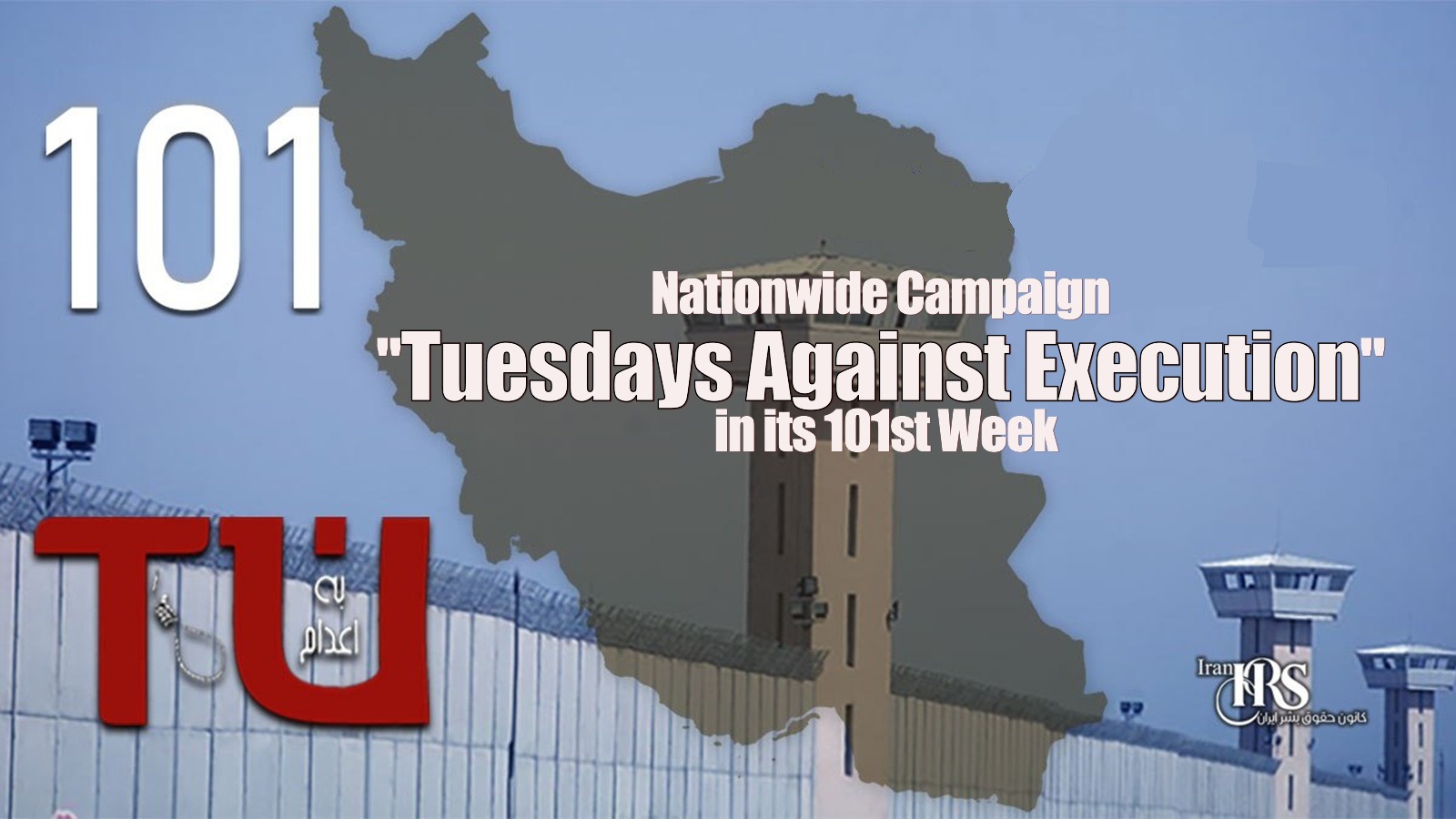
The “Tuesdays Against Execution” campaign reaches its 101st week with unprecedented participation across dozens of Iranian cities. Diverse groups unite against the death penalty in a powerful national cry for life and freedom.
The chorus of diverse segments of society has elevated “Tuesdays Against Execution” beyond a limited protest, transforming it into a symbol of social solidarity and a collective demand for the right to life and freedom.
Unprecedented Expansion of Protests in the 101st Week
The Tuesdays Against Execution campaign enters its 101st week with remarkable growth. This weekly protest now unites people across Iran. Families, students, workers, and retirees join together. They demand an end to the death penalty. Their voices grow louder every week.
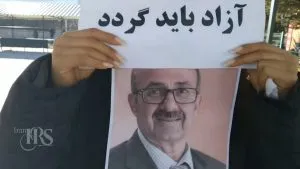
Dozens of Cities, One Common Demand
Major locations include Tehran, Shiraz, Tabriz, Isfahan, and Mashhad. Smaller cities like Karaj, Qazvin, Rasht, and Sanandaj also participate. This wide geographical spread shows strong national support. The movement connects people from north to south. It links east to west in shared opposition.
Participation of Diverse Social Groups
Students chant slogans at gatherings. Teachers and retirees bring decades of experience. Workers highlight the link between executions and daily struggles. Women, especially grieving mothers, add deep emotional power. Youth energize the streets with fresh determination. Artists and union activists expand the message further. This broad participation proves the cause belongs to everyone.
Support of Retirees for the Tuesdays Against Execution Campaign
Teachers and retirees, with years of experience facing economic and social pressure, have become the voice of a generation demanding human dignity and justice. Workers and laboring classes have also shown through their participation that executions and repression are directly tied to their livelihood, security, and future. The presence of women—especially grieving mothers and sisters—has added a deeply human and emotional dimension to the movement, turning it into a moral cry against state violence. The unity of these diverse groups has taken “Tuesdays Against Execution” beyond a limited protest and made it a symbol of social solidarity and a collective demand for the right to life and freedom.
Pivotal Role of Families of Justice-Seekers; The Beating Heart of the Campaign
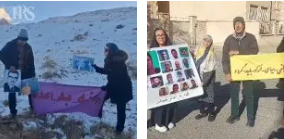
They carry photos of loved ones. Mothers, fathers, sisters, and brothers stand firm. They chant powerful slogans together. “No to execution.” “Execution never, for anyone.” “Free our children.” Their presence reminds society of real human costs. These families refuse silence. They fight to break the cycle of violence. These families loudly chanted:
- No to execution
- Support Tuesdays Against Execution
- Execution never, for anyone
- Free our children
According to those close to these families, their presence is not merely to defend the individual rights of their loved ones, but a conscious effort to stop the ongoing cycle of executions and elimination. Many protesters believe that the steadfastness of these families has played a major role in turning the campaign into a broad social movement and has once again drawn public attention to the “right to life” as a fundamental principle.
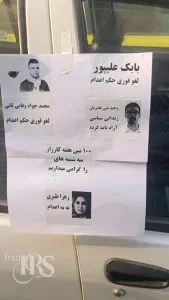
No to Execution; From Weekly Protest to National Demand
After 101 weeks since the campaign began, “No to Execution” is no longer just a slogan—it has become a national and widespread demand. The weekly continuity of the gatherings, simultaneous presence in dozens of cities, and the accompaniment of families of justice-seekers demonstrate that this protest movement has succeeded in forging a link between prison, street, and society. Many observers believe that the nationwide spread of the “Tuesdays Against Execution” campaign reflects a significant shift in the country’s social atmosphere—a shift in which opposition to the death penalty has become one of the main axes of protests.
Execution as a Tool of Political and Social Repression
In the structure of the ruling dictatorship in Iran, execution is not used as a judicial tool, but as one of the primary instruments of political and social repression. The widespread use of the death penalty—especially against political prisoners, protesters, minorities, and young people—is intended to create fear, silence the voice of protest, and prevent the formation of collective resistance. By relying on executions, the authorities seek to send a clear message to society: the cost of protest is heavy and irreversible. This approach demonstrates that execution is far more about preserving power and controlling society through fear than about delivering justice; it is an instrument that is used with greater intensity in times of social and political crisis.
See also the below articles:
- Continuation of Detention and Uncertainty of Ramin Rostami in Evin Prison
- Motaleb Ahmadian Faces Medical Deprivation and White Torture in Evin Prison
Follow Iran Human Rights Society on social networks:
Telegram /Twitter /Instagram / YouTube / Facebook
Join Iran Human Rights Society on Twitter




Discussion about this post