
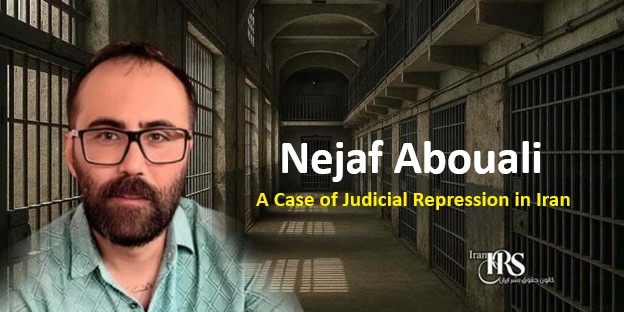
Nejaf Abouali’s re-arrest in 2025 for an 8-month sentence in Dastgerd Prison highlights Iran’s judicial repression and human rights violations.
Iran Human Rights Society, Monday, September 8, 2025-The Nejaf Abouali re-arrest in 2025 underscores Iran’s harsh crackdown on dissent. On September 8, 2025, Nejaf Abouali, a dissenting citizen from Shahinshahr, Isfahan, surrendered to authorities to serve an eight-month sentence issued by the Isfahan Revolutionary Court. Authorities swiftly transferred him to Dastgerd Prison in Isfahan. Abouali’s history of arrests during the 2017 and 2022 protests reveals a pattern of targeting activists. His case exposes the regime’s use of vague charges to silence critics, raising serious human rights concerns.
Repeated Charges Against Nejaf Abouali

The Iranian judiciary accused Abouali of “propaganda against the regime,” “spreading falsehoods,” and “publishing indecent images via computer.” These vague charges often target political opponents. Initially, the Isfahan Criminal Court sentenced him to five months in prison. On January 20, 2025, he served three months in Dastgerd Prison and gained parole for the remaining two months. However, the Revolutionary Court filed a parallel case with identical charges, imposing a harsher eight-month sentence. His lawyer noted that delayed notifications prevented any legal challenge, showcasing judicial overreach.
Unfair Trials and Judicial Abuses
Nejaf Abouali’s re-arrest violates fair trial principles. The judiciary tried him twice for the same charges, breaching the “non bis in idem” principle, which prohibits double jeopardy. Vague accusations like “propaganda against the regime” lack clear legal definitions, enabling authorities to abuse power. Moreover, delayed notifications blocked Abouali’s right to appeal. Such practices reflect a judicial system driven by political motives rather than legal standards, undermining justice and fairness.
A History of Persecution
Abouali’s activism during the 2017 and 2022 nationwide protests led to multiple arrests. These protests, sparked by economic and social grievances, faced brutal crackdowns, with thousands detained, tortured, or interrogated. Abouali’s repeated arrests highlight the regime’s intolerance for dissent. Despite peaceful protests, he continues to face relentless judicial harassment, illustrating the broader suppression of free expression in Iran.
Dastgerd Prison: A Hub of Repression
Dastgerd Prison in Isfahan, where Abouali serves his sentence, symbolizes repression. Known for overcrowding, poor sanitation, and inadequate medical care, it houses many political prisoners. The prison has a grim history of executing activists, particularly those arrested during recent protests. Reports confirm widespread rights violations, making Dastgerd a stark example of Iran’s inhumane prison conditions.
Iran’s Crackdown on Dissent
The Nejaf Abouali re-arrest reflects Iran’s broader strategy to crush dissent. The regime responds to minor labor or political protests with severe repression. Authorities fabricate charges like “collaboration with the enemy” or “disrupting public order” to justify lengthy sentences or executions. Instead of addressing public demands, the judiciary silences critics, revealing a deep crisis in Iran’s legal system. This pattern of oppression stifles free speech and escalates human rights violations.
Human Rights Violations in Abouali’s Case
Abouali’s case involves several human rights violations:
- Double Jeopardy: The judiciary convicted him twice for the same charges, violating the “non bis in idem” principle.
- Unfair Trial: Delayed notifications denied him the right to appeal, undermining due process.
- Freedom of Expression: Charges like “propaganda against the regime” punish Abouali for exercising his rights under Article 19 of the ICCPR.
- Prison Conditions: Holding political prisoners like Abouali alongside general inmates risks their safety and violates offense separation principles.
See also the below articles:
- Iran Executions Surge: 94 Prisoners Killed in past two weeks
- Condemnation of Mamosta Ayat Gholami: Iran’s Crackdown on Sunni Clerics in Kermanshah
Follow Iran Human Rights Society on social networks:
Telegram /Twitter /Instagram / YouTube / Facebook
Join Iran Human Rights Society on Twitter







Discussion about this post