

The Tuesdays Against Execution campaign in its 85th week on September 9, 2025, unites Iranians in protests against the regime’s death penalty, demanding justice.
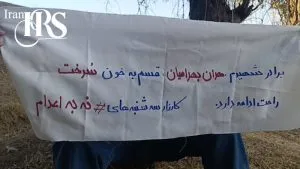
Iran Human Rights Society, Tuesday, September 9, 2025 – The Tuesdays Against Execution campaign, in its 85th week on September 9, 2025, showcases Iran’s unyielding fight against the regime’s execution policies. From Tehran to Sabzevar, citizens and families of political prisoners rallied, chanting “No to Execution” and honoring martyrs like Mehran Bahramian. This movement, born in Qezel Hesar Prison in 2023, has grown into a national outcry, defying repression and amplifying demands for human rights.
Nationwide Protests Fuel the Movement
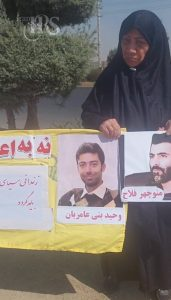
On September 9, 2025, protests erupted across cities like Kermanshah, Sanandaj, and Lahijan. Demonstrators held photos of executed prisoners, including Mehran Bahramian, killed in Semirom. Chants like “Political Prisoners Must Be Freed” and “The Blood of the Uprising Martyr, Mehran Bahramian, Sets Fire to These Tyrants” echoed through the streets. These gatherings highlight the campaign’s transformation from a prison protest into a societal demand, uniting diverse groups against state violence.
Key Chants Driving the Campaign
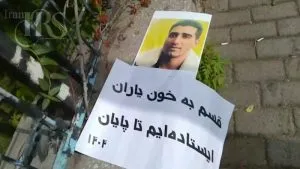
The Tuesdays Against Execution campaign resonates with powerful slogans:
- “We stand until the end, sworn by the blood of our comrades.”
- “No to execution.”
- “Political prisoners must be freed.”
- “My martyred brother, Mehran Bahramian, your path continues.” These chants, shouted in cities like Zanjan and Chalus, reflect the movement’s resolve. They symbolize defiance against the regime’s use of executions to suppress dissent, inspiring more citizens to join.
From Prison Cells to National Demand
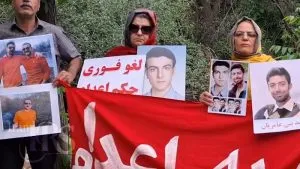
What began as a hunger strike in Qezel Hesar Prison in 2023 has evolved into a nationwide movement. The Tuesdays Against Execution campaign now spans 52 prisons, with Sabzevar Prison joining in its 85th week. Over 756 executions have occurred since March 21, 2025, fueling public outrage. The campaign’s growth shows that “No to Execution” is no longer just a slogan but a collective call for justice.
Families Lead the Resistance
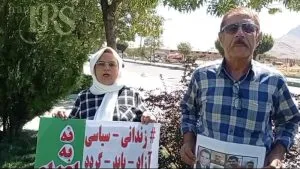
Families of political prisoners, especially mothers, drive the campaign’s emotional core. Holding photos of their loved ones, they protest despite threats and summons. Their courage amplifies the voices of prisoners, turning personal grief into a public demand for change. In Semirom, shopkeepers and residents joined families to protest Mehran Bahramian’s execution, proving the campaign’s broad appeal.
A Symbol of Political Crisis
The Tuesdays Against Execution campaign exposes the regime’s legitimacy crisis. Each execution, meant to instill fear, instead sparks new protests. The judiciary’s reliance on death sentences, often based on vague charges, fails to silence dissent. Instead, it unites prisoners, families, and citizens in a growing movement that challenges the regime’s repressive tactics.
International Support Grows
The campaign has drawn global attention. Human rights organizations have praised the Tuesdays Against Execution movement as a beacon of civil resistance. Reports highlight Iran’s violation of international laws, including Article 6 of the ICCPR, which restricts the death penalty. The UN and activists have called for a moratorium on executions, urging global solidarity with Iran’s protesters.
Human Rights Violations in Focus
The campaign protests Iran’s breach of human rights obligations:
- Right to Life: Article 3 of the Universal Declaration of Human Rights is violated by arbitrary executions.
- Prohibition of Cruel Punishment: Article 5 of the ICCPR condemns inhumane treatment, yet executions persist.
- Death Penalty Restrictions: Article 6 of the ICCPR limits capital punishment, which Iran ignores with politically motivated sentences. These violations fuel the campaign’s demand for an end to the death penalty.
A Movement That Endures
In its 85th week, the Tuesdays Against Execution campaign remains a cornerstone of Iran’s fight for justice. Despite security threats, the movement grows, with protests in 52 prisons and countless cities. Families and prisoners vow to continue until executions cease. The campaign’s resilience proves that executions no longer silence dissent but ignite resistance, paving the way for change.
See also the below articles:
- Nejaf Abouali Re-Arrest: A Case of Judicial Repression in Iran
- Iran Executions Surge: 15 Prisoners Executed Across Multiple Prisons
Follow Iran Human Rights Society on social networks:
Telegram /Twitter /Instagram / YouTube / Facebook
Join Iran Human Rights Society on Twitter







Discussion about this post