
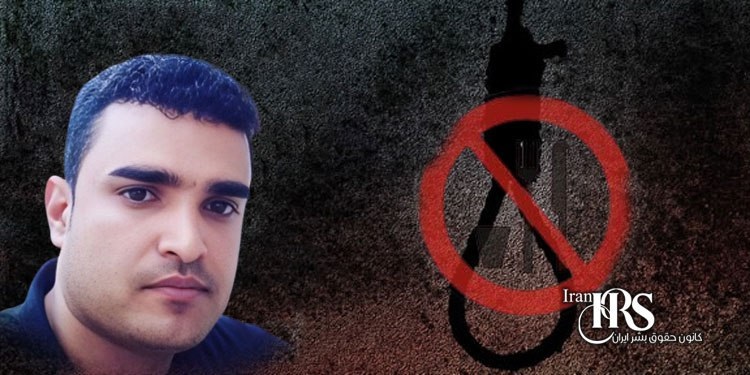
“No to Execution”: Revisiting Nasser Rahimi’s Execution and the Necessity of Expanding the “No to Execution” Campaign Against Unjust Executions in Iran
Iran Human Rights Society, Saturday, May 24, 2025 – As the world moves toward abolishing the death penalty, in Iran, the sound of death still echoes from the gallows. The case of Nasser Rahimi, one of thousands of victims of a judicial system lacking expertise, transparency, and respect for the rights of the accused, underscores why expanding the “Tuesdays Against Execution” campaign is more critical than ever.
Nasser Rahimi: A Man Trapped, Not by Crime, but by Injustice

Nasser Rahimi, a 36-year-old father from Mashhad, was arrested in 2020 during a trip to Zahedan to sell a car. What seemed like a routine transaction turned into a death trap. Stopped at a checkpoint in Birjand, authorities found three kilograms of heroin in his vehicle. Rahimi immediately stated that the car had been in the possession of potential buyers for hours and that he was unaware of the drugs, even providing the name of a possible suspect. However, a judicial system that does not prioritize thorough investigation disregarded his defense. He was arrested, sentenced to death, and executed without prior notice to his family.
His family was only informed when called to retrieve his body—a common practice in Iran’s judicial system that blatantly violates the family’s right to a final farewell, protest, or appeal.
The Fragility of Justice in Drug-Related Cases
Nasser Rahimi’s case reflects the fate of thousands of prisoners in Iran who are sentenced to death on drug-related charges through unfair processes without effective legal defense. In many such cases, verdicts rely on forced confessions obtained under torture, without expert analysis of evidence like fingerprints, the timing of drug planting, or actual ownership of the substances.
When Expertise is Sacrificed, Lives are Easily Taken
The greatest tragedy lies in the judicial process for drug-related crimes, where judges lack scientific expertise or precise tools to ascertain the truth. This gap leads to hundreds of people being sentenced to death based on unproven assumptions, mere suspicion, or simply being present at the scene.
The “Tuesdays Against Execution” Campaign: A Response to the State’s Machinery of Death
In opposition to this ruthless system, a social and international movement against execution has emerged. The “No to Execution” campaign is more than a slogan—it is a fight to restore human dignity, prevent unjust executions, and push for reform in judicial structures that prioritize vengeance over justice.
The rising number of executions, particularly targeting marginalized and vulnerable communities, reveals that the death penalty is not a solution but a tool of political and social suppression. Expanding the “No to Execution” campaign is not only about raising awareness but also about increasing international pressure and publicizing cases like Nasser Rahimi’s, which is more vital than ever.
Our Historical Responsibility: Amplifying Victims’ Voices by Joining the “No to Execution” Campaign
Today, the voice of Nasser Rahimi’s family, like hundreds of others across Iran, resonates: the cries of mothers and fathers who have lost their children to unfair trials. This voice must be transformed into a global outcry.
True security comes from fostering justice, education, employment, and human dignity—not from erecting gallows. Nasser Rahimi and others like him may no longer be among us, but their cries of injustice must grow louder every day.
Human Rights Violations in Nasser Rahimi’s Case
According to international human rights law, the process of Nasser Rahimi’s arrest, trial, and execution violates several fundamental principles:
Violation of Article 6 of the ICCPR
This article emphasizes the right to life and restricts the death penalty to the “most serious crimes” after a fair trial. Executing Rahimi for a drug-related offense, considered a “non-violent crime” by international bodies, violates this principle.
Violation of Article 14 of the ICCPR (Right to a Fair Trial)
Rahimi was tried and executed without expert analysis of the charges, transparent communication with his family, or likely adequate access to legal counsel, breaching the right to effective defense and an impartial trial.
Violation of Article 7 (Prohibition of Torture and Inhumane Treatment)
Many confessions in such cases are extracted under coercion or threats. If Rahimi was interrogated under duress or without transparency, this constitutes a clear violation of this article.
Ending the Cycle of Death Through Unity in the “No to Execution” Campaign
Nasser Rahimi’s fate is not just a tragic individual story; it is a stark reflection of an unjust judicial system that issues death sentences without regard for human dignity. Now, more than ever, civil society, international organizations, and all conscientious individuals must unite to end the death penalty.
We say in one voice: No to execution, yes to justice.
Follow Iran Human Rights society on social networks:
Telegram /Twitter /Instagram / YouTube / Facebook
Join Iran Human Rights Society on Twitter




Discussion about this post