
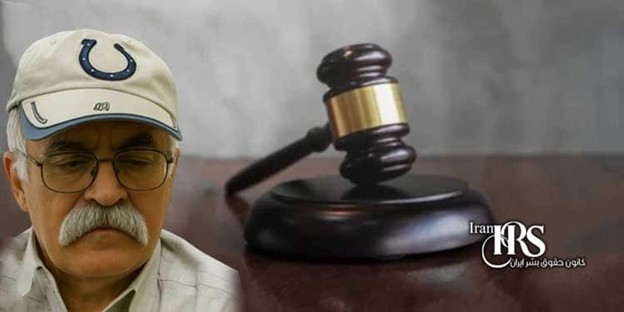
Hamid Sharghi, a political prisoner in Iran, faces re-imprisonment despite critical health issues, violating human rights
Iran Human Rights Society, Sunday, August 17, 2025 – The Karaj Revolutionary Court’s decision to summon political prisoner Hamid Sharghi back to prison, despite his critical health condition, highlights a severe breach of human rights in Iran. Authorities arrested Sharghi in September 2024 for “propaganda against the regime,” sentencing him to one year in prison after a flawed trial. His deteriorating health led to a temporary release on bail, yet the court now demands his return, threatening to confiscate his family’s property. This case exposes systemic abuses against political prisoners, ignoring their right to medical care and humane treatment.
Background of Hamid Sharghi’s Case

Security forces arrested Hamid Sharghi in late September 2024 on charges of “propaganda against the regime.” The Karaj Revolutionary Court sentenced him to one year of discretionary imprisonment following a trial marked by serious irregularities. Sharghi lacked access to an independent lawyer, and the court disregarded his medical condition. His health worsened significantly during detention, prompting doctors to warn that continued imprisonment could endanger his life. Authorities released him temporarily on a 500 million toman bail to seek medical treatment, but the court’s recent re-summoning order ignores these medical concerns.
Health Crisis and Judicial Neglect
Sharghi’s health deteriorated rapidly in prison, with specialists warning that detention posed a direct threat to his life. Despite this, the Karaj Revolutionary Court issued an order for him to resume his sentence. Judicial authorities have further pressured Sharghi by threatening to auction his residential property, registered as bail, if he does not comply. This disregard for his critical health condition violates international standards for prisoner treatment, which mandate adequate medical care for all detainees.
- Osman Mameh: 33 Months of Enforced Disappearance in Iran
- Iran Executions Escalate to Crisis Levels in August 2025
Systemic Abuses Against Political Prisoners
The judiciary’s actions in Sharghi’s case reflect a broader pattern of mistreatment of political prisoners in Iran. Authorities consistently deny detainees access to proper medical care and subject them to psychological pressure. Threatening to confiscate Sharghi’s family home adds financial and emotional strain, exacerbating the harm caused by his re-summoning. Legal experts argue that such actions cause irreparable psychological and social damage, compounding the physical risks of imprisonment.
Impact on Sharghi and His Family
The re-summoning of Hamid Sharghi endangers his life and places immense stress on his family. The threat of property confiscation not only jeopardizes his health but also jeopardizes their financial stability. This dual assault—on Sharghi’s well-being and his family’s security—demonstrates a blatant disregard for human dignity. Moreover, the lack of transparency in the judicial process raises concerns about arbitrary detention and unfair treatment.
Call for Accountability
Hamid Sharghi’s case underscores the urgent need for accountability in Iran’s judicial system. Authorities must prioritize prisoners’ health and ensure access to medical care. Furthermore, they should halt threats of property confiscation and psychological pressure. International human rights organizations continue to monitor cases like Sharghi’s, advocating for fair treatment and adherence to global standards. However, systemic change remains critical to address these ongoing violations.
The summoning of Hamid Sharghi back to prison, despite his critical health condition, exemplifies the dire situation faced by political prisoners in Iran. Authorities’ actions violate fundamental rights, including access to medical care and protection from inhumane treatment. The judiciary’s disregard for Sharghi’s health, coupled with threats against his family’s property, demands immediate attention. His case serves as a stark reminder of the systemic human rights abuses in Iran, urging global action to protect vulnerable prisoners.
Follow Iran Human Rights Society on social networks:
Telegram /Twitter /Instagram / YouTube / Facebook
Join Iran Human Rights Society on Twitter





Discussion about this post