
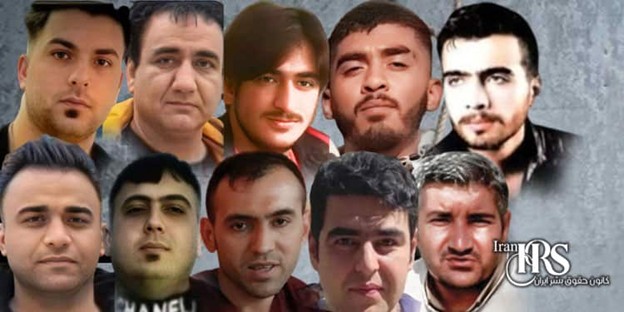
Iran executions soar to 79 in Mordad Persian calendar month, with 16 prisoners executed in Saveh, Semnan, Malayer, and more.
Iran Human Rights Society, Tuesday, August 5, 2025 – Iran executions have escalated to alarming levels, with at least 79 prisoners executed in August 2025. This translates to over five executions daily, or one every five hours. These disturbing statistics stem from prisons in Saveh, Semnan, Malayer, Khorramabad, Mashhad, Tabriz, Nur, Ilam, and Yazd. The Iran Human Rights Society documented these cases on August 5, 2025, highlighting a growing human rights crisis.
Executions in Saveh and Semnan Prisons
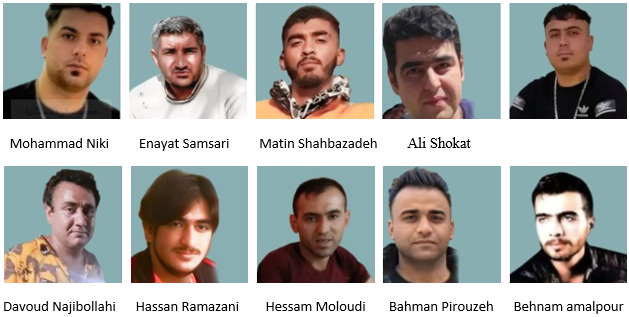
On August 5, 2025, authorities executed Ali Shokat in Saveh Prison. He faced charges of murder, leading to his death sentence. Similarly, Jahanshah Iravani died in Semnan Prison on the same day for drug-related offenses. These cases reflect Iran’s frequent use of capital punishment for diverse crimes. Human rights advocates question the fairness of these trials. Moreover, the rapid execution rate intensifies concerns about judicial transparency and due process.
Malayer and Tabriz: A Troubling Trend
Farzad Yari faced execution in Malayer Prison on August 5, 2025, for murder charges. Meanwhile, Tabriz Prison executed three prisoners on August 4, 2025: Matin Shahbazadeh Moghaddam, 24, Hessam Moloudi, 29, and Enayat Samsari, 36. All received death sentences for murder. These individuals, arrested years earlier, highlight Iran’s persistent reliance on the death penalty. The swift pace of these executions points to systemic issues within the judicial system, raising global alarm.
Nur and Mashhad: Ongoing Capital Punishment
In Nur Prison, authorities executed Hamid Soroush on August 4, 2025. Arrested in 2020 for murder, his case adds to the growing tally of Iran executions. Similarly, Vakilabad Prison in Mashhad executed four prisoners on the same day: Reza Sarparast, Davoud Najibollahi, Bahman Pirouzeh, and Mohammad Niki. All faced drug-related charges. These executions for non-violent crimes draw sharp criticism from international human rights groups. The lack of judicial clarity further fuels global concern.
Khorramabad and Ilam: Diverse Victims of Execution
Khorramabad Prison executed three prisoners, including a woman, on August 3, 2025. Hassan Ramazani, 28, and Mehdi Jouzian Gavbaze died for murder charges, alongside an unidentified woman whose charges remain under investigation. Another prisoner, Saber Azizpour, faced execution there on the same day. In Ilam Prison, Eqbal Abdali died on August 3, 2025, for murder. These cases show the broad application of the death penalty in Iran. The execution of a woman also raises questions about gender disparities in sentencing.
Yazd Prison: Harsh Penalties for Drug Offenses
Behnam Samalpour, 26, faced execution in Yazd Prison on July 23, 2025, for drug-related charges. Authorities arrested him five years earlier. This case underscores Iran’s severe approach to non-violent crimes. International organizations criticize such punishments as disproportionate and inhumane. The continued use of the death penalty for drug offenses violates global human rights standards. Therefore, calls for reform grow louder.
Iran Executions Violate Human Rights
Article 3 of the Universal Declaration of Human Rights declares everyone’s right to life. Iran executions directly contradict this fundamental principle. The irreversible nature of the death penalty risks catastrophic judicial errors. Additionally, certain execution methods amount to torture, breaching human rights norms. Iran, a signatory to the International Covenant on Civil and Political Rights, must uphold fair trial standards for death penalty cases. However, many trials lack transparency and independent oversight, violating these obligations.
Global Outcry Over Iran’s Death Penalty
The alarming rate of Iran executions in August 2025 demands urgent attention. With 79 executions in just days, the pace shows no signs of slowing. Human rights groups call for greater scrutiny of Iran’s judicial practices. The use of the death penalty for non-violent crimes, coupled with questionable trial fairness, sparks global outrage. Advocates urge reforms to align Iran’s practices with international human rights standards, emphasizing the need to protect the right to life.
Follow Iran Human Rights Society on social networks:
Telegram /Twitter /Instagram / YouTube / Facebook
Join Iran Human Rights Society on Twitter






Discussion about this post