Four days after the execution of four political prisoners, the families are still waiting for the delivery of the bodies of their loved ones; a process that according to observers is considered a kind of pressure and psychological torture against the families
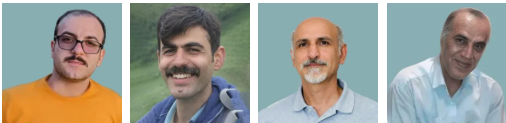
Iran Human Rights Society, Thursday, April 2, 2026 – Based on the news received by the Iran Human Rights Society, with the passage of four days from the execution of four political prisoners, Babak Alipour, Mohammad Taghavi, Akbar Daneshvarkar and Pouya Ghabadi, the judiciary has refused to hand over their bodies to the families and no response has been given to the families. This issue has increased concerns about the continuation of the process of not handing over the bodies of the executed and their secret burial.
Why are the bodies of the executed not handed over to the families?
Based on the news received, with the passage of several days from the execution of four political prisoners, their bodies have not been handed over to the families and the families are in the dark. This is while the families have referred to various institutions for the delivery of the bodies and information about the place of burial, but they have not received any response.
Not handing over the bodies of the executed to the families has also been reported many times in previous years and in many cases the families have remained unaware of the place of burial of their loved ones. This situation has caused the families to not even have the possibility of holding mourning ceremonies and visiting the burial place of their loved ones.
Execution of four political prisoners in two days
At dawn on Monday, March 30, 2026, Mohammad Taghavi and Akbar Daneshvarkar were executed in Qezelhesar Prison. The Mizan News Agency, affiliated with the judiciary, published the news of the execution of these two prisoners. According to reports, the families and lawyers of these prisoners have been unaware of the time of the implementation of the execution sentence and these sentences were carried out suddenly. The sudden implementation of execution sentences and the lack of informing the families about the time of the implementation of the sentence have increased concerns about the process of handling the cases of these prisoners.
On the morning of Tuesday, March 31, 2026, two other political prisoners, Pouya Ghabadi and Babak Alipour, were executed in Qezelhesar Prison. These executions were carried out only one day after the execution of the other two prisoners.
Secret burial and families in the dark
Based on reports, not handing over the bodies of the executed and not announcing their place of burial has also occurred in other cases before. For example, the place of burial of two executed political prisoners in August 2025, Mehdi Hassani and Behrouz Ehsani, has not yet been announced to their families. The families of these individuals, after a long period of time, are still unaware of the place of burial of their loved ones. This situation has caused the families to be in the dark and in waiting. According to observers, not handing over the bodies of the executed and not announcing their place of burial puts severe psychological pressure on the families and this situation is considered a kind of punishment for the families.
International reactions to the executions
The execution of four political prisoners has faced international reactions. Volker Türk, the United Nations High Commissioner for Human Rights, in reaction to these executions, stated that while people are facing wartime conditions, arrests, unfair trials and executions continue.
Also, Mai Sato, the United Nations Special Rapporteur on Human Rights in Iran, has expressed concern about the process of implementing execution sentences in the current conditions and has stated that in the conditions of long-term internet shutdown, it is not clear which other individuals have been executed or are at risk of implementation of the sentence. According to her, the execution of political prisoners in war conditions can be used as a tool to suppress political opposition.
Not handing over the bodies; continuation of pressure after execution
Not handing over the bodies of the executed to the families, along with the sudden implementation of execution sentences, has caused an increase in concerns about the situation of the prisoners’ families. The families not only face the execution of their loved ones, but are also deprived of the right to receive the bodies and information about the place of burial.
According to observers, this process causes severe psychological pressure on the families and in many cases, the families remain unaware of the place of burial of their loved ones for years.
Human rights violations by not handing over the bodies of the executed
Not handing over the bodies of the executed to the families and not announcing their place of burial causes severe suffering and psychological pressure for the families. This action prevents holding mourning ceremonies and knowing the place of burial and is recognized as a kind of psychological pressure against the families.
- Violation of the prohibition of torture – Article 5 of the Universal Declaration of Human Rights:
- Creating mental suffering and psychological pressure on the families through not handing over the bodies and hiding the place of burial can be considered an example of inhuman and degrading treatment.
- Violation of the right to human dignity – Article 1 of the Universal Declaration of Human Rights:
- Treating the bodies of individuals and depriving the families of the right to mourn and information about the place of burial is in contradiction with the principle of human dignity and respect for human beings.
- Violation of the right to family life – Article 12 of the Universal Declaration of Human Rights:
- Depriving families of information about the fate and place of burial of their loved ones is considered interference in family life and creating mental damage for the families.
- Violation of the right to information about fate – Human rights principles:
- Families have the right to be informed about the fate, place of burial and situation of their loved ones and hiding this information is considered a violation of this right.
See also the below articles:
- Execution of Amirhossein Hatami after a hasty and entirely ambiguous trial
- War on the Thirty-Second Day in the Shadow of Ambiguity in Negotiations
Follow Iran Human Rights Society on social networks:
Telegram /Twitter /Instagram / YouTube / Facebook
Join Iran Human Rights Society on Twitter