
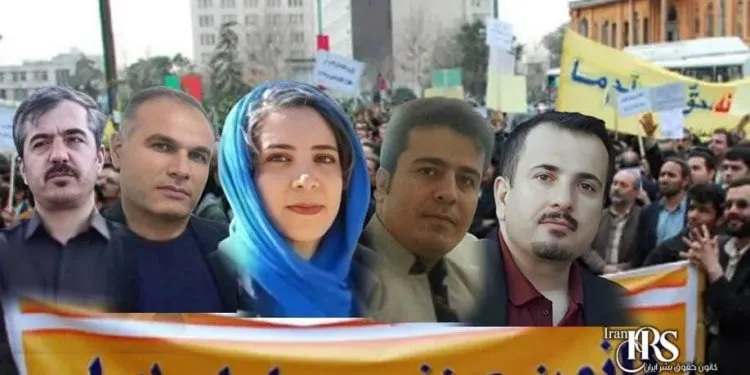
Harsh rulings against Sanandaj Teachers’ Trade Association members spark outrage.
Iran Human Rights Society, Wednesday, August 20, 2025 – In May 2024, the Kurdistan Education Department’s Disciplinary Board launched cases against seven Sanandaj Teachers’ Trade Association members, suspending their employment for three months. This action barred them from schools and cut their salaries by 70%, aiming to silence their activism. By March 2025, the Ministry of Education’s Appeals Board issued unprecedented rulings, including dismissals and exile, raising alarms about teacher suppression in Iran.
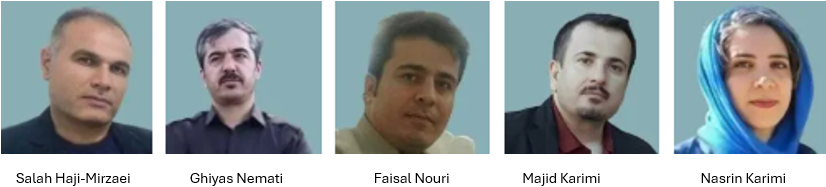
Unprecedented Rulings Against Sanandaj Teachers
The Appeals Board finalized severe penalties for seven board members of the Sanandaj Teachers’ Trade Association. These rulings include:
- Majid Karimi (23 years of service): Permanent dismissal.
- Ghiyas Nemati (17 years of service): Permanent dismissal.
- Salah Haji-Mirzaei (26 years of service): One-year temporary dismissal.
- Nasrin Karimi (27 years of service): Forced retirement with a two-rank demotion.
- Leila Zarei (30 years of service): Removal from vice-principal role and forced retirement with a one-rank demotion.
- Faisal Nouri (19 years of service): Five-year exile to Kermanshah Province.
- Mohiuddin Rihani (28 years of service): Permanent dismissal. These experienced educators faced final, enforceable rulings in March 2025, marking a significant escalation in punitive measures.
Background of the Sanandaj Teachers’ Case
In May 2024, the Disciplinary Board suspended these teachers, restricted their school access, and slashed their salaries. Consequently, this strategy aimed to exert economic and psychological pressure to curb their activism. Furthermore, the harsh measures reflect an intent to dismantle the Sanandaj Teachers’ Trade Association’s influence and deter future union activities.
Purpose Behind the Punitive Rulings
The rulings adopt a deterrent approach rather than a fair process. For instance, permanent dismissals and forced retirements devastate the careers of teachers with decades of service. Similarly, exiling Faisal Nouri to Kermanshah imposes severe personal and familial hardship. Therefore, these actions create a climate of fear, discouraging teachers from pursuing union activities or advocating for better working conditions.
Violations of Teachers’ Rights in Sanandaj
These disciplinary measures violate core human rights, including freedom of expression, the right to form peaceful associations, and the right to just working conditions. Moreover, they undermine the freedom to establish trade unions. By targeting the Sanandaj Teachers’ Trade Association, authorities suppress activism and threaten the professional and personal rights of educators across Iran. As a result, these actions jeopardize the future of education and civil liberties.
Widespread Backlash and Educational Concerns
Trade union activists nationwide have condemned these rulings as unjust and illegal. They warn that such measures widen the gap between teachers and the government. Additionally, the teachers’ families pledge to pursue legal and media efforts to reverse the rulings. Educational experts highlight a critical issue: removing experienced teachers exacerbates shortages and harms Kurdistan’s education system. Consequently, the quality of education may decline further, impacting students and communities.
The Cost of Union Activism in Iran
The severe rulings against the Sanandaj Teachers’ Trade Association underscore the high price of union activism in Iran. Dismissals, forced retirements, and exile not only violate teachers’ rights but also harm the broader educational community. These actions signal a troubling trend of suppressing dissent, which could have lasting negative effects on Iran’s education system and civil society.
See also the below articles:
- Masoud Bidarigh: From Boxing Champion to Political Prisoner
- Sudden Exile of Iman Jamalzehi: A Violation of Baluch Prisoners’ Rights
Follow Iran Human Rights Society on social networks:
Telegram /Twitter /Instagram / YouTube / Facebook
Join Iran Human Rights Society on Twitter




Discussion about this post