
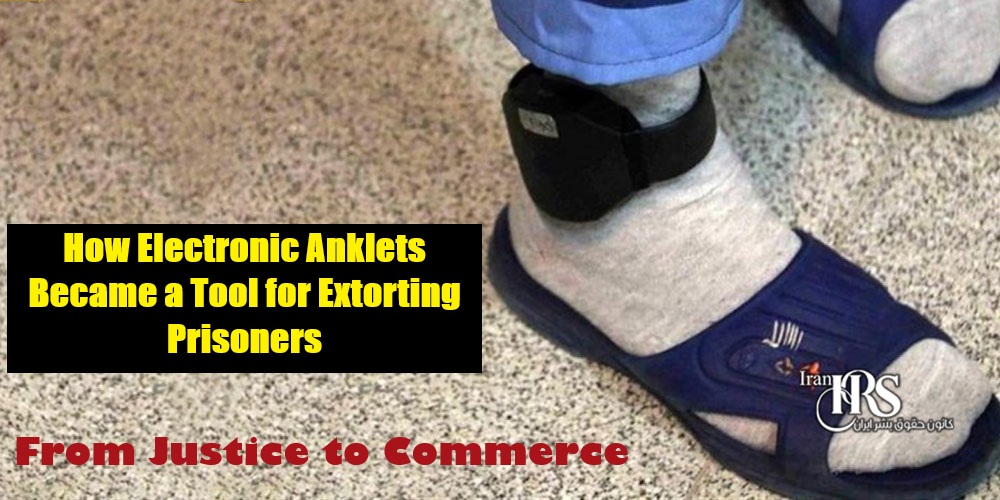
Electronic anklets in Iran promise a humane alternative to prison, but they’ve morphed into a costly burden for prisoners. Instead of fostering rehabilitation, they fuel a black market for justice. This article explores how a tool meant for progress became a symbol of extortion.
Tuesday, September 23, 2025, the Iran Human Rights Society – On September 22, 2025, Ali Qasi, Tehran’s Chief Justice, announced that over 2,500 prisoners use electronic anklets. He highlighted a national guideline for their use, claiming they reduce prison overcrowding and aid reintegration. However, the reality raises doubts. Are electronic anklets in Iran a step toward humane justice, or do they merely cut costs while generating revenue? The evidence suggests the latter, as prisoners bear heavy financial burdens.
How Do Electronic Anklets Differ in Iran?

Globally, electronic anklets often support juveniles or minor offenders, with governments covering costs to prevent deeper criminal behavior. In contrast, Iran shifts the financial load to prisoners. This transforms electronic anklets from rehabilitative tools into instruments of economic pressure. Consequently, what should symbolize progress instead becomes a mechanism for control and profit, starkly different from international practices.
What Costs Do Prisoners Face for Electronic Anklets?
Prisoners must pay over 5 million tomans upfront for an electronic anklet, plus monthly deposits of 500,000 to 1 million tomans. These sums burden families already strained by legal and economic hardships. Thus, electronic anklets become a privilege, not a right. Prisoners essentially buy partial freedom, turning a justice tool into a revenue stream for the government. This financial strain undermines the tool’s intended purpose.
Why Are Prisoners Resisting Electronic Anklets?
Many prisoners reject electronic anklets, viewing them as a deceptive trade-off. They see the government offering superficial freedom while imposing steep costs. For some, prison feels preferable to this extortionate system. This resistance highlights growing distrust in a judicial system that prioritizes profit over fairness. As a result, electronic anklets fail to deliver on their promise of humane incarceration alternatives.
Are Electronic Anklets About Reform or Revenue?
Iran’s prisons face overcrowding, poor sanitation, and suspicious deaths. Electronic anklets could address these issues by reducing inmate numbers. However, the policy seems designed to cut government costs and create income. Prisoners shoulder both their sentences and hefty fees, revealing a system less focused on rights and more on financial gain. Therefore, the true aim appears to be revenue, not reform.
What Are the Consequences of Commercializing Electronic Anklets?
Human rights experts warn that monetizing electronic anklets erodes trust in Iran’s judicial system. Imposing high costs on prisoners’ families deepens economic inequality and contradicts justice’s goal of rehabilitation. Instead of progress, electronic anklets symbolize a commodified justice system where freedom comes with a price tag. This commercialization risks further alienating vulnerable populations and undermining judicial integrity.
How Do Electronic Anklets Violate Human Rights?
The use of electronic anklets in Iran breaches several human rights principles:
- Arbitrary Detention: Article 9 of the Universal Declaration of Human Rights prohibits arbitrary detention. Political prisoners under anklet supervision face “home imprisonment,” restricting their freedom unjustly.
- Humane Treatment: Article 10 of the International Covenant on Civil and Political Rights demands respect for detainees’ dignity. High anklet costs burden families, violating this principle.
- Adequate Living Standards: Article 25 of the Universal Declaration ensures a right to well-being. Monthly anklet fees strain families financially, breaching this right.
- Fair Trial Rights: Article 14 of the International Covenant guarantees fair trials. Many prisoners receive anklet sentences without transparent legal processes, undermining justice.
Electronic anklets could reduce prison overcrowding and promote rehabilitation if implemented fairly. However, Iran’s approach turns a progressive tool into a profit-driven scheme. For true reform, the government must cover costs and prioritize prisoners’ rights. Until then, they remain a symbol of extortion, not justice.
See also the below articles:
- Karim Khojasteh’s Trial in Rasht: Baghi Charge Lacks Evidence Amid Ongoing Uncertainty
- Last Defense of 5 Political Prisoners in Ahvaz’s Sheyban Prison: A Case Full of Torture and Uncertainty
Follow Iran Human Rights Society on social networks:
Telegram /Twitter /Instagram / YouTube / Facebook
Join Iran Human Rights Society on Twitter








Discussion about this post