

The Most Important and Major Events in Iran and the World in 1403 Under the Rule of Velayat-e Faqih
The Most Important and Major Events and developments in Iran in 1403
The year 1403 has come to an end with all its ups and downs, and now we are in the spring of 1404. Undoubtedly, 1403 was one of the worst years for the dictatorship of Velayat-e-Faqih and for Khamenei personally, as it suffered severe and irreparable blows to the decaying structure of this regime. So much so that the daily newspaper Kayhan on March 23 referred to this year as “The Year of Sorrow” and added that no remedy could soothe these heavy wounds. The most important events of the year 1403 can be summarized in the following bullet points:
- The death of Raisi and the loss of the government desired by Khamenei
- The fall of Bashar al-Assad and the loss of the regime’s strategic depth in Syria
- The killing of the main leaders of Hezbollah in Lebanon and their marginalization in political power
- A crippling military blow to Hamas and the killing of its leaders
- The implementation of maximum pressure and comprehensive sanctions by the United States
- The expansion of social and occupational protests by various segments of the population
Khamenei’s response to these defeats was a significant and unprecedented increase in executions.
The death of Raisi and the election of Masoud pezeshkian.

At the beginning of this year, the death of Raisi due to the crash of his helicopter was one of the most significant blows dealt to Khamenei, to the extent that in the next elections, he was forced to accept Masoud Pezeshkian as a candidate for the presidency.
The return of maximum sanctions by the United States is another significant event of this year, initiated by Trump’s administration. The focus of these sanctions is to reduce Iran’s oil exports to zero, and if achieved, one can expect the collapse of Iran’s economy. The immediate impact would be a reduction in the costs of expanding nuclear and missile programs, while simultaneously lowering the expenses associated with regional interventions and their level of effectiveness.
On the other hand, Europe, including the UK and France, has recently announced that if Iran does not cooperate, they are prepared to activate the trigger mechanism and restore six Security Council resolutions for comprehensive sanctions. This signifies the global community’s determination to prevent Khamenei from acquiring nuclear weapons.
Social Protests
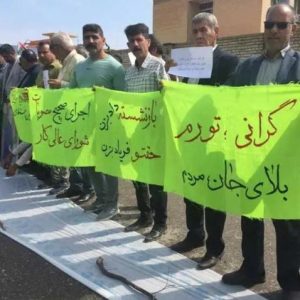
In 1403, unprecedented protests occurred by various groups, including retirees, farmers, working-class individuals, truck drivers, shopkeepers, and others in different cities across Iran. Some of the most important protests include:
Retirees’ Protests: Retirees from telecommunications, social security, steel industries, teachers, and more protested against rising prices, inflation, and the shrinking of their livelihoods in various cities and provinces of Iran, such as Ahvaz, Haft Tappeh, Shush, Dezful, Arak, Hamadan, Tehran, Isfahan, and Kermanshah, by holding protest gatherings or street demonstrations and demanded attention to their concerns.
Farmers’ Protests: Farmers in various regions of the country, such as Khuzestan, Kermanshah, Isfahan, Varzaneh, Minab, Sistan and Baluchestan, etc., have staged protest gatherings or street demonstrations in response to issues like water shortages, right of access to water, frequent power outages, and reductions in fuel quotas for agricultural machinery.
Strikes and Protests by Workers and Employees: This includes protests by permanent, temporary, contractual, and project-based workers in the private or public sectors employed in companies, refineries, institutions, offices, factories, and workshops in Iran. They protested against rising prices, high inflation, low wages, heavy taxes, job security concerns, unpaid salary arrears, and living conditions, with actions taking place in Ahvaz, Bushehr, Qazvin, Rasht, and other cities.
Truck Drivers and Drivers: Groups of drivers, including truck drivers, bus drivers, minibus drivers, and construction vehicle drivers, in various cities across the country such as Tehran, Saravan, Urmia, Omidieh, Isfahan, Marivan, Qasr-e Shirin, Zahedan, Shiraz, Kerman, Rafsanjan, Ilam, Sistan and Baluchestan, Assaluyeh, Kohgiluyeh and Boyer Ahmad, etc., protested against reduced fares, fuel quotas, job discrimination, and sought attention to their demands by halting cargo loading and continuing work, staging strikes and protest gatherings.
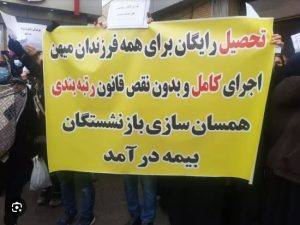
Defrauded Investors
Defrauded Investors: A group of investors affected by Amitis, Caspian Administrative Institute, Golbaran Recreational and Commercial Complex in Dezful, defrauded investors of Razayat Khodro, Toravat Novin, Reyhan Tak, Shahr Khodro, Reigan Khodro, and others in Qazvin held protest gatherings demanding attention to their requests and a swift return of their investments.
Merchants and Shopkeepers: A group of goldsmiths from the Tehran market, Hamadan, Shiraz, Mashhad, Tabriz, and Isfahan protested against the new tax law, closing their shops and going on strike.
Protests against the rising price of the dollar, which has seen an increase of more than one hundred percent (i.e., doubled) this year, rising from 42 thousand tomans at the beginning of the year to 95 thousand tomans by the end of the year, prompted a gathering of merchants in the Grand Bazaar of Tehran, Sepahsalar Market, and in the streets of Molavi, Imam Khomeini Square, and Khayam Southerly, where they halted work and held protest gatherings.
Popular Protests: On the second anniversary of the death of Mahsa Amini, merchants in cities such as Mahabad, Sanandaj, Dehgolan, Kamyaran, Piranshahr, Bukan, Divandareh, Saqqez, and Marivan staged widespread strikes.
Moreover, in various cities in the Kurdistan province, including Sanandaj, Saqqez, Divandareh, and Marivan, merchants and shopkeepers closed their shops in protest against the issuance of death sentences for Vrisheh Moradi and Pakhshan Azizi.
In protest against power outages in several cities of Iran, including Chabahar, Iranshahr, and Kuhdasht, people took to the streets and organized protest gatherings.
Contract Teachers and Hourly-paid Teachers in Tehran and Rasak County and several other cities protested against layoffs, job insecurity, unstable employment, unpaid wages, lack of insurance, and job ambiguity, staging protest gatherings.
Protesting in various cities and provinces across the country
Nurses in various cities and provinces across the country, including Fars, Hamadan, Khuzestan, Isfahan, Mazandaran, Alborz, Yazd, Bushehr, Mashhad, etc., have seriously and extensively gone on strike and organized protest gatherings in the streets in response to work pressure, insults and threats, low base salaries, cheap and compulsory overtime, and other grievances.
Patients and disabled individuals in Tehran, Chabahar, Ardabil, Mashhad, Urmia, Kermanshah, Kerman, and other locations have conducted widespread street protests in response to the lack of certain medications and their high prices, as well as joblessness and lack of income.
Other groups, including fishermen, fruit vendors, and housing seekers, have also organized protest gatherings in various cities.
Executions in the year 1403
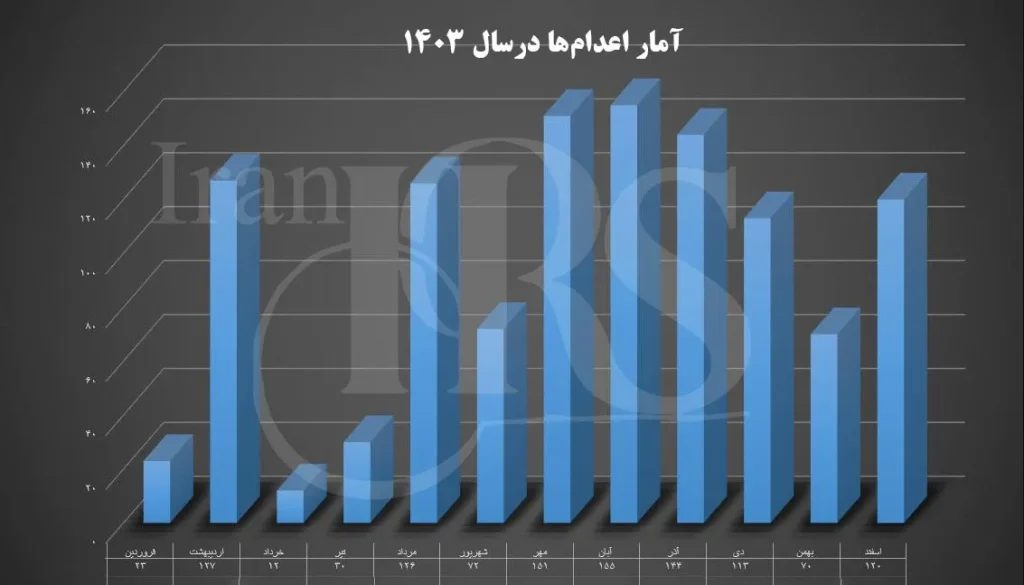
In the year 1403, the government executed more than 1,100 Iranian citizens, marking the highest number of executions in recent years, with monthly statistics shown in the chart above.
United Nations human rights experts have expressed serious concern about the sharp increase in executions in Iran and described these penalties as illegal. They have issued a letter urging the Iranian government to halt the implementation of death sentences for all convicts.
On the occasion of World Day Against the Death Penalty, several UN experts issued a statement expressing concern over the rising executions in Iran and calling for an immediate halt to executions.
Continuation of the “No to Execution Tuesdays” campaign
This campaign has continued and expanded throughout the year 1403 and currently encompasses 38 prisons, enjoying extensive international support, including:
68 Iranian and international human rights organizations have issued a statement expressing solidarity with the “No to Execution Tuesdays” campaign in Iranian prisons and calling for international community support for the protesting prisoners.
Condemnations of the regime in the international community:
The seventy-first resolution on human rights violations by the rule of the clerics approved in the Third Committee of the United Nations General Assembly, condemning executions and the repression of people during uprisings, among other issues, this year.
Important global developments:
Hezbollah’s defeat in Lebanon.
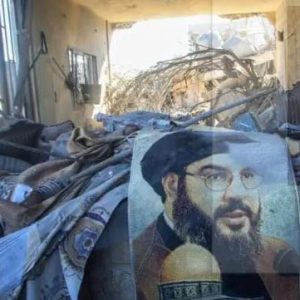
In the autumn of this year, following severe military blows to Hezbollah in Lebanon, which began with widespread explosions and continued with the killing of their leaders, Hezbollah was weakened and forced to accept a ceasefire. The immediate result of this military defeat was a significant political setback, leading to the rise of a Prime Minister and President in Lebanon who are not aligned with Hezbollah, causing the group to be isolated and sidelined to such an extent that Hezbollah regarded it as a political coup against itself. This was yet another strategic blow to the regime of the clerics, as Hezbollah was the main proxy group of Khamenei in the entire region.
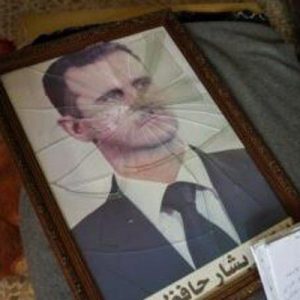
Downfall of the dictatorship of Bashar al-Assad in Syria
In late autumn of this year, the Syrian dictator, Bashar al-Assad, was overthrown, and the Supreme Leader of Iran lost his strategic depth in the region. Syria was a vital center for supporting and supplying Iranian proxy groups, including Hezbollah and Hamas. With the loss of this center, the logistical routes for the regime’s proxy forces completely severed, severely disrupting his interventionist policies and the export of terrorism and fundamentalism.
This strategic blow has upset the balance of power in the region and significantly destabilized the regime’s position, putting Khamenei’s four-decade investment in the area at risk of extinction. Currently, he is desperately trying to reverse this situation, but their recent efforts have led nowhere and resulted in another defeat and humiliation.
Ceasefire in Gaza and the position of Hamas
In the past year, a full-scale humanitarian disaster occurred in Gaza, initiated by Hamas’s adventurism and continued with the ruthless bombings by Israel, causing the Palestinian people to pay a heavy price, suffering over 50,000 casualties in addition to the destruction of their homes. However, the instigators of this war, namely Hamas, also endured severe and debilitating blows, losing several generations of their political and military leaders. Hamas’s military force has similarly suffered heavy losses, transforming from a nearly regular army into an irregular guerrilla force.
At the beginning of the current winter, a ceasefire in Gaza established, and the exchange of hostages began.
Currently, the political continuation of Hamas’s rule over Gaza is being questioned, and discussions about stripping them of power and their complete disarmament are now on the table.
The weakening and inability of Hamas, both militarily and politically, also represents significant strategic blows to Khamenei’s plans in the region.
International Condemnation of Iran’s Human Right’s Violation

Due to severe human rights violations, the crackdown on protesters, and the increase in executions, Iran faced growing international condemnation, additional sanctions, and mounting diplomatic pressure from global organizations.
Conclusion
In 1403, under the continued rule of Velayat-e Faqih in Iran, the country faced escalating internal crises, international isolation, and increased pressure from domestic protests, which will eventually lead to popular uprisings and, ultimately, the overthrow of the regime and a transformative change in Iran. This will be a promising sign of freedom and liberation for the people of Iran.
Follow Iran Human Rights society on social networks:
Telegram /Twitter /Instagram / YouTube / Facebook
Join Iran Human Rights Society on Twitter





Discussion about this post