
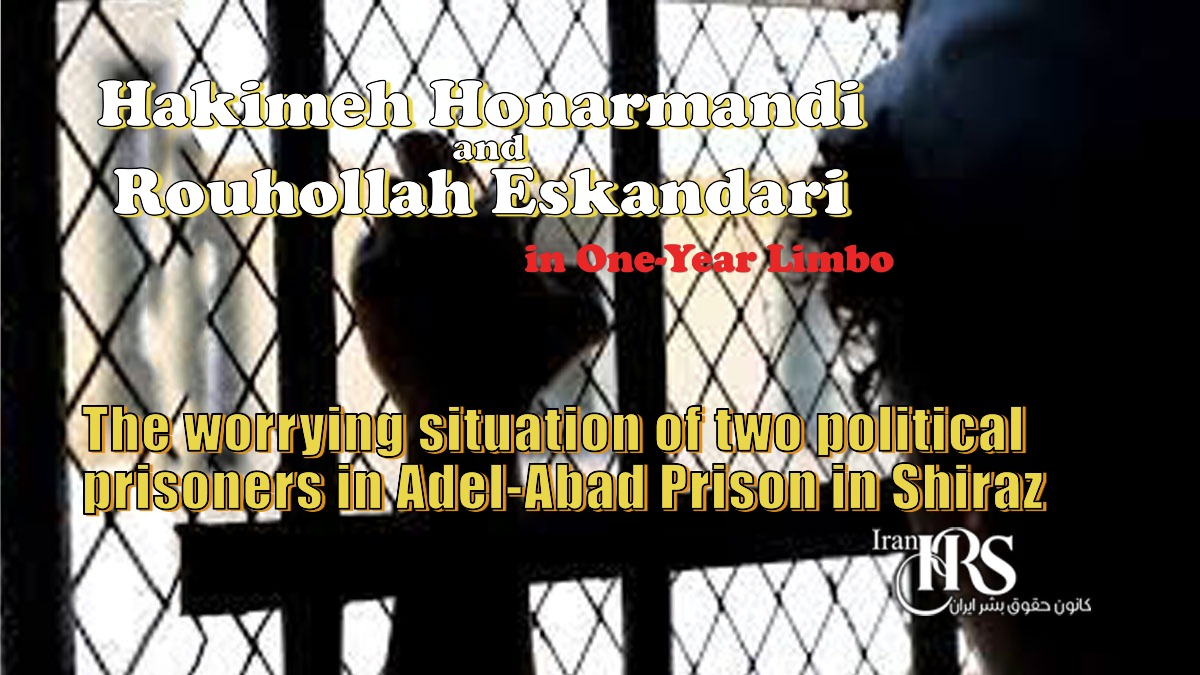
Political prisoners Hakimeh Honarmandi and Rouhollah Eskandari suffer ongoing uncertainty and medical deprivation in Adel-Abad Prison. They face rebellion charges that risk execution in Iran.
Iran Human Rights Society, Thursday, December 18, 2025 – Political prisoners Hakimeh Honarmandi and Rouhollah Eskandari face prolonged limbo in Iran. Authorities detain this mother and son for over a year in Adel-Abad Prison, Shiraz. They confront the grave charge of “baghi,” or rebellion. This accusation often leads to death sentences. Furthermore, lack of medical care threatens their lives seriously.
Worrying Conditions for Political Prisoners in Adel-Abad Prison
Iran Human Rights Society reports on December 18, 2025. Hakimeh Honarmandi, a 61-year-old laboratory technician, stays imprisoned. Her son, Rouhollah Eskandari, born in 1978, shares her fate. Both endure uncertainty in Adel-Abad Prison. Authorities charge them with “baghi.” Reports reveal physical and psychological torture after arrest. However, other charges remain unclear.
Effects of Long-Term Uncertainty and Psychological Pressures
Prison officials hold Hakimeh Honarmandi in the women’s ward. She experiences severe restrictions daily. Constant threats and worries erode her health. Psychological pressures build over time. Similarly, Rouhollah Eskandari faces harsh conditions. Denial of prison leave intensifies fears. Moreover, absence of a fair trial heightens anxiety for the family.
Poor Hygiene and Denial of Essential Medical Treatment
The women’s ward lacks proper hygiene. Unsuitable conditions prevail everywhere. Hakimeh Honarmandi struggles with diabetes. She also deals with high blood pressure and skin diseases. Authorities provide insufficient medical care. Rouhollah Eskandari endures lumbar vertebrae pain. He receives no adequate treatment either. Informed sources warn urgently. Continued deprivation risks permanent damage to their bodies and minds.
The Grave “Baghi” Charge and Threat of Execution
Iran’s regime enforces the “baghi” charge strictly. It labels actions as rebellion against authority. This heavy accusation permits death penalties. Human rights experts condemn its application here. They highlight injustice against a mother and son. Therefore, prolonged uncertainty amplifies the execution threat significantly.
How Detention Impacts Mental and Physical Health
Political prisoners like these suffer deeply from limbo. One year passes with constant stress. Limited family contact breeds isolation. Anxiety levels rise steadily. Stress compounds existing illnesses. Experts recognize this pattern clearly. They describe prolonged restrictions as white torture. It inflicts harm without physical scars.
Urgent Calls from Human Rights Organizations
Human rights groups demand immediate action. They seek to end uncertainty for Hakimeh Honarmandi and Rouhollah Eskandari. Organizations insist on proper medical services now. They advocate fair trials without delay. Furthermore, activists call for quick release. Serious health risks and execution threats demand swift intervention.
Social and Human Consequences for Political Prisoners
This case exposes broader issues in Iran. Systematic pressures target political prisoners routinely. Torture occurs physically and mentally. Medical denial persists widely. Execution threats loom over many. Families endure broken bonds. Relatives voice strong criticism. They decry officials’ opacity and lack of accountability.
The Critical Need for Urgent International Actions
Authorities continue uncertainty and treatment denial. These practices risk irreparable health consequences. Human rights bodies must act decisively. The international community needs to apply pressure. They should halt potential executions firmly. Protecting rights for this mother and son remains essential. Guaranteeing their health and safety tolerates no delays.
Human rights violations in the case of Hakimeh Honarmandi and Rouhollah Eskandari
- Article 3 of the Universal Declaration of Human Rights: Threat to life and personal security through issuance of death sentence and prolonged uncertainty.
- Article 5 of the Universal Declaration of Human Rights: Psychological and physical torture resulting from prolonged detention and security pressures.
- Article 9 of the Universal Declaration of Human Rights: Prolonged detention without fair trial and deprivation of leave.
- Article 10 of the Universal Declaration of Human Rights: Violation of the right to a fair trial and examination of the case under illegal pressures.
See also the below articles:
- Political Prisoner Evin: Mohsen Razm Aeen Faces Execution Threats and Medical Neglect
- Iran Prison Deaths: Two Inmates Die in Mahabad and Mashhad Amid Neglect
Follow Iran Human Rights Society on social networks:
Telegram /Twitter /Instagram / YouTube / Facebook
Join Iran Human Rights Society on Twitter





Discussion about this post